Senators & House Members Bask In Spotlight Today After Moving Mental Health Bill Forward

Texas Sen. John Cornyn will not help push mental health bill through Senate and onto White House

Texas Sen. John Cornyn will not help push mental health bill through Senate and onto White House.

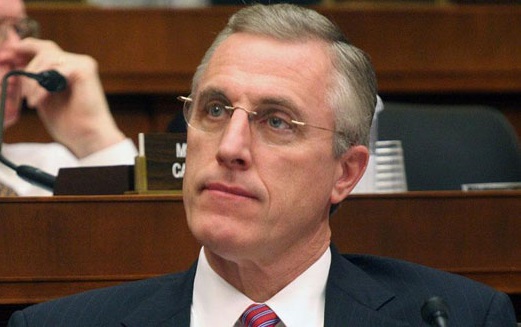
(12-1-16) Here’s what several of the key players shepherding Rep. Tim Murphy’s Helping Families in Mental Health Crisis Act through Congress had to say last night after the legislation — now part of the $6.3 billion 21st Century Cures Act — was passed in the House. The Cures Act is expected to be voted on quickly in the Senate and then sent to the president for signing into law. Murphy’s act is the first major reform of the government’s mental health programs in decades.

Representative Tim Murphy  (R-Pa.): 

For the last four years since the time of the terrible tragedy at Sandy Hook Elementary followed by repeated other ones our nation has been awoken from a slumber of ignoring problems of mental illness in America. One that when we closed down our institutions decades ago we turned our eye to those who lie homeless in the street or we filled our prisons or our cemeteries or laid on a gurney in the emergency room or sent back to a family that felt helpless and hopeless.

We’ve changed the situation where now we are coming together on a bill that will save lives. This is a new era of healthcare, and the next generation of hope for Americans that really transcends boundaries.

To all the families who brought their stories out of the shadows that dared to share their sorrows their hopes and to share their dreams, today is a day of joy and today is only possible, I say to all those families, because they dared to step forward.

…We can look back on this moment in history and say today though we have much to do, and although we didn’t get everything we needed but we needed everything we did get. But this is a moment on this day forward to say that today we took action to save lives.

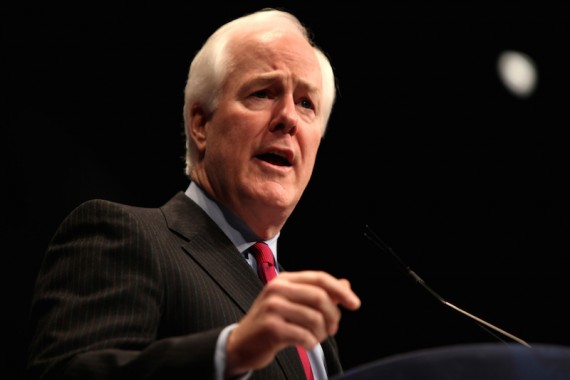
Senator John Cornyn (R-Tx.):

(Cornyn’s Mental Health and Safe Communities Act also was merged with Murphy’s bill into the 21st Century Cures Act. He has played a pivotal role as Senate Majority Whip getting the legislation voted on during the lame duck session.)

“I dare say there’s probably not a family in America that doesn’t have to deal with this in some way or another, either at work, people you go to church with, people who live next door. Some way or another, mental health problems are rampant.”
Click to continue…

Murphy’s Family Mental Health Bill Approved: Next Step Senate then White House

murphy3

(11-30-16) Rep. Tim Murphy’s Helping Families in Mental Health Crisis Act is poised to become a federal law.

By a 392-26 vote late Wednesday, the House passed the 21st Century Cures Act, a massive $6.3 billion health bill, that included Murphy’s legislation. The Senate is expected to approve the legislation shortly  before sending it to President Obama to sign before leaving office.

“This is a huge victory,” Andrew Sperling, NAMI’s director of advocacy, wrote in an email. “The entire enterprise could have easily collapsed given the election results.” 

D. J. Jaffe, who publishes the website Mental Illness Policy Org., and was active behind the scenes pushing the bill, called Murphy a “hero” and praised the Pittsburgh Republican and Sen. John Cornyn (R-Texas) for their tenacity. Both endorsed greater use of Assisted Outpatient Treatment, which is strongly supported by Jaffe.

“AOT was a great win in this legislation,” he said. “Now, the question is if the new assistant secretary (for mental health) will drain the swamp at SAMHSA (Substance Abuse and Mental Health Services Administration) and make that agency focus on the seriously mentally ill.” 

The Treatment Advocacy Center, which supports AOT legislation, was a vigorous champion of Murphy’s bill from its first draft.

Murphy began laying the groundwork for his bill in March 2013, three months after Adam Lanza’s 2012 attack on the Sandy Hook Elementary School that left 28 dead, including him. I was questioned at his first House session about problems my family faced trying to get help for my son. 

Murphy’s original bill faced strong opposition from Democrats and a slew of mental health organizations, including Mental Health America, who claimed it would eliminate and roll back hard-won civil rights protections. Some mental health groups scoffed at Murphy’s chances of getting any legislation passed. The  National Alliance on Mental Illness was the only major group that supported Murphy’s bill. (see correction at end of blog.) It wasn’t until after Murphy had collected more than a hundred co-sponsors that his critics became alarmed.

Supporters welcomed Murphy’s legislation, saying it was one of the first that recognized the problems that parents and families faced, rather than focusing primarily on the rights of individuals who were ill. Because much of what Murphy first proposed was nearly identical to reforms that Dr. E. Fuller Torrey had been pushing for years,  I once dubbed the bill “Torrey’s revenge” against SAMHSA and mental health lobbying groups that had widespread support in Congress.

Click to continue…

Involuntary Commitment Radio Show Sparks Lots Of Calls & Comments – As Expected

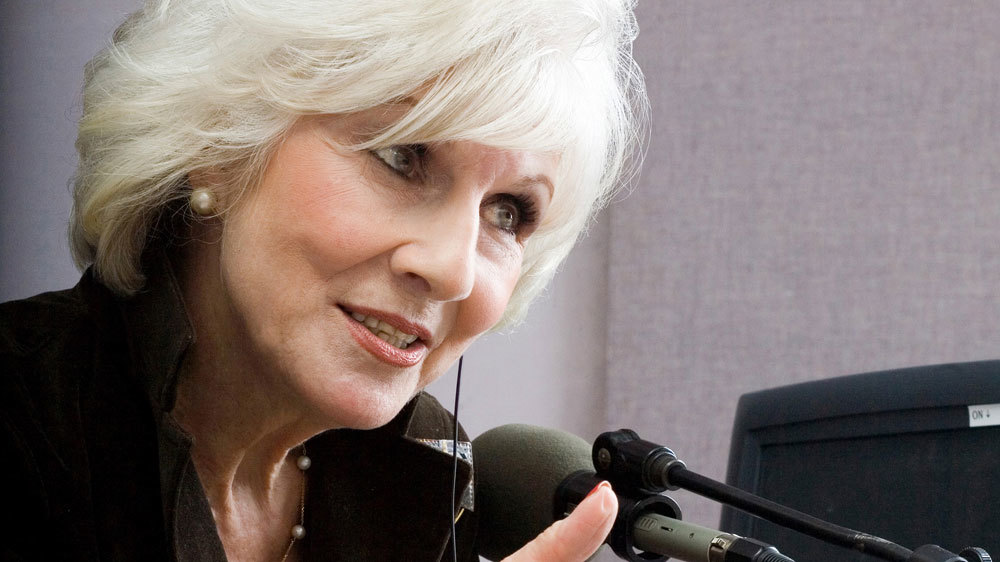
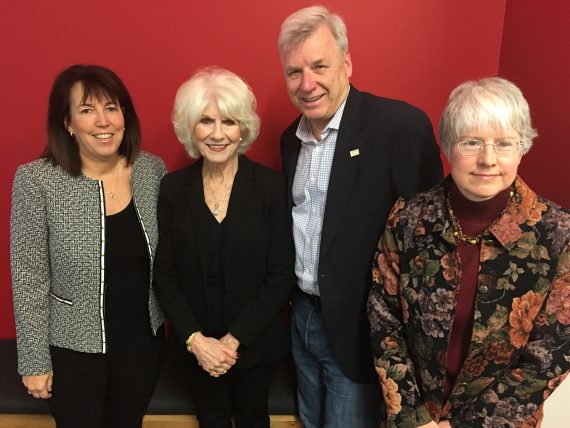
Dr. Dinah Miller, Diane Rehm, Pete Earley, Dr. Annette Hanson

Dr. Dinah Miller, Diane Rehm, Pete Earley, Dr. Annette Hanson

(11-29-16) Few topics are as hotly debated as Involuntary Commitment, which was the featured topic on the second hour of the Diane Rehm show today. The reason for the discussion was  COMMITTED: The Battle Over Involuntary Psychiatric Care, a new book by Drs. Dinah Miller and Annette Hanson. I was invited because I wrote the book’s foreword.

You can listen to the entire hour program here. 

After the program, Drs. Miller and Hanson spent a half hour answering comments on Facebook — and there were plenty of them and questions that I’ve included in this post.  You can also read more comments and an excerpt from the book here.

Click to continue…

Join Tuesday’s NPR Debate About Forced Psychiatric Care: Vote On Mental Health In Congress This Week: New Radio Spot For My Novel

diane-rehm

(11-28-16)  Most of us have strong opinions about involuntary psychiatric treatment and tomorrow (TUESDAY 11-29) at 11 a.m., it will be the topic on Diane Rehm’s  popular NPR show.

I’ll be a guest along with Drs. Dinah Miller and Annette Hanson, co-authors of  COMMITTED: The Battle Over Involuntary Psychiatric Care.  committed1

In keeping with NPR’s promise of hearing all sides, Diane will interview two individuals with mental illness; one who has been helped by involuntary commitment and one who was traumatized by it.   Please listen and join the discussion. Here is what the show has posted on its website about Tuesday’s hour long program:

Many mental health experts say forcing someone into psychiatric care against their will can be necessary to protect people dangerous to themselves and others. But in some certain cases it is illegal, and some see involuntary commitment as a violation of someone’s civil rights. A look at how patients can be both helped and traumatized by involuntary psychiatric care, and what the data indicates about its role in preventing violence, suicide and mass murder.

HELPING FAMILIES IN MENTAL HEALTH CRISIS ACT  TO BE VOTED ON THIS WEEK, REP. TIM MURPHY CLAIMS MAJOR VICTORY

Rep. Tim Murphy (R-PA.) announced late last Friday that a version of his Helping Families in Mental Health Crisis Act (HR 2646) and Rep. Fred Upton’s (R.-Mich.) 21st Century Cures Act (H.R. 6) have been merged into one package that will be voted on sometime this coming week, possibly as early as Tuesday. I wrote about this   commingling of bills ten days ago and will be posting an analysis of the bill after it is passed. Meanwhile….

Click to continue…

I’m Thankful Today For My Fellow Advocates Who Tirelessly Fight For Mental Health Reforms

laura-and-zac

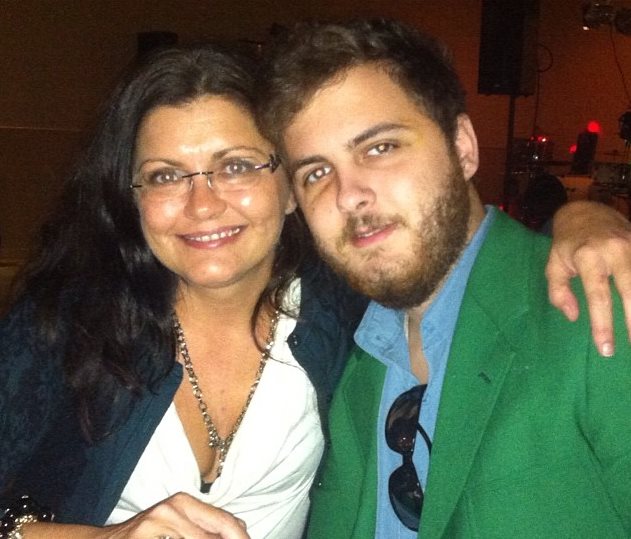
(11-24-16) Among the many blessings that I have in my life are the relationships that I have developed with fellow advocates for persons with mental illnesses. I know many of these courageous individuals only through emails and Internet posts. 

Laura Pogliano is one such friend and today on Thanksgiving, I am reposting a letter that she wrote to me last year. Laura,  I am thankful for you and so many others who inspire me. 

Hi Pete,

I started to write a reply to you, to thank you for the kind words in your Friday blog about my son, Zac, and my advocacy, but didn’t finish. When I got home from work, I realized why. Hanging on my door knob was a gift from Officer Kim Lankford of the Baltimore County Police Department.

Let me tell you a bit about Officer Lankford. You might recall that Zac decided at one point that he had been shot in the head. He hadn’t but he was convinced because of schizophrenia that he had. I wrote a blog for you about how Officer Lankford had treated my son with respect and had spent time comforting him. Later, it was Officer Lankford who did the welfare check at his apartment when I was concerned and the one who found him deceased and broke the news to me.

I want to tell you about the gift she left on my door knob.

Click to continue…

Study Questions Our Assumptions About Mental Health Courts. They “Work” But Why?

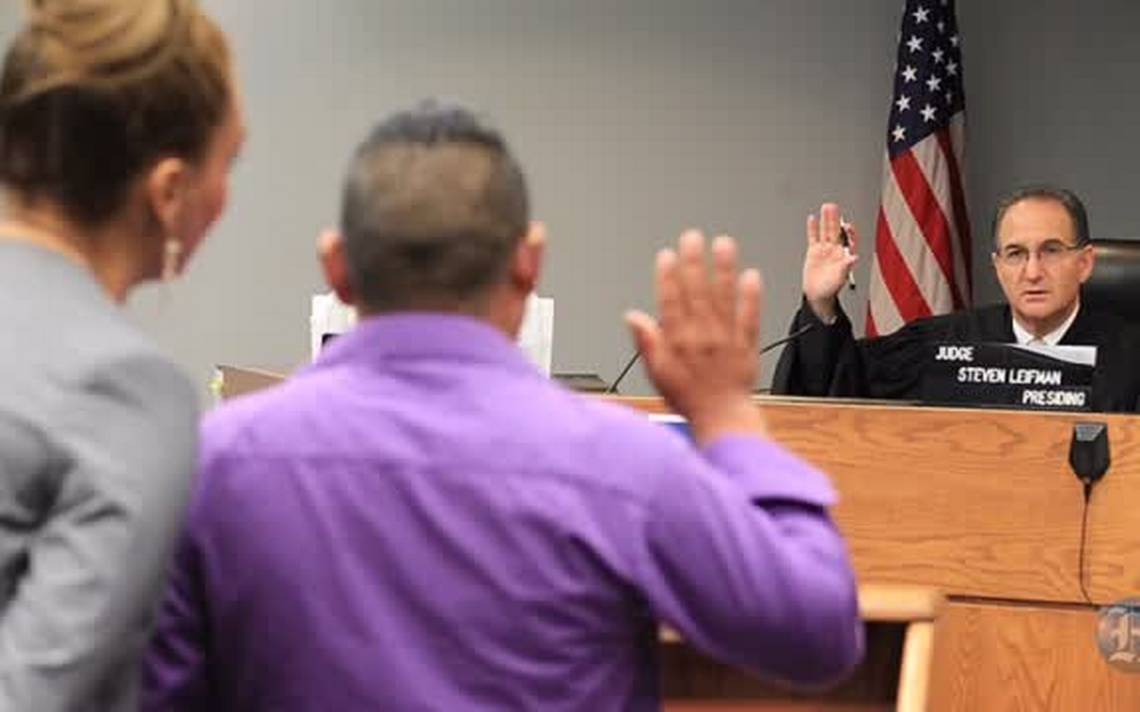
My friend, Judge Steve Leifman, runs one of the most successful mental health courts in the US

My friend, Judge Steven Leifman, runs one of the most successful mental health courts in the US

(11-15-16) I am a strong advocate for mental health courts.

Why should someone such as my son, who broke into a stranger’s unoccupied house to take a bubble bath while he was psychotic, have to go through the regular criminal justice system when it is obvious that it was his mental illness and not some criminality that prompted him to break the law? Getting him into meaningful, court-supervised treatment would have made more sense than incarcerating him, especially because we know that individuals with mental disorders are more likely to have more charges pressed against them when they are in jail.

In a specialized mental health court, court-affiliated mental health professionals would have assessed him and developed a treatment plan and the judge would have monitored his adherence to community-based treatment. While he might have faced sanctions – including jail – for failing to engage in treatment, he might also have had his charges reduced or dismissed after a sufficient period of demonstrating his commitment to remaining stable and law-abiding. Instead, he is forever marked as a criminal because his sentence in Virginia cannot be expunged.

A handful of jurisdictions launched mental health courts in the late 1990s. Today, there are more than 400 mental health courts, another 1,500 drug courts, and more than 3,000 other treatment oriented courts of various kinds, such as veterans courts, DUI courts, juvenile drug courts, and family dependency drug courts. In a 2015 literature review of mental health court data, 15 articles examined recidivism rates; of these, 13 found significant reductions in new arrests and days spent incarcerated.

So what was I to think of a scholarly article authored by Carol Fisler, director of Mental Health Court Programs at the Center for Court Innovation in New York, published last year in the American Bar Association’s  Judges’ Journal, that challenged many of our assumptions about mental health courts?

It is important to note that Ms. Fisler, who directed the planning and implementation of the first specialized court for offenders with mental illness in New York and has provided training and technical assistance to mental health court planning teams across the country, ultimately concludes that “research to date consistently supports the notion that mental health courts ‘work.'”

But, she cautions, that the reasons why they “work”  appear to have little to do with some of the basic assumptions that we believe when we create them.

Click to continue…