Emotions are difficult to control. You think you can keep them in check and most days you can, and then they rise up.
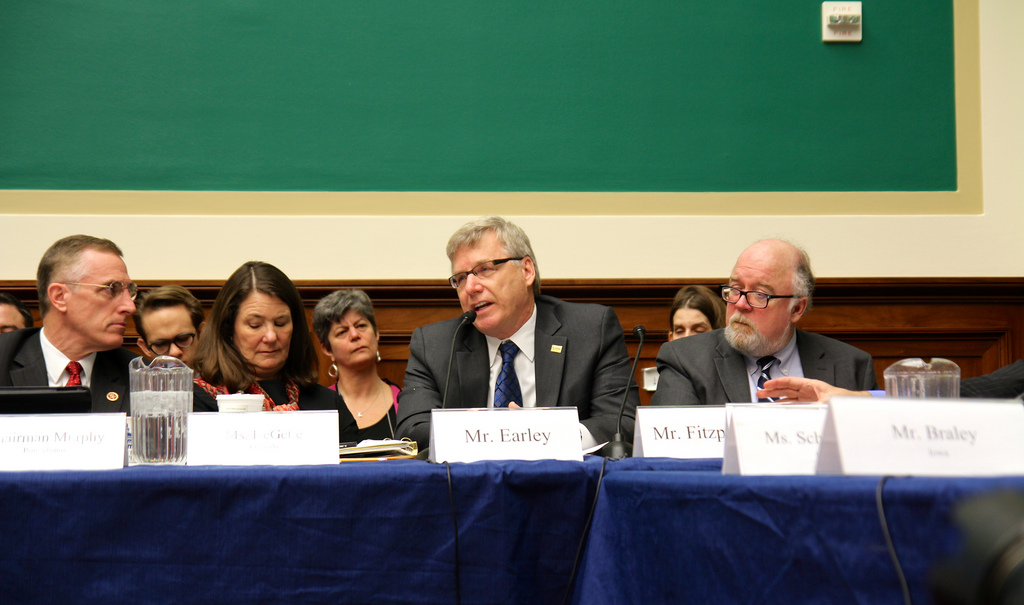
Seconds before I was scheduled to testify Tuesday before the U.S. House subcommittee on Oversight and Investigations at a public forum entitled: “After Newtown: A National Conversation on Violence and Severe Mental Illness,” I felt my emotions taking hold. Tears began welling in my eyes and my voice started to crack.
I was angry at my lack of self control.
It wasn’t because I was having stage fright. I have told my story — about how I had tried to get my adult son help when he became psychotic and was turned away from a hospital emergency room — hundreds of times and to much larger audiences without becoming distraught.
I was overwhelmed. I only had three minutes — maybe four — to tell more than a dozen members of Congress about an event that had totally changed my son’s life and my family’s. What could I possibly say that would express what I have learned about mental illnesses, my son, myself and our mental health system during the past ten years — traveling to 49 states, touring dozens of programs and meeting hundreds of individuals little different from my son and me?
Many of you had written thoughtful comments for me to share with Congress and I did. I delivered them to the subcommittee staff for distribution.
What could I now add?
I had been invited to tell my personal story. The forum’s sponsors, Reps. Tim Murphy (R-Pa.) and Diana DeGette (D-Co.) had invited five experts to provide them with specifics about mental illness and federal programs. Along with Pat Milam, whose son committed suicide, and Liza Long, who gained notoriety when she penned a blog called “I Am Adam Lanza’s Mother,” I had been chosen to humanize the issue.
As soon as I began, I realized I would have difficulty getting through my statement. I was disappointed in myself. I know that the show of emotions can be powerful, but I also realize that it often makes listeners uncomfortable and diminishes the speaker’s message. What I was saying was important and I wanted them to hear every word not focus on my inability to keep my emotions in check.
I explained that Virginia’s “imminent dangerous” involuntary commitment criteria had kept me from getting my son help before the law was changed. I want my son’s civil rights protected, I said, but I added that the “dangerous” criteria that is in every state’s commitment criteria is — in my opinion — a foolish standard. I told the subcommittee that reforming commitment standards will not do any good if there are no meaningful community treatment services available. I added that while my son had suffered four major breaks and had been tasered twice by the police, he was doing great today because he finally got the help that he needed.
Because of my background in journalism, I understand the need for sound bites and I ended with this one:
” We tell our sons and daughters — oh, you may be sick but we are not going to help you until you become dangerous. And then when they become dangerous, we blame and punish them. In that scenario, you tell me: ‘Who is the ‘crazy’ one?'”
At one point, I had to stop my testimony because I had become too emotional to continue. Pat Milam did a much better job than I did delivering his unscripted remarks even though he began by saying that he was not a public speaker. He kept control, was specific, and — most important of all — he targeted barriers that Congress can do something about, such as modifying HIPAA laws. (States control involuntary commitment criteria.) Pat didn’t pull punches. He said the doctors who treated his son hid behind HIPAA and really didn’t want to talk to him or his wife, Debbie.
Liza Long gave an eloquent presentation via a television screen from her home. (The subcommittee did not have adequate funds to fly witnesses into Washington. Pat paid his own expenses to get here.)
I had testified twice in front of congressional committees but this forum was much different — and better! In the past, one or two members would drift into the committee room, make a statement and then hurry off. No one paid attention. But at Tuesday’s hearing, I counted more than a dozen House members sitting at the table where we’d gathered and everyone of them was paying attention, and most asked questions.
I was especially impressed by Rep. Bill Cassidy, (R. LA.) a medical doctor, who grilled me about my involuntary commitment comments. It became clear that Dr. Cassidy understands our system and hopes to find ways to improve it. Panel member Dr. Harold S. Kopolewicz, president of the Child Mind Institute, also impressed me with his recitation of statistics about the need for child psychiatrists in the U.S. and his insights into the problems that children with mental disorders face.
I had to grin at one point because a staff member handed a sheet of paper to Rep. Kathy Castor, (D-Fl.) who was sitting next to me. The top of the page contained a warning. It said that Dr. E. Fuller Torrey, the founder of the Treatment Advocacy Center, was going to attack SAMHSA during his remarks. A list of positive things that SAMHSA does was printed on the fact sheet for Castor to cite if Torrey attacked it. He did and she used the sheet to respond.
That was the only bit of politics that I noticed being played out.
I became emotional again during the one minute that I was given for closing. I had tried before the hearing to get a person with mental illness appointed to the panel. I had hoped the subcommittee would invite my son because he is doing so well. Unfortunately, the subcommittee decided against it, but promised there would be future hearings. I hope so. I was told that the subcommittee also decided not to invite the parents of a child who had been murdered by a person with mental disorders. I wish they had invited both because I believe we all need to talk frankly and work together to fix our system.
Regardless, I wanted to make certain that members of Congress understood most persons with mental disorders are just like all of us, only they have a medical illness. I urged Congress to be thoughtful and not hurry any bills into law that further stigmatized persons with mental illness. I was especially worried about laws that require lists of persons with mental disorders to be drawn up and turned over to the police and federal officials, including lists of persons who have never been violent.
“Lists increase stigma,” I warned. “We are your sons and daughters. We are Rep. Patrick Kennedy and Terry Bradshaw. We are not the enemy.”
I’m one of those persons who always thinks about what they should have said about an hour after I said it. In retrospect, there are several points that I wish I had made, several things that I wish I would have said differently. Most of all, I wish that I hadn’t been so damn emotional because I think it made people uncomfortable and undercut the credibility of my message.
On the other hand, if the subcommittee wanted to see how emotional it is for a parent of an adult son with a mental disorder, even one who is doing well, then they saw it. I only hope that they understood that it was not sympathy or sadness or even empathy that I was expressing or seeking. It was frustration. Or as I told the subcommittee:
Don’t tell me that we can’t help people with mental illnesses. I have seen it happen. This is not a problem of us not knowing what to do, it is a problem of us not doing it…All of the pain that my son endured, all of the pain that my family has suffered, all of the tax dollars that have been wasted and all of the fear that my son caused others, could have been avoided.
None of it had to happen.
(You can watch the entire hearing by clicking here. Be warned that it is nearly three hours long. My opening statement begins at 18:07 and my ending one can be found at 2:23:59. Unfortunately, my computer expert son is relaxing on a Caribbean island on a vacation away from the snow and wasn’t around to pull out my specific comments.)
ADDED TO THIS BLOG ON MARCH 9TH
Thanks everyone for your support and very kind comments. My son, Kevin (Mike in the book) and I gave a speech Friday before a local crime commission. It was only the second time that we have appeared together. Kevin spoke openly about his illness, how it felt to be psychotic, why he went off his medications from time to time, and also gave pointers on how law enforcement can interact with persons with mental disorders in a non-threatening way. He was awesome! I wish Rep. Murphy’s subcommittee would have heard him. Hopefully, he will get an opportunity to speak to the subcommittee in the future. He reminded me of why all of us advocate for our loved ones. He also reminded me that most people with mental illnesses can recovery if they are given meaningful services. Bravo Kevin!

 About the author:


Thank you, Pete. Your emotions are part of your story. They are part of the re-living of what our loved ones have had to endure.
I just wrote you an email, and it was your testimony that made me cry that day, for the very reasons you just outlined above. You’re a journalist, experienced public speaker, you’ve repeated this story hundreds of times, etc. What I saw was the raw pain of a parent, a grieving father, and that’s exactly what they needed to see. It did not take away from your testimony, in fact, quite the opposite. Thanks so much for that effort. Laura Pogliano
Sugar,while frustrated, your frustration was as a father. You’re a good man and loving father. Don’t beat yourself up over it. The emotions played out may have touched the hearts of those congressmen deep enough to actually change the laws on mental health
Hi Pete,
We talked at a NAMI convention in Chicago a couple years ago. You were and are speaking for all the Dad’s who love their sons who are dealing with a medical problem with the Brain that then manifests through behavior. Our health care system should provide comprehensive wrap around care and services as they do with cancer or diabetes or heart disease. The anguish of families cannot be understated. Thank you for what you do and I will continue to be a fan!
As loved ones of those who have struggled/are struggling with the worst and most dangerous symptoms of mental illness, Thank You for being our voice and showing our emotions. ~Michele Kinzel-Peles, Albany, NY
Thank you Pete. Your emotions showed what we as family members go through. What our loved ones must endure. I relived it right along with you. Baker Act, we had to take the same route as you. Although my ex-husband couldn’t tell me he was going to. It was planned. And it tore him apart. As I saw it did you as well when you spoke. Congress needs to feel our emotions, our pain, our children’s pain. Thank you, thank you, thank you for all you do. I’m new to your blog, NAMI, BC2M. Although, our journey started 7 years ago when my son was 18. I pray that Congress will act. Thank you again. Rosie M. Tampa Bay, FL
Pete, I was watching on the live Web stream. You were magnficent. Your emotions were genuine and powerful and hit home in so many wayd. As a father also, they moved me at my core. I’m proud of you and proud to be able to tell others that I know you–and Kevin. .
Pete: A sincere “Thank you and God bless you” — for being our voice. We are grateful you were there. Yes, emotions can drown out “the message” somewhat, but I’m glad they saw some human emotion behind one of the best advocates — (a dedicated & loving father) — we have in this country. Those raw emotions are a critically important part of that message because they are a reminder to the policymakers that the family care givers/advocates/first responders get worn out….that mental illness takes its toll on family caregivers. As family/caregivers of the mentally ill, we do everything humanly possible to help our loved ones, but the hard, sad truth is that this journey wears us out mentally, emotionally, financially, physically and takes its toll on us… we sacrifice ourselves, we drown too… and sometimes we just give up because we’re burnt out… (to a crisp)…. THIS is one of the most important issues that needs to be conveyed to the policymakers in this country: Caregivers Burnout… because if we’re not there to help our loved ones, who will be? Thanks for all you do.
Is it me or does this country has it’s priorities upside down? How obsurd that the baseball player “scandal” about using steroids got far more time in front of lawmakers than the critically important issue of mental illness? Seriously… They gave Pete all of 3 minutes to convey the critical issues of mental illness??? Outrageous and obsurd!
What about the family of the Newtown shooter? His father, brother and other relatives can help this issue. Will they be able to talk privately to lawmakers?
I watched the entire video. Pete, you just nailed it. A perfect bullseye. You said everything they needed to hear. The other stories are just gutwrenching, heartbreaking. My heart goes out to all those who shared their stories. God bless all of you for sharing your heartbreak and trying to prevent other tragedies from happening.
Thank you for your dedication and for standing up to be the voice of so many. Sometimes it all catches up with you, all of the time, the fear and pain, the frustration, exhaustion; and you know you can’t stop. You hang in there and know that you are appreciated and we have your back.
I have to tell you. Your testimony delivered the way it was, gave me courage. I have the same thoughts. Do I sound too emotional? Am I just complaining? Your testimony was powerful and credible. I shall continue to tell my story whenever and wherever possible, and I hope I sound like you. JeanWilliams, Edmond Oklahoma
Hi Pete. Thanks so much for telling your story at the subcommittee hearing. Even though we think we are in control of our raw emotions, sometimes our emotions break through and take over. You showed everyone how deeply you care for your son and how passionate you are about leveling the playing field for persons with a mental illness and their families. You put a lot of pressure on yourself about doing this.You are a public speaker but first you are a dad who is still grieving about what happened. That is what makes you so relateable to the rest of us who experience that same grief and frustration too. I am so glad I got to meet you and hope to stay connected to you as you continue to advocate for what all of us hold dear in our hearts.
Terri Wasilenko
” The soul would have no rainbow, had our eyes no tears.”
I, too, don’t like tearing up in public –
Sometimes, when I do, when I get home, I let the floodgates open,
then awashed and alone, I let the tears flow,to do the magic that only
your own tears can do.
Thank you, Pete, for your bravery, persistence, and all in all, going out on a limb,
where no other single American has yet gone.
Pete – I know of no one who is better qualified to testify to the relationship between mental health and gun violence than yourself. Expert on police matters and crime in general, expert in the area of mental health, expert at the use of words – the mental health problem associated with gun violence could not have a more effective spokesman. I am proud to know you.
Reis R. Kash
U.S. Marshals Service (Retired)
Pete, as always your message is absolutely vital. You share it with deep and heartfelt emotions that help your listeners actually get into your pain and thereby better understand. Thank you for continuing to be our spokesman.
Dear Pete,
You spoke to the people who were on the subcommittee just like you were meant to! They needed to remember that the people who are afflicted with Mental Illnesses are human beings who are suffering. When they make laws they need to remember their laws hurt or help these victims. Showing them how a human being feels pain is what they needed know. Our ability to love allows us to feel pain along wth the person who is suffering. We all need more emplathy. I choke up, tremble and cry for my son everyday for the last 13 years. He fights to just live everyday and deserves laws that might help him cope. You made a very important message even more effective. Thank you for everything you do to try to lessen suffering. Take care of yourself so you can keep doing what you do.
Thanks for your advocacy and this excellent site. Thanks for coming out of the closet and being an honest advocate for better mental health treatment. You did an excellent job on the panel and your emotions were real so they were very touching to those who watched. I look forward to seeing some progressive, good changes taking place. I am glad your son has insight and is actually able to work. Wish that were the case with my son and others. Hopefully someday there will be a blood test or functional imaging scan to diagnose the scope of the brain illness and effective treatments to get the brain worklng more normally.
Only five days… I was first admitted when I was fourteen. I lost five years of my life before I finally saw a judge who ordered me released. In some ways I was lucky, at some point, I went on auto pilot. I retained a rough outline of my life but no personal memories until a few years ago. The few memories I have where I;m not standing outside my self are dehumanizing on a level that most people in this country can’t imagine. The cruelty I encountered when I was released led to multiple suicide attempts before I began eight years of slow suicide that ended when I started to remember. I take some medications, and to regulate them, I was forced to take LOA from work. When I returned, I was passively refused training then punished for not having it. I was not allowed to take my medication at work when I complained about my treatment and the sudden public knowledge of my diagnosis and people were advised that I was a trouble maker. I was forced to excuse myself due to a panic attack, that meant informing my supervisor and assistant, and after three minutes or so, I was ordered out of a bathroom stall and required to answer whether I was capable of doing my job. I was not allowed to even wash my face and forced to walk through the call center with my manager while she stopped at every team. 700 people. Still, I held on for another year of being blatantly ostracized while attending prelaw. I was an honor student, a ta, and well respected. When my advisor learned of my diagnosis, I was advised I would never sit the bar. Undaunted, I continued with the intention of teaching, volunteering… anything. 40 thousand dollars in student loans before I found out that my state would not certify me even to practice massage therapy with my history. Employment in any government or state agency required screening and refusal to disclose in considered criminal. My admittance at my divorce mediation that I was being treated for Bipolar 1 was enough to deny me custody. I wouldn’t see my children for five years as my ex husband tied up the court with demands for psychiatric records and accusations about my mental capabilities. I sat through years of college psychology courses listening to my diagnosis. The ridiculous accusations accepted as fact about my character, and my eyes were opened. Knowing I would be leaving school since I already will never be able to pay off my loan, I wrote a long and brutally honest characterization of my disorder, my suicide attempts, and the problems with the absence of reported warning signs in bipolar disorder. I ruined any hope for a career, but my work is now being taught in abnormal psych courses at the college. It cost me 40k to be heard,but in some ways, it was well worth it. Civil commitment only produces one benefit, it gets you out of other people’s way. It has been 14 years since I was released, and some days I still wake up and thing Iback there. I still randomly scream myself awake. When I left, I didn’t even know how to balance a bank account. A diagnosis is more than a prescription with a kick back for the doctor. It’s all consuming. I have a 168 IQ, I played multiple instruments by ear from the time I was six, have perfect pitch, write, and paint. I was extremely accomplisheId in constitutional law. I was so defined by my diagnosis to such a degree that I was 27 before I found out that not everyone could hear a piece of music once and randomly play it back. Years of medication have caused me to lost words most likely from chemically induced brain injury, and my experiences have left me too afraid to stop taking my medications. The stigma I have endured has left me wary of people, and I rarely leave the house. The medications don’t work. They never have, but now I take meds to cancel out the side effects which are the only medicinal attribute of any of my very wide and varied use of psych meds. After two years of taking 6-8 mg of attivan daily (on good days) and between 10 and 12 on the bad ones, I discovered the increase of my panic attacks. I decided to stop taking the drug. The drugs had dumbed the panic down for me, but they also made me a zombie and unaware of the root cause. four months later, I realized I no longed needed the medication. I still can’t do certain things, but to live with this, and its a struggle to do that, you have to come to terms with it’s unique and individual causes and effects. The compromises I make with my phobias just to go to the store are interesting to watch, but it was almost like having some control over my life. The APA and DSM are designed to increase revenue. There is no consideration of my quality of life, or the possibility of a cure. Instead, I wonder what I could have been had I been something other than a disorder, and I write continuously, because people really don’t know that this happens every day. People like me, people with promise and affluent families, and possibilities, lose their entire selves because a doctor felt secure enough in the lies of his science and some monetary benefit, that my life was worth sacrificing.