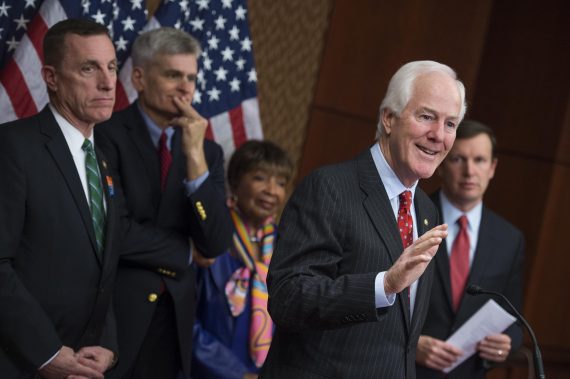
Senate Majority Whip John Cornyn, R-Texas, speaks in favor of mental health reform legislation on Monday. Also appearing are, from left, Rep. Tim Murphy, R-Pa., Sen. Bill Cassidy, R-La., Rep. Eddie Bernice Johnson, D-Texas, and Sen. Chris Murphy, D-Conn.
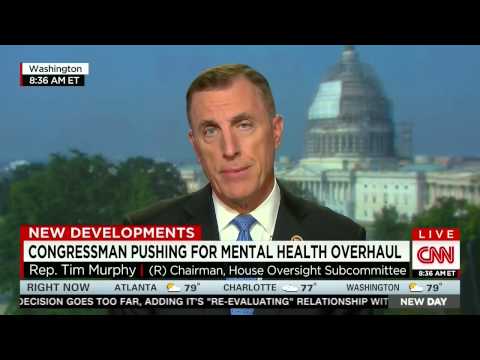
(12-13-16) Shortly before 3 p.m. today, President Barack Obama will sign the 21st Century Cures Act, which includes two important mental health bills, including the Helping Families in Mental Health Crisis Act that Rep. Tim Murphy (R-Pa.) tenaciously pushed for nearly four years.
Two years ago, I began a year-end tradition of naming individuals or groups who I believe had the most impact in mental health during the year. Rep. Murphy was my primary pick in 2014 even though Democrats successfully blocked his initial efforts to get his bill passed. As I’ve written before, he was relentless and should be proud and much credited today at the White House signing.
But he didn’t get his bill to the president’s desk today alone and I am selecting three other key players this year as my choices for the most impactful mental health warriors of 2016. They are Senators John Cornyn, (R.-Tx.) Chris Murphy (D-Conn.) and Bill Cassidy (R.-La.).
It was Chris Murphy and Dr. Bill Cassidy who initially introduced a companion bill to Tim Murphy’s in the Senate. They held a Senate Mental Health Summit to educate their colleagues and worked on compromise language that won their bill widespread support. Bipartisan support is not enough, however, in Congress to get a bill moving through the political system. Because both Murphy, who was elected in 2013, and Cassidy, who moved from the House to the Senate in the 2014 elections, lacked seniority, it would have been difficult for them to get their legislation out of committee. Undaunted, they were able to persuade Sen. Lamar Alexander (R. Tenn.), the powerful chair of the Senate Health, Education, Labor and Pensions Committee (HELP), to back them.
Even with Alexander’s help, the Murphy/Cassidy bill would have had difficulty if Sen. Cornyn, the Senate Majority Whip, had not made mental health reform one of his chief priorities. He had simultaneously introduced his own mental health bill, the Mental Health Safe Communities Act, in the Senate Judiciary Committee.