(10-16-17) Public outrage about how Americans with mental illnesses were treated inside state mental hospitals helped spark de-institutionalization.
So where is that anger and fury now when it comes to abuses of Americans with mental illnesses currently being warehoused in our jails and prisons?
This week, the Chicago Sun Times newspaper reported:
“Thousands of (Illinois state) prisoners are experiencing the symptoms of untreated or inadequately treated mental illness, including paranoia, hallucinations, anger, withdrawal, confusion, agitation, anxiety, depression, self-harm and suicidal ideation…To allow one human being unnecessarily to suffer these symptoms is unacceptable. To allow thousands to suffer is a moral and legal catastrophe.”
When I spent a year inside the U.S. Penitentiary in Leavenworth, Kansas, reporting for my book, The Hot House, the federal Bureau of Prisons set the highest standard for professionalism.
But an Office of Inspector General report released earlier this year reveals our federal prison system, which houses 148,227 prisoners in 122 institutions, has become one of the most abusive and neglectful in its handling of inmates with serious mental illnesses.
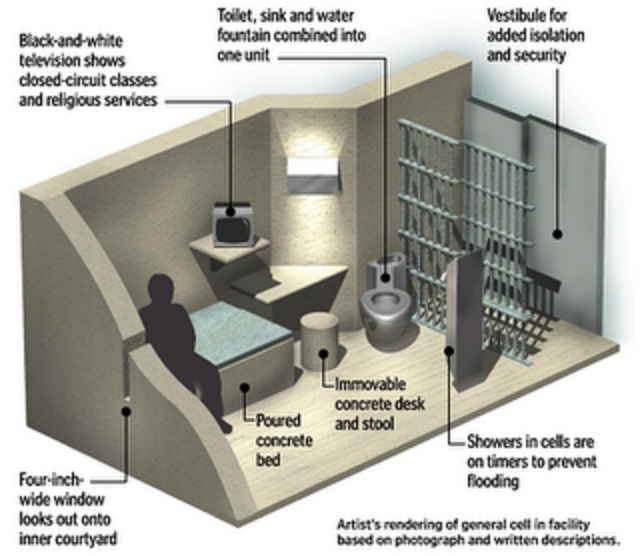
Among the most damning findings is how prisoners with serious mental illnesses are being held in complete isolation not for days, weeks, or even months, but for years. That’s right: isolation for as long as six years!
The Office of Inspector General found that on average, BOP prisoners with serious mental illnesses were confined about 896 consecutive days, or about 29 months, in so-called “special management units (SMUs)” between 2008 and 2015. Incredibly, 13% of these inmates with serious mental illness were released directly into the community after spending an average of 29 consecutive months in isolation cells.
Meanwhile, the BOP insists it does not place a single prisoner with mental illness or any other inmate in solitary confinement.
This is because the BOP refuses to use the word solitary confinement. Instead, it calls it “single celling” – a wonderful euphemism as pointed out in a Washington Post editorial entitled Solitary confinement is torture. Will the Bureau of Prisons finally stop using it?
“You have no contact, you don’t speak to anybody, and it’s a form of torture on some level,” a BOP psychologist quietly acknowledged to OIG investigators.