Solitary film follows inmates and officers at Virginia’s Red Onion prison
(10-6-16) I’m excited to be participating tomorrow (Friday) in a panel discussion about solitary confinement in America’s jails and prisons.
Entitled: “Unlocking Prison: A Case Study,” the discussion will happen at the National Press Club (13th Floor) from 11:15 AM – 12:45 PM, as part of Double Exposure, the Investigative Film Festival and Symposium being held in Washington D.C.
This is the second year for the three day festival that begins today (Thursday) and ends Saturday, October 8, 2016.
The Double Exposure festival is unique because it combines investigative journalism with the visual arts by featuring the work of investigative journalists who work on films and in other visual forms. The line up of films this year is truly first-rate. They range from an investigation of elephant hunting for ivory to a profile of the banker who leaked documents to WikiLeaks exposing secret bank accounts and tax havens to Wall Street shenanigans involving pyramid schemes,
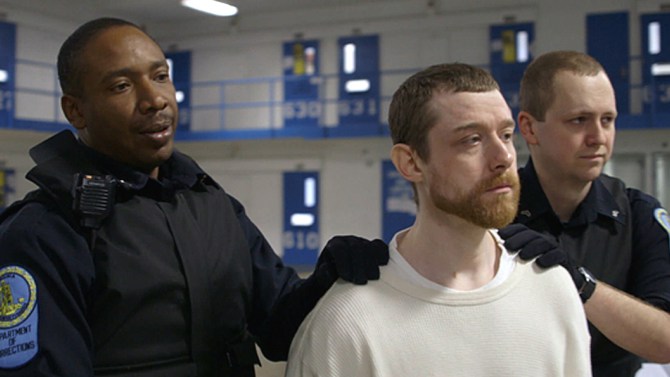
Our panel discussion is being held in conjunction with the showing of a dramatic documentary called SOLITARY, a film made by Kristi Jacobson who spent a year filming the lives of guards and inmates at Red Onion State Prison in southern Virginia. Here is a snippet about the film from a Nick Schager review in Variety.
There’s little hope, but considerable insight, found in “Solitary,” Kristi Jacobson’s documentary about Wise County, Virginia’s Red Onion State Prison, a supermax facility where convicts are holed up for 23 hours a day in separate 8′-by-10′ cells. Shot over the course of a year, the film presents an unfiltered insider’s view of their colorless day-to-days, which are largely spent trying to stave off madness…
“Solitary” concentrates on a handful of Red Onion’s inhabitants, all of them locked away for serious crimes and resigned to spending the rest of their lives behind bars. They are, by and large, well-spoken and introspective, the latter born from the fact that their time is mostly spent by themselves, with only minimal contact with guards — and chats with other inmates through cells’ air vents — to mitigate their crushing seclusion.Click to continue…