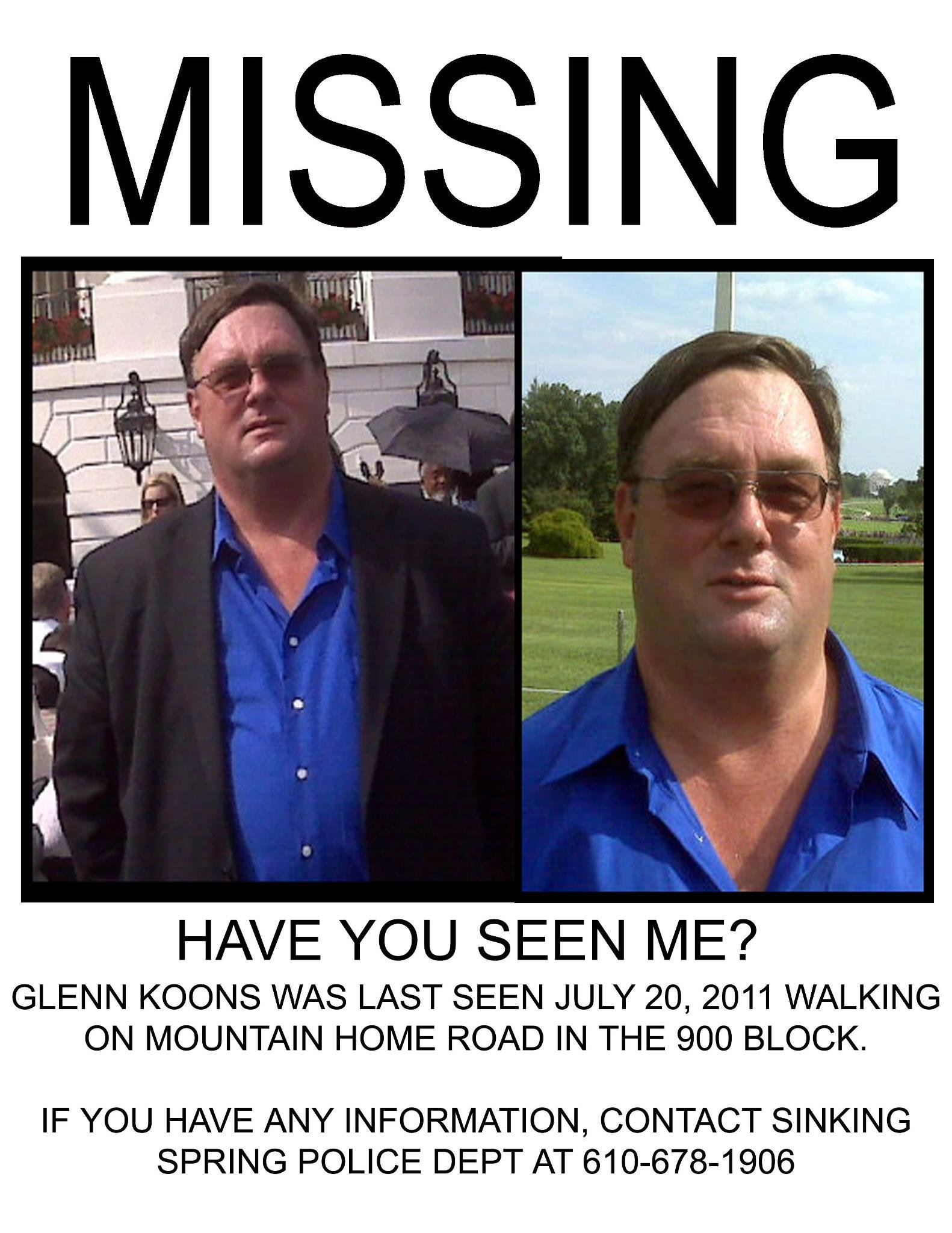
FROM MY FILES FRIDAY: Two years ago, I published a blog about Glenn Koons, a well-known peer specialist and advocate in Pennsylvania who had died after vanishing for several days. Authorities later said there was no foul play and his death was accidental. As a tribute, the Mental Health Association in Pennsylvania set up a scholarship in his name. Unfortunately, no one was ever able to determine why Glenn vanished before he died. Some speculated that he had become depressed because of a recent relapse. He had been held up as a recovery model and possibly thought he had failed. I am not certain what happened in his case, but no one should ever feel badly about having a relapse. It can happen. I am reprinting this blog to help keep Glenn’s memory alive. He was an inspiration to others. His passing also is a reminder that we need to be vigilant when it comes to providing services and support to individuals with mental disorders, including those who are in recovery.
Death of an Advocate Sept. 19 2011
I first met Glenn Koons when I was invited to speak at a luncheon in Montgomery County, Pa., being hosted by the National Alliance on Mental Illness. It was one of the first speeches that I delivered after publication of my book and before my talk, NAMI Board Member Carol Caruso introduced me to Glenn. I was immediately struck by his easy-going manner. Carol bragged that Glenn was one of the first NAMI trained Peer-to-Peer mentors in the entire nation. Glenn and I spoke for several minutes and I was impressed by his thoughtfulness and enthusiasm.