nbsp;
(6-27-22) Ken Burn’s Hiding In Plain Sight documentary about youth and mental illness premiers tonight on your local PBS station. 9 pm. EST and 8 CST.
Bestselling Author and Mental Health Advocate
nbsp;
(6-27-22) Ken Burn’s Hiding In Plain Sight documentary about youth and mental illness premiers tonight on your local PBS station. 9 pm. EST and 8 CST.
(6-23-22) Kevin and I were invited to the White House yesterday for an advance screening of the Ken Burn’s PBS documentary, Hiding in Plain Sight: Youth Mental Illness.
The four hour documentary will be shown in two segments and will premiere on June 27 and 28 on PBS. Check your local listings. Both of us were interviewed for the film, which follows the mental health journeys of more than 20 young Americans, and features interviews with their parents, teachers, friends, health care providers, and mental health experts.
Dr. Jill Biden called the young people interviewed in the documentary “courageous.”
It’s been two years since film makers Erik Ewers and Christopher Loren Ewers, along with producer Julie Coffman, showed up at my office to interview us. At the time, the brothers were still deciding what direction a film about such a vast subject as mental illness would take. What could they do that hadn’t already been done? It wasn’t long before they zeroed in on the plight of young people. (Even though Kevin is older than most of the other participants, his first mental break happened when he was in his twenties.)
It proved to be the right choice.Click to continue…

(6-19-22)
Published in THE WASHINGTON POST on Sunday, June 22, 2014
By Pete Earley
Father’s Day found me with a man who often doesn’t remember who I am, although we have spent much of his 93 years together. My father has dementia.
Five years ago, I persuaded my parents to move from Spearfish, S.D., into a second house that my wife and I own that doubles as my office. Leaving a community where they were well-established was difficult. But they enjoyed seeing grandchildren, spent Saturdays at garage sales and played Upwords with me at lunch time. It was good.
I first noticed little things. Forgetfulness, confusing names. It’s part of aging, I thought.
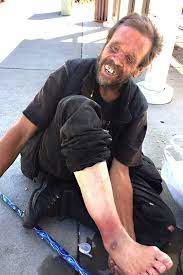 This is James Mark Rippee. He has lived on the streets of Vacaville, California, for fifteen years. He has schizophrenia. Thirty-five years ago, Mark Rippee suffered a motorcycle accident that left him blind, with head trauma, brain loss, and a shattered right leg that is kept in place with a metal rod. He has endured more than sixty surgeries. He is beaten and robbed regularly. (Photo courtesy of Author Ron Powers)
(6-13-22) Guest post today by Linda Rippee Privatte.
I have been a caregiver on the streets of my hometown of Vacaville, California, to my brother, Mark, who is disabled, blind and has a serious brain disorder with anosognosia (lack of insight). He has been left untreated by the system and homeless for 14 years now.
Lately I have been wondering what title I would be given. That is if our U.S. mental health system even acknowledged and valued the family members who go to the streets to care for their homeless untreated seriously mentally ill (SMI/SBD) loved ones?
I have thought long and hard about the many things I try to be to my brother. Treatment will never be in his reach while the sickness in his brain tells him to say “no” to all offers of help. Lack of insight further complicates care given out on the streets.
I take him water, food and clothing, and each time he has nothing with him again. I show him love and human kindness. I remind him about family memories and make him laugh. I hold him when he is sobbing with delusions. I try to calm him when he is raging in psychosis. I am his substitute for an In-Home Supportive Services Caregiver, nurse, therapist, and social worker.
My responsibility goes even further as I am also expected to answer to my community about their expectations of removing my brother from their streets all the while I am out on those streets caring for him.
Rather than reform HIPAA, LPS, and mental health laws, mental health professionals do not want to acknowledge that they intentionally send the SMI/SBD to U.S. streets. We have advocated for my brother, Mark, unsuccessfully for 34 years due to California legal blockades. He has not had mental health treatment or services in more than 3 decades. The sad truth is that there is no true mental health system in the United States for those with serious brain disorders.
Rather than acknowledge this, mental health professionals and legislators will blame and shame the families.
Through HIPAA, they will blindfold, silence, and handcuff our hands, and still expect us to do the heavy lifting for them. Our family has been my brother’s mental health care system. I am his lifeline. If a loved one of yours develops a serious brain disorder you will become their lifeline too. If the title has not yet been claimed… I will boldly do so now.
I am an American Curbside Caregiver, and I am not the only one!

Image by Gordon Johnson from Pixabay
(5-31-22) Norman Ornstein lost his son to mental illness. Judge Steven Leifman, a hero in my book CRAZY: A Father’s Search Through America’s Mental Illness, has become a leading, national expert on how to stop the inappropriate incarceration of Americans with serious mental illnesses.
If we stopped using prisons to warehouse psychiatric patients, we could heal people and save tax dollars.
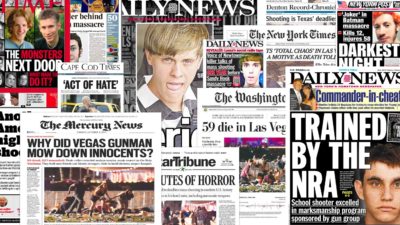
(5-26-22) The moment I heard about the 18 year-old shooter in Texas, I knew mental illness would be blamed.
This always is what happens and Texas Gov. Greg Abbot was quick to prove me true. (See: Texas Gov. Greg Abbott blames mass shootings on mental-health concerns, despite noting that there’s no evidence that the Texas-school gunman had mental illness)
Yes, there have been horrific incidents caused by a shooter who has been diagnosed with a serious mental illness and in many of those incidents, the shooter’s parents had tried to get their child psychiatric help without success.
But studies show the most common killers are not being driven by a mental illness – not hearing voices or having wild mood swings. Instead, they are motivated by racism, hate, and feelings of revenge or a desire to be famous. Here’s a list of reasons published in a major study of mass shootings.
Whatever the style of killing, the motives for mass murder are organized aroundfive primary themes that can occur singly or in combination (Fox & Levin, 1998).Specifically,1. Revenge (e.g., a deeply disgruntled individual seeks payback for a host of fail-ures in career, school, or personal life);2. Power (e.g., a “pseudo-commando” style massacre perpetrated by some mar-ginalized individual attempting to wage a personal war against society);3. Loyalty (e.g., a devoted husband/father kills his entire family and then himselfto spare them all from a miserable existence on earth and to reunite them in thehereafter);4. Terror (e.g., a political dissident destroys government property, with severalvictims killed as “collateral damage,” to send a strong message to those inpower); and5. Profit (e.g., a gunman executes the customers and employees at a retail store toeliminate all witnesses to a robbery
I was pleased to hear Sen. Chris Murphy, (D-Conn.), who helped push through one of the most important mental health laws in recent years, knock down Gov. Abbott’s straw man.
“Spare me the bullshit about mental illness. We don’t have any more mental illness than any other country in the world. You cannot explain this through a prism of mental illness, because we don’t — we’re not an outlier on mental illness. We’re an outlier when it comes to access to firearms and the ability of criminals and very sick people to get their hands on firearms. That’s what makes America different,” Sen. Murphy said.
Thank you Sen. Murphy for speaking out against the further stigmatization of those with diagnosed mental illnesses. They have enough trauma in their lives without being blamed for mass murders.



Pete Earley is the bestselling author of such books as The Hot House and Crazy. When he is not spending time with his family, he tours the globe advocating for mental health reform.
As a former reporter for The Washington Post, Pete uses his journalistic background to take a fair-minded approach to the story all while weaving an interesting tale for the reader.