Federal Agency That Delivers Mental Health Services Doesn’t Believe Serious Mental Illnesses Are Real! Huh?

samhsa-award-stars

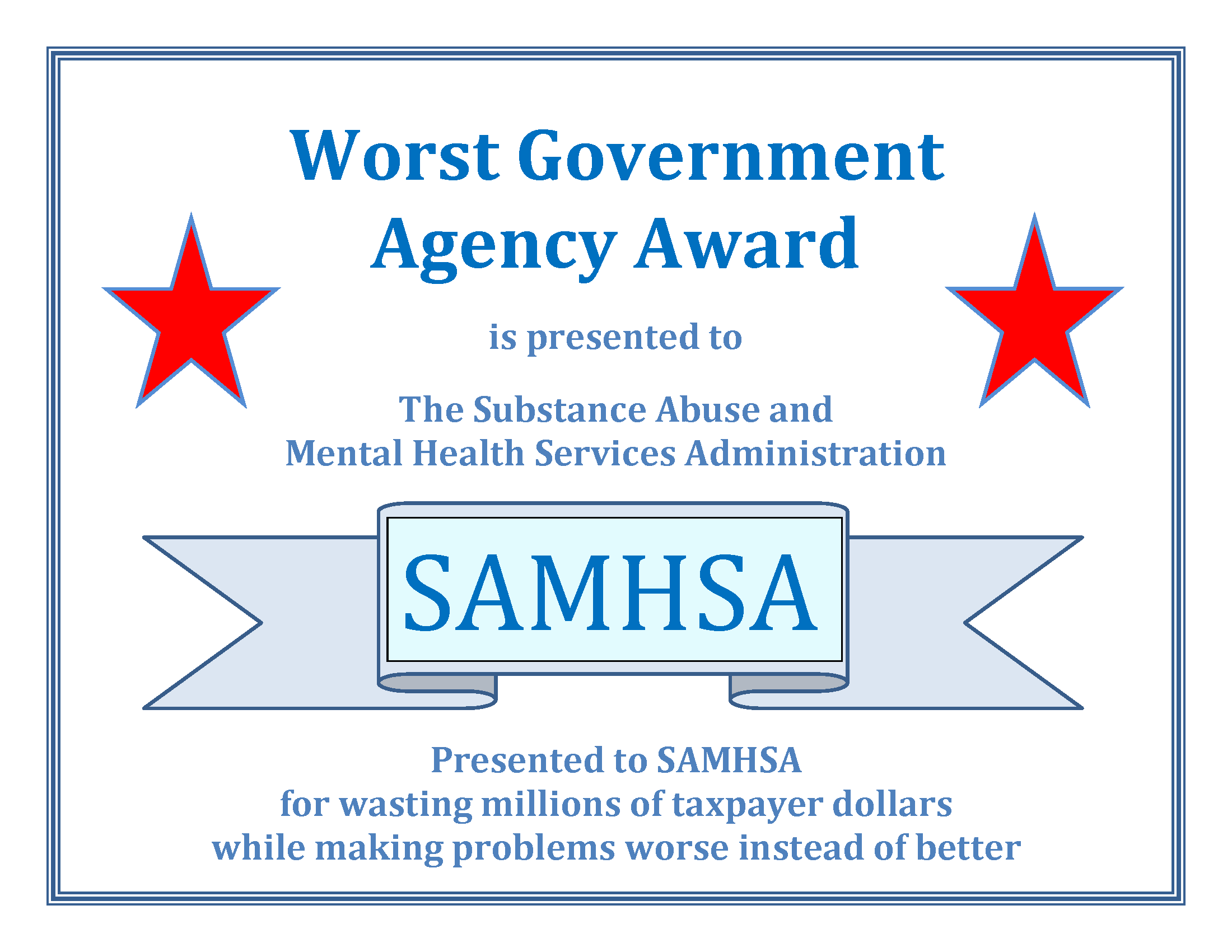
(4-22-16) The federal agency responsible for running mental health services in our country is openly hostile toward the use of psychiatric medicine, doesn’t focus on helping the seriously mentally ill, and questions whether bipolar disorder and schizophrenia are even real, arguing that psychosis is just a “different way of thinking for someone experiencing stress.”

That scathing charge was levied earlier this week by Dr. Elinoe F. Mccance-Katz, who spent two years as the Substance Abuse and Mental Health Services Administration’s first Chief Medical Officer. In an article published in the Psychiatric Times, Dr. Mccance-Katz writes that SAMHSA’s Center for Mental Health Services, which administers federal mental health programs, ignores serious mental illnesses and evidence based practices in favor of feel-good recovery programs that are politically popular but do little to help persons diagnosed with debilitating disorders.

Dr. Mccance-Katz’s broadside against her former employer might surprise some at SAMHSA because she resigned last year after being highly praised by its director.

But her charges echo repeated complaints that mental health advocate Dr. E. Fuller Torrey has been making for years. “SAMHSA knows nothing about severe mental illness and, indeed, is not even certain that it believes such illnesses exist,” Torrey wrote in a 2013 National Review article. He pointed out that SAMHSA’s three year plan at the time was 41,804 words in length but did not include “a single mention of schizophrenia, schizoaffective disorder, bipolar disorder, autism, or obsessive-compulsive disorder.” He also noted that SAMHSA didn’t employe a single psychiatrist.


Click to continue…

Virginia Officials Sat On Reports About Inmate’s Death Until After State Legislators Had Gone Home

empty room

EMPTY VIRGINIA LEGISLATIVE CHAMBER

Did the office of Virginia Attorney General Mark Herring and the Virginia Department of Behavioral Health and Developmental Services (DBHDS) intentionally delay releasing an embarrassing report until the state’s elected legislators had gone home?

The timing of the release of the report and the meeting schedule of Virginia’s General Assembly, which only convenes three months per year, suggests so.

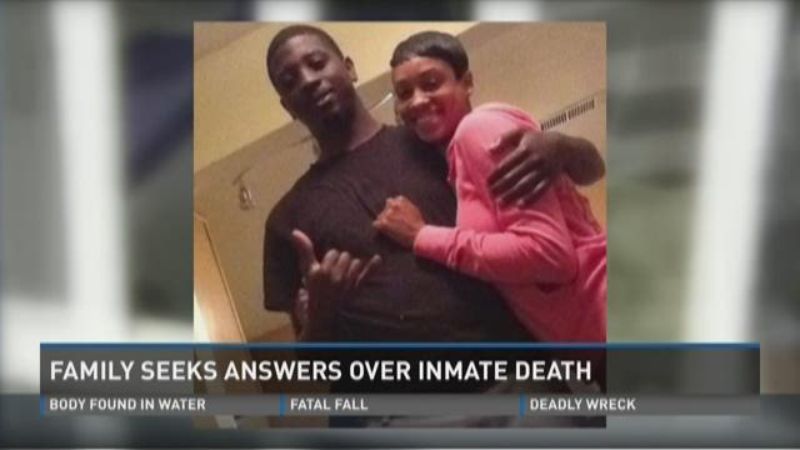
I’ve already published several blogs about Jamycheal Mitchell, the 24 year-old African American inmate with mental illness who suffered a heart attack last August after starving himself while waiting for a bed in a state hospital. His lifeless body was found covered with feces in a cell at the Hampton Roads Regional jail where he’d been imprisoned after stealing $5 worth of snacks from a convenience store. Mitchell had spent 101 days waiting to be transferred and had weighed 144 pounds when he’d died — 34 pounds less than when he had been booked healthy into jail.

Seven months after Mitchell’s death, I began filing freedom of information requests and questioning why the DBHDS, which oversees state hospitals in Virginia, was taking so long to release a report that would explain why Mitchell was allowed to literally starve himself to death. I also questioned why the state Office of Inspector General had not released its investigation since the results of those IG reports historically had been made public about four months after a death.

In response, a spokesperson for the Inspector General’s office explained that it couldn’t finish its probe until the DBHDS released its inquiry. The DBHDS simply said it was moving as quickly as it could. On March 21, the DBHDS finally released its findings and on April 5, the state IG issued its report.

That’s when I noticed a curious, one line statement in the 16-page IG review. It stated that the DBHDS had actually finished its investigation into Mitchell’s death in December 2015 — four months after Mitchell’s death in August.

That’s right. Four months after he was found in his cell that report was done. Why wasn’t it immediately released?

Click to continue…

A Greasy News Clipping Touched His Life: Why We Need To Speak Out

words

 From My Files Friday (4-15-16)

A reader wrote to me about her adult son, who had been diagnosed with bipolar disorder, but didn’t believe he was ill. I wrote her an encouraging note.  More than a year later, she sent me this note and gave me permission to share it with you.
 Dear Pete 
     I just want to tell you how, I believe, that you helped to get my son into treatment that he has steadfastly resisted for these many years. I think I told you of the difficult time I have had to get him to cooperate and to take his medicine correctly for his bi-polar. Even after he became diabetic, he was just as much in denial and un-cooperative.
      I was paying for his apartment and knew he was not taking care of himself. However, he would refuse all of my offers to help him wash his clothes, clean his apartment or any other assistance. His siblings were, also, turned down. He withdrew from all of us.    

Click to continue…

Patty Duke’s Kind Telephone Call When I Needed Reassurance and Hope – Plus I Visit Indiana State in Terre Haute

pattyduke

(4-11-16) Shortly before the publication of my book, CRAZY: A Father’s Search Through America’s Mental Health Madness, my editor told me that he had mailed an advance copy to Patty Duke, who was living quietly in Coeur d’Alene, Idaho.

“But don’t get your hopes up,” he warned.

Every time a new book about mental illness was about to be published, editors would send her a copy and ask for a favorable comment to help sell the book. That had been happening ever since Duke published her best-selling book “A Brilliant Madness: Living with Manic Depressive Illness” in 1992, co-authored with Gloria Hochman.

Click to continue…

Long Awaited Report Blames System Rather Than Individuals In Starvation Death of Jamycheal Mitchell

mitchell (1)

(4-6-16) A state agency in Virginia investigating the death of a 24 year-old prisoner with mental illness, whose feces covered body was discovered in his isolation cell August 19, 2015, reported yesterday that records kept by medical personnel who were responsible for watching him were “incomplete and inconsistent.”

But the long anticipated report does not assess blame on any individual. Rather it makes five recommendations about system changes that its authors claim could prevent future similar tragedies.

The 16-page report’s recommendations are bound to frustrate and disappoint the family of Jamycheal Mitchell who have asked for details that would explain what happened to Mitchell during the 101 days that he was languishing in jail waiting to be sent to Eastern State Hospital for a mental evaluation and competency restoration.

Mitchell died of “probable cardiac arrhythmia accompanying wasting syndrome of unknown etiology,” according to Donna Price, an administrator for the Medical Examiner’s Office in Norfolk. Wasting syndrome is defined as a profound loss of weight, greater than 10 percent of a person’s original body weight. Put simply, he had a heart attack caused by starvation.

The IG report stated that its investigators decided to not investigate who might have been responsible for Mitchell’s death. Nor did the IG investigate “every element of prior investigations.” (Jail officials already had conducted their own internal, confidential investigation and found themselves innocent of wrongdoing. State mental health officials released a report last month in which they acknowledged clerical errors were made.)

Instead, the IG said it focused on system errors rather than human ones. Just the same, the report contained several troubling revelations, most notably about the for-profit company NAPHCARE which was responsible for providing medical care to Mitchell in the jail but has since been replaced.Click to continue…

Head Jailer Says His People Are Not To Blame For Mentally Ill Prisoner Starving To Death

notmyfault

(3-4-16) A physically healthy 24 year-old man is put in jail for taking $5 worth of snack food from a convenience store. Jailers know that he has a serious mental illness. Yet for 101 days, he never leaves his cell. He never showers. He often is covered with his own feces and urine is found on the floor of his isolation cell. His weight drops NOT 34 pounds, as has been previously reported, but 46 pounds, from 190 pounds to 144 pounds. An autopsy shows he suffered a heart attack brought on by him starving himself to death.

Yet, Lt. Col. Eugene Taylor III, assistant superintendent of Hampton Roads Regional Jail in Portsmouth, said last week that the jail had conducted a thorough investigation and found no evidence of any wrongdoing or mishandling of this prisoner’s case by his staff.

“To us, it’s an unbelievable tragedy, but it was not a circumstance where it could have been prevented by the Hampton Roads Regional Jail,” Taylor was quoted as saying by reporter Sarah Kleiner in a story published Friday by the Richmond Times-Dispatch.

Taylor said the jail would not make its internal investigation — that cleared itself — public, but he defended the jail’s treatment of Jamycheal Mitchell, whose body was found dead in his cell last August. Taylor told Kleiner that Mitchell was offered a shower every third day but never accepted it. He had a chance to spend an hour five days a week in the gym, playing basketball, running or interacting with other inmates but he opted to stay alone in the cell.

Taylor also revealed that Mitchell was held in a cell that was monitored by an officer every half hour and that medical personnel in the jail were required to check on him daily. In any given day, Mitchell was supposed to have been observed 49 times by correctional officers or nurses.

49 times.

But Taylor said no red flags were raised and no one on his staff realized that Mitchell was starving himself because food trays that were passed into the cell each day were returned empty. Taylor also questioned if Mitchell actually “starved to death” in jail.

“We have no indication that he lost so much weight that his heart stopped,” Taylor said. The jailer did not explain why he disagreed with a state medical examiner’s autopsy that found Mitchell died of “probable cardiac arrhythmia accompanying wasting syndrome of unknown etiology.” Wasting syndrome is when a person loses more than 10 percent of their weight in a short period from not eating. Taylor, who does not have a medical degree, said he didn’t believe that ruling.

At the risk of appearing cruel, I’d like to ask Taylor if he would have been satisfied with the explanation that he gave to the Richmond paper if Mitchell would have been his child. If his son had been held in a jail cell 101 days without ever taking a shower or coming out to exercise and had lost 46 pounds would he believe that his son’s death in jail “was not a circumstance where it could have been prevented”?

Now here is another sobering thought.

No one in the jail was disciplined. No one was fired. There were no reprimands put into anyone’s file and no policies have been changed. Meanwhile, Taylor remains in charge of 244 other inmates who have diagnosed mental illnesses.

If Taylor really believes that his employees aren’t culpable and there is no need for the jail to change any of its practices, then why will he not release the results of his internal investigation that cleared everyone?

Click to continue…