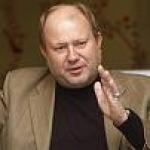
 I am sorry to announce that my good friend, Sergei Tretyakov, the subject of my book, Comrade J: The Untold Secrets of Russia’s Master Spy in America After the End of the Cold War, died unexpectedly on June 13th in his home with his wife, Helen.
Sergei was 53.
Helen asked those of us who were his friends to not immediately reveal his death until an autopsy could be performed under the supervision of the FBI. She was concerned that Sergei’s former colleagues in Russia’s SVR, which replaced the KGB as Russia’s foreign intelligence service, might attempt to use his unexpected death for propaganda purposes.
 I was told that the autopsy shows no evidence of foul play, according to an FBI official who spoke to me off-the-record. Helen told me that her husband died from massive cardiac arrest. The Associated Press is reporting that a final autospy report will be released in late July.
 In keeping with Russian Orthodox religious traditions, a private funeral was held on the third day after his death. On the ninth day, more than 200 people attended a private celebration of his life. The guests included close friends, neighbors and persons who had worked with him in the United States.
Sergei was called “the most important spy for the U.S. since the collapse of the Soviet Union” by an FBI official in my book. Unfortunately, because much of what he said is still being used by U. S. counter-intelligence officers, it will be years before the true extent of his contribution can be made public — if ever.
Sergei Olegovich Tretyakov was born Oct. 5, 1956 in Moscow and rose quickly through the ranks to become the second-in-command of the KGB in New York City between 1995 to 2000. As such, he oversaw all Russian spy operations against the US and its allies in New York City and within the United Nations.
When he defected on Oct. 11, 2000, with Helen and their daughter, Ksenia, the U.S. government took the family into hiding and during the next five years, they lived largely “off the grid.” It wasn’t until Comrade J was published and Sergei went on a book tour that his work both as a high-ranking KGB/SVR officer and U.S. operative was made public. It is thought that he spent at least three years working as a U.S. agent while he was still an SVR colonel in New York.
Sergei, Helen and their daughter became U.S. citizens after they defected and although some federal officials feared for their safety, Sergei lived openly under his own name without protection – although when he traveled overseas, he always had an FBI escort. Sergei was convinced that his U.S. citizenship protected him from the SVR, even though he continued to publicly criticize his former colleagues, especially President Vladimir Putin.
The recent arrests of eleven Russian “illegals” on June 28th by the FBI thrust Sergei’s name into the news once again. The fact that he was in charge of all covert operations in New York City when several of the illegals entered the country suggested that he was aware of their operations and quickly led to speculation that he had tipped-off the FBI about the ring.
However, on Thursday, a informed source told me that Sergei was not involved in the case. Sergei told U.S. officials when he was debriefed about Russian “illegal” operations, but he did not know the individuals who later were arrested, my source said.
I became close friends with Sergei and Helen while working on my book about their life and his career. They insisted that I stay with them in their home and during our weeks together, I witnessed first-hand how much he and Helen loved each other, their devotion to their daughter, and love for their new homeland. I also was delighted to discover that Helen was a gourmet cook!
Sergei dispelled many of the Hollywood stereotypes of a Russian agent. He was well-educated, fluent in three languages, quick-witted, personable and able to laugh at his own mistakes when he didn’t understand an American tradition or slang.
He proved to be a tireless worker when I interviewed him. He would speak for ten hours straight, often pacing back-and-forth, in the family room of his house as we discussed his career. He had a fabulous memory that he had sharpened as a KGB/SVR officer and he refused to speculate or exaggerate when he discussed KGB/SVR operations. He knew his enemies in Russia would use the slightest mistake to attack his credibility so he was scrupulous in what he said and the charges that he made.
Having written bestselling books about two American traitors, including John Walker Jr., and his Family of Spies,and Aldrich Ames, the CIA turncoat, I was struck at how different Sergei was from U.S. traitors. Walker and Ames were motivated by greed and money. Sergei did not need money. Upon his return to Russia from New York, he was due to be promoted to the rank of general, which would have guaranteed him a cushy retirement. He had assets in Moscow worth more than two million U.S. dollars – money that was stripped from him after he defected.
It was clear to me early on that he did not swtich sides for financial gain, but rather because he had lost faith in Russian leaders and he wanted a better life for his young daughter. He liked to say that he did not betray his homeland. Rather he and other ordinary citizens in Russia had been betrayed by Presidents Boris Yeltsin and Putin after the Soviet Union collapsed.
Neither Walker or Ames ever wanted to become Russian citizens, but Sergei and his family relished their U.S. citizenship. Sergei often told me that Americans were naive because they took freedoms for granted and did not understand how unique our lives here are compared to life in an oppressive nation, such as Russia whose leaders often silence their critics, especially those in the media, with a bullet.
One reason why I believe Sergei did not know about the 11 Russians who were arrested as illegals is because he did not hold back during our interviews in identifying persons whom he claimed were Russian spies.
Among the individuals identified in my book were a former member of the Canadian Parliament, a top-ranking verification expert at the International Atomic Energy Agency, and a former U.N. official who Sergei helped place in the Oil For Food Program. That UN official diverted a half billion US dollars of UN humanitarian relief to Moscow under both the Yeltsin and Putin administrations and was rewarded by Putin for the thefts. Sergei was disgusted by that thievery and said so.
In our interviews, he talked repeatedly about how Yeltsin had failed the Russian people by becoming a drunken stumble-bum who allowed Oligarchs to engorge themselves by stealing government property. He had similar harsh criticisms for Putin, whom Sergei described as an insignificant KGB officer who later as president surrounded himself with thugs. Their primary goal has been to enrich themselves, he charged.
Sergei asked me to write his story at the suggestion of a director in the British intelligence service. They were having dinner when my name was mentioned because the director had read my book about Aldrich Ames and had admired it. Sergei waived his rights to any advance money from the publisher and received less than $10,000 from the book’s sales even though it was a New York Times bestseller. Money was not his motive in telling his story.
Instead, he hoped to sound a wake-up call about Russia. He was fond of saying that the Cold War never ended. Before the collapse of the Soviet Union, the KGB had a list of three main adversaries: (1.) The United States (2.) NATO and (3.) China. After the KGB was disbanded and the SVR was formed, Sergei said a new edict came down announcing that the SVR had three main targets: (1.) The United States (2.) NATO and (3.) China.
“What changed?” he asked, laughing.
Those of us who were his friends will miss his sense of humor, his knowledge about Russia and KGB/SVR spy-craft, and his almost child-like love for his new country.
I was honored to write his life story and to call him my friend.
I will miss not hearing his voice when I call.

 About the author:


I'll look forward to reading your book on Mr. Tretyakov.
Dear Mr. Earley,
Thanks for all your time and effort taken to write a book about
Sergei Tretyakov. I would enjoy purchasing a signed autographed
copy from you. In truth, I was shocked when I read in the newspaper
(here in Florida) that Sergei had died–and in further disbelief that
he was so famous (upon viewing the numerous Internet postings
on him.” I knew Sergei under completely different circumstances and cared for and miss the man, himself–very much–regardless
of his fame or history. Hopefully through your book I will learn
more about him to make up for years of losing touch with him.
I would like to meet his wife again (she does not live that far
from me where I presently take care of my 94 year old father since
his stroke, in Florida–except I don’t drive.) Sorry that your
Dateline interview was cut from public viewing. Best wishes to
you, Victoria Spain
Nice for you to get the scoop on the Associated Press, WTOP and the Washington Post. Now if only they would reference your site and blog in their articles.
Hi all, Pete would greatly appreciate it if you are writing a story on this or have read a story on this to let the author know to cite this post! It was reported here first. Please leave comments or send emails to help correct this.
Worthy, dignified he has been obviously. RIP. Shouldn't have travelled throughout the country and criticized openly and before public without precaution. Litvinenko was not very cautious, too, and contacted many people…
Russians would never dare to do anything to Sergei! If ANYTHING happened to my husband because of Russians, Russia would be excluded from the international community. Sergei was too well known. This would be much worse that Mr. Litvinenko’s scandal.
My husband died of a heart attack.
How about your family getting excluded from international community if something happened to someone because your traitorous husband?
As a Navy veteran, I find your comment repugnant.
Only trouble is, Mrs. T, is that the official autopsy report stated that he “choked on meat”.
I think that what Mr. Tretyakov did is not ethical…
He is a traitor just like Robert Hanssen…
Да, кстати, Дима Кеглев… Вы думаете, что Вам и Вашей семье ничего не угрожает? Подумайте!
КГБ, ЦРУ? И здесь, и там серьёзные ребята…
Наилучшие пожелания!
Лена
а чего мне и моей семье бояться? я секреты не продаю… ни чьи ни свои.. ни совей компаании.. а мой мой отец военный – никого не предал, служил честно.. двадцать пять лет армии отдал.. я думаю, наоборот, меня и мою семью уважают за честность и профессионализм и в ЦРУ и КГБ….
I'd like to hear you elaborate on this Keglevdima
Sure, as a professional intelligence officer he cannot disclose his sources of information and agents who he worked with… what he did is unethical… he is a traitor who sold government secrets for money. I have no respect for people like Tretyakov and Robert Hanssen.
Дима! Неужели Вы настолько слепы, что не понимаете что происходит в России?! Это же геноцид российского народа! Откройте Ваши глаза!
Мой муж сделал все что мог, и не за деньги! Он не мог больше служить этим преступникам и казнокрадам.
Я не обижаюсь на Вашу грубость, мне просто жаль Вас. Но я рада и горжусь, что многие Россияне уважают моего мужа.
С сомнительным, увы, уважением,
Лена Третьякова
а почему тогда ваш друг Питер говорит, что сергей был самым высокооплачиваемым агентов в истории фбр? кто-то из вас врет… сотрудники цру тоже не согласны бывают с правильством США, но на другую сторону не беребегают, а просто уходит в отставку и занимаются бизнесом… сергей мог поступить также…
интересный у вашего мужа был ответ на геноцид русского народа – пошел к американцем и секреты им продал и товарищей по работе сдал всех с потрохами)))) к предателям во всех странах и народах отношение одно – презрение… и с этим клемом они живут всю жизнь….
Are you an American? Sounds to me as if you are bitter. I Knew Sergei and that man and his family risked their lives in order to help our Country. I have never met anyone who was so Proud to be an American…Everyone who knew him,Loved him……He will be missed. Traitor I don't think so.
As My Friend Sergei would say about ignorant people…”You area Complete Idiot” Don't speculate on things you don't know.
I do not need to know anything. I am looking at this case from ethical poin of view…
He is a traitor and there are no questions about it. He broke a code of professional ethics. Former agents never reveal secrets. These are not their secrets; these secrets belong to the government. What he did is called state treason, if he did not like something about the government and Putin, he should have resided from intelligence service. People like Tretyakov, Hannsen, Walker and others are despised.
All systems are not equal. Communism is Godless and created by Jewish radicals to overthrow the Czar. The Orthodox Church was infiltrated from the inside. JPII was shot by a Russian agent. Stalin killed millions. World domination is still the goal “by hook or by crook”. Therefore, Tretyakov is a hero and you are misguided or a double agent or both.
Keglevdima, if that is really his name, is probably just a puppet for the Russian Agency that he works for. To this date there are many people in the Russian Government that hate Sergei for telling the truth about the rampant corruption in that country. One of our country's most famous patriots Thomas Jefferson said “the tree of liberty must be watered by the blood of tyrants”. Sergei was one of the few great men who stood up to the tyrants that were robbing his people, then the Russian people, of life, liberty and the pursuit of happiness.
As a third generation American from Russian emigrants, my brothers and I were told countless times by my grandfather about where we came from and to “thank God you live in America”. The first thing my Grandfather did when he turned 18 was to sign up to fight for his new country in World War I. Was he a traitor to Russia? My father later fought for the US in World War II. He taught us of our Russian heritage but constantly reminded me and my brothers that we owe our lives and our futures to the freedom that this country has provided us. Was he a traitor to Russia as well?
I knew Sergei Tretyakov personally. I traveled with him on FBI lectures for almost two years lecturing by his side and often having dinners with him and his lovely wife Yelena and talking politics until the early hours of the following morning. Sergei was as great a critic of the incompetence he saw in the U.S. government as he was the corruption he saw in the Russian government. The one thing I always noted about Sergei was his honesty and consistency in applying the same rules to all which he examined. In openly criticizing what he saw wrong with U.S. he was exercising the same patriotism to advocate reform as he was when he defected and openly criticized the cruelty he witnessed in his former country.
Below are the words of condolence I sent to his family. People like Keglevdima may be incapable of being insightful and pragmatic enough to understand what Sergei did and why he did it but I am sure the vast majority of both Russians and Americans will respect him for having the courage to openly speak his mind and take action on issues that far too many were fearful to even mention in a whisper:
There are no words that I can offer to fill the shock and the void in our hearts for the loss of our great friend and my beloved brother Sergei.
There was a special connection I felt with him, in part because of our native heritage, in part because he was a brave soul who always spoke the truth no matter what the consequences and in part because we simply understood each other. He will always have my love, respect and admiration as one of those few great souls that you get the opportunity to meet in this world. Unfortunately we live today in a world filled with many heartless bureaucrats devoid of any soul. Sergei was a true personality, a true spirit, a man who lived by his own convictions and beliefs and did not compromise his integrity for any one or any thing. He was as my favorite President, Teddy Roosevelt, said in his poem “an uncommon man”. He will always be remembered by me and my son Max as such a man. Although he has passed his spirit will always live in our hearts.
With much love,
Brett Kingstone
Sergei´s Younger Brother and “Bloody Capitalist
Now how about
Now how about letting go of the jingoism and noting the obvious which is that Tretyakov is 1) a traitor to Russia and 2) a patriot to the US? Isn't that the typical pattern with all turncoats?
“Potato (toe)” “Potato (tahto)”. You say “swine”. I say “venizen”.
It is almost impossible to assess the character and career of the man
Sergei Tretyakov. He certainly worked against America for many years as
a career Gebist. He certainly was right to feel disgust about corruption in
Russia, but this existed also under the Soviets. In fact, it is said his own
mother bribed a doctor to overlook a heart problem which would have dis
qualified him from the KGB.
While as an American and former intelligence officer myself, I applaud
any and all Russian defectors, it is unclear to me how Tretyakov's de-
fection and later cooperation with our government helped Russia. I would
suggest that, had he all the assets suggested, he could have returned to
Russia and, after resigning, written and spoke and even run for office, to promote a better Russia. But having defected, an act which then made it impossible to return to Russia and not face consequences, once
the truth inevitably came out, he ended up helping America; he did not necessarily help his native country.
And, finally, unless I missed something, as I did not know the man, was
he also concerned about freedom and democracy and rule of law in Russia?
Just some thoughts,
Old Nick
New York
KeglevDima – просто гебешный хуесос.
Not liking Russian government is one thing, but to become a traitor? Oh well. I agree that Yeltsin was a shameful figure. Maybe Mr Tretyakov could have waited a little bit longer and given the new government a chance, or came back to Russia, or became an expat. All those cliches in the piece above about his loving family, his wife being a good cook, him being so concerned about Russia and so in love with American liberty, yet I fail to see how he helped anyone apart from himself and the Americans.
What world are you living in? This is reality and not “Grand Theft Auto”. This is godlessness versus a deteriorating system which Mr. T tried to preserve.
Alex, you are right.. there were lotsof opportunities for Tretyakov to help Russia &he U.S. without being a traitor and selling secrets…
These are the “bad guys” and not something off of Dr. Phil or Oprah. They make American street gangs look like Boy Scouts. Stalin killed millions. Recently, they poisoned the leader of the Ukraine and subverted and then retook proxy control. Take a deep breath of reality. Hannsen and Tretyakov were not “heads and tails” of the same coin.
пошел нахуй казел
This is really pretty funny. No-one is claiming Tretyakov is a traitor to America last time I checked.
The platitudes about the love of American liberty and concern for his daughter's future essentially sound like ex post facto justification. Probably more for himself than anyone else, if I guess correctly.
Brett Thank You so much for being able to put into words the feelings that me and my husband are experiencing. We knew Sergei for only 8 yrs and it was not long enough. We too consider him a family member and cannot believe he is gone…I Miss Him So Much….Paula Irvine aka “The pain in the A**”
1.Нові чутки про шпигунський скандал.
дізнався щe деталі про шпигунів, чутки такі: був проект в штатах, тривав кілька років
Складали списки російськоі агентури, багато хто засланий десятиріччя тому (до США, лише офіційно, з ссср в'їхало у 80-90-2000і майже міліон чи навіть два совків)
Подейкують що:
з початку 'згорів' хард драйв з списками російских агентів у ЦРУ чи ФБР, але Третяков мав копію на папері. Тоді його хату пограбували і списки зникли, але одна сторіка списків чомусь залишилася. Наче сам агент, який крав списки, залишив; вирогідно хотів накапостити своїм.
Саме та сторінка і містила імена отих, кого американці вислали зараз: 10-12 агентів РФ.
2.Третяков.
Подейкують, що його отруїли росіяни. А зрадили його американські менти, точніше кроти, які працюють на Кремль у службах США
Поки що це найкраще пояснення всій історії.
закордоних стукачів у ФБР елементарно вирахували і склали списки
3.В часи “перестройки” була така форма “заохочення”:стукачів за добре виконану роботу – сприяння виїзду стукача за кордон.
Так що народу там є. А от попалилися росіяни тим , що залучили їх до форумних інтерент-воєн . А може й хтось по своїй власній ініціативі Є багато форумів і коментів де світиться ІР . Як правило одні і ті самі персонажі кочують по багатьох форумах і “коментаторських підвалах”. Легко визначаються по стилю, або навіть по тому самому ніку. А по ІР вже можна визначити країну. На багатьох форумах країна проставляється автоматом. Є і інші методи
4.До уваги кремлядських і марксистских стукачів. Вас сажатимуть в клітки. МАСОВО.
Заокеанські троллі СВР пішли у підпілля?
Серед версій причин провалу російських агентів у США, який депортували днями з цієї країни є фіксування електронними службами ФБР їхньої “неуйомної” тролячої активності на різноманітних інтернет форумах чи просто рубриках коментарів Росії, України та їм подібних.
Особисто у мене враження, що з часу шпигунського скадалу різні пропутінські і не тільки ( “леґенди” ж бо бувають різні ) зарубіжні “васі”, “тараси” та “оксани” ніби як води в рот понабирали – тобто очевидно бояться попадатися на очі , чи їм взагалі не до інтернету.
Чи склалося подібне враження і в інших?
Bret, your comments summarize how many of us think and feel about
Sergei. I knew Sergei for about two years in the mid1990s while he was
working for the Russian Mission. I did not know anything of the things
for which he is “being accused.” I saw an intelligent and caring person
who treated everyone equally well. He had a wonderful sense of humor,
was charming and loving. I generally treat a person the way they treat
me and found no instance whatsoever to doubt his sincerity. He was
supportive of my projects and several times came to the university
where I worked in support of these events. I am greatly sorry that I
did not keep in touch with Sergei after leaving the New York
Metropolitan area, as I am certain we could have remained friends
(despite the fact his professional position was more important than
mine). I extend my sympathies to his wife (whom I met once) and
daughter (whom he spoke of with reverence) and family. Let God be
the final judge of whatever sins (and who hasn't sinned) he committed.
I do and will certainly miss Sergei.
Keglevdima is Dima (a nickname; the full first name must be either Dmitry or Vadim) Keglev. The last name, while possibly true, sounds a bit artificial.
I'm not sure that he works for KGB-SVR (he can't even spell correctly very simple Russian words: “кАзел” – ~ a moron in the context, literally – a he-goat, must be spelled “кОзел”). But he is a patriot of that fascist state. It has always amazed me, that those Germans who spied against the Nazis were considered heros in Russia. At the same time those Soviet citizens who spied again an even more evil system – the communist one – were of course traitors! And traitors like the Oxford 5 (or is it 6?) or Bruno Pontecorvo (who betrayed not only the West but also hid friend the great Enrico Fermi) – oh, those were heros too. Should not be surprising though. 86% of the Russians voted for this toad-like little RGB officer Putin, a thief and a murderer.
God bless those who is against that evil as ever state!
Mr. Tretyakov, rest in peace.
Леночка, дорогая, мои глубочайшие соболезнования Вам и Вашей
доченьке.
Dr. Igor A.
Ой, ржу нимагу – аффтар жжот! Now, does my usage of Russian web-jargon tell anything about my education or place of work?
Nice comment.
Это вот, Димыч, твой культурный уровень налицо. Там же, в головке, небось и обе мозговых клетки.
эту у тебя в голове две клетки, а у меня два высших образования от ведущих российских и американских университетов
Is “просто гебешный хуесос” an expression of high culture and intellectualism, then?
Again, thank you, Victoria! I miss my husband so much! 34 years together… And believe me, he and I, and our daughter, we love this country so much! This is our home. My husband risked his life for the safety and security of the United States of America.
Helen Tretyakov
Спасибо, Доктор! Спасибо, Игорь! Мне очень тяжело без Сережи… Ну что же делать. Он сделал все что мог, и не за деньги! Он не мог больше служить этим преступникам и казнокрадам.
С уважением,
Лена Третьякова
Thank you, Nick!
Sergei loved this country. The same way I do.
He sacrificed a lot for the safety and the security of the Uneted States of Amaerica.
He never did it for money.
Helen Tretyakov
Yeah, to bad he betrayed his homeland to get cozy place to live.
There is blood on Aymes' and Hanssen' hands. Not on my husband's hands.
Dear Dima, I know who you are and my friends know who you are, this is really ridiculous! I feel sorry for you…
Well, I wish you all the best.
By the way, you have to lose weght! NOW! I hope it is not too late… You look awful, my “dear friend.”
Best regards to you and your wife!
Lena Tretyakova
я только одно понять не могу – зачем становиться на путь измены? ну не согласен сергей был с Путин, считал что правительство коррумпировано, ну уйди тогда в отставку, вступи в оппозицию… устраивай демонстрации на улицах, избирайся в парламент от любой партии наконец и борись там с коррупцией… зачем секреты продавать было, которые темболее не его?
Да причём тут вообще Путин? Если верить обсуждаемой статье, г-н Третьяков встал на путь предательства в 1997-м году. Никакого мнения о достоинствах или недостатках Путина он иметь не мог, так как к тому времени Путин сябя ещё никак не проявил.
Dear Mrs. Tretyakov,
I am so sorry to hear of the death of your husband at such a young age.
Congratulations on your many years of successful marriage. We met
once at the Russian Mission to the U.N. in the mid1990s, at one of
the social events, although I am sure you don't remember me.
I am quite ashamed to read such hate mail on this blog for your
husband. As in the Bible, “who will cast the first stone?” I personally
have no such information, because I did not travel in such political
circles, so my relationship with your husband was through my
work.
Regardless, I would hope that those responding would at least have
the courtesy to send you and your daughter their sympathies for
the loss of your husband.
I take care of my 94 year old father in a city not far from you and
when things settle down, perhaps my sister will drive me to visit
you, briefly, to bring my condolances to you in person.
Again, please accept my heartfelt sympathies for the unexpected
loss of your husband. Best wishes in your time ahead.
Sincerely,
Victoria Spain
After my last posting I had no plan to engage in further discussion with the ideological mules who are still bantering in their Soviet style line of reasoning. However, since the lies and slander have become so outrageous that even Sergei's wife felt it necessary to comment, I will submit my final response below. So before I dispel a few myths, let’s start with a few definitions for my Stalinist friends who have so often chosen to fabricate the “truth” in their postings on this blog:
USEFUL IDIOT http://en.wikipedia.org/wiki/Useful_idiot
From Wikipedia, the free encyclopedia
For other uses, see Useful idiot (disambiguation).
In political jargon, the term useful idiot was used to describe Soviet sympathizers in Western countries and the attitude of the Soviet government towards them. The implication was that though the person in question naïvely thought themselves an ally of the Soviets or other Communists, they were actually held in contempt by them, and were being cynically used.
The term is now used more broadly to describe someone who is perceived to be manipulated by a political movement, terrorist group, hostile government, or business, whether or not the group is Communist in nature.
Origins: Lenin and Stalin
The term is commonly attributed to Lenin and Stalin, sometimes in the form “useful idiots of the West”, to describe those Western reporters and travelers who would endorse the Soviet Union and its policies in the West.
Modern usage
Similarly, Bruce Thornton, a professor of Classics at American University of Cal State Fresno wrote:[5]
“ Lenin called them “useful idiots,” those people living in liberal democracies who by giving moral and material support to a totalitarian ideology in effect were braiding the rope that would hang them. Why people who enjoyed freedom and prosperity worked passionately to destroy both is a fascinating question, one still with us today. Now the useful idiots can be found in the chorus of appeasement, reflexive anti-Americanism, and sentimental idealism trying to inhibit the necessary responses to another freedom-hating ideology, radical Islam.
TURNCOAT http://en.wikipedia.org/wiki/Turncoat
A turncoat is a person who shifts allegiance from one loyalty or ideal to another, betraying or deserting an original cause by switching to the opposing side or party. In political and social history, this is distinct from being a traitor, as the switch mostly takes place under the following circumstances:
In groups, often driven by one or more leaders.
When the former cause driving and benefitting the person becomes inviable or too fraught with danger.
https://www.cia.gov/library/center-for-the-stud…
The Strange Case of John Honeyman and Revolutionary WarEspionage
John Honeyman is famed as the secret agent who saved George Washington and the Continental Army during the dismal winter of 1776/77. At a time when Washington had suffered an agonizing succession of defeats at the hands of the British, it was Honeyman who brought the beleaguered commander precise details of the Hessian enemy’s dispositions at Trenton, New Jersey. Soon afterwards, acting his part as double agent, Honeyman informed the gullible Col. Johann Rall, the Hessian commander, that the colonials were in no shape to attack. Washington’s men, he said, were suffering dreadfully from the cold and many were unshod. That bitingly cold Christmas, nevertheless, Washington enterprisingly crossed the Delaware and smashed the unprepared (and allegedly drunk) Hessians. Three days into the new year, he struck again, at Princeton, inflicting a stunning defeat upon the redcoats.
Before pointing out where Keglevdima, Karlin and Arena were wrong, let me first point out where they were right. Sergei was a “turncoat”. Turncoat was a commonly applied term to all the American colonists who rose up against Britain during the American Revolution. So in effect, at some point every American that founded this nation was a turncoat. Sergei was no less a turncoat for joining the side that he felt was morally and politically correct and swearing off his allegiance to his previous nation. Sergei was a turncoat but he was not a traitor. A traitor is someone who either stays with the side he is on or joins another side for personal reasons rather than ideological ones. Keglevdima is also correct that Robert Hanssen is a traitor, he worked solely in his own self interest. The term “traitor” is also more appropriately applied to the members of the Soviet secret services who continued to remain in their positions supporting mad men like Joseph Stalin who systematically murdered millions of their own countrymen. It is well documented that Stalin murdered more Russians than any man in history besides Adolf Hitler. In a free society, individuals are encouraged to speak up as an act of patriotism to stand against bad policies or corrupt leaders of their government. This is something that many dictatorial societies just don’t “get” or understand. This is another reason why these societies often fail to prosper or simply “fail” as did the former Soviet Union.
Myth 1: Sergei was murdered. First Sergei was alone in his home with his wife when he died. Nobody aided in his death. I have no doubt that if it was the SVR’s intention to liquidate him they would have done it ten years ago. Sergei never lost his respect for the SVR’s capabilities. He often said it was superior in many ways to U.S. agencies. However, Sergei lived openly. He lectured publicly around the country. He was easy to find. He did not even try to hide his identity or hide himself. He only traveled with FBI protection overseas. Sergei did so because he was confident, even though he was already under three death sentences in Moscow, it was not in Russia's best interest to assassinate him. But I think it was more because that several leaders in Russia knew that certain information he possessed about their personal business dealings would be revealed in the process.
Myth 2: Sergei defected for the money. Sergei would have lived a comparatively much more luxurious life had he remained with the SVR than the one he lived after he defected. Yes, Sergei liked cars (his favorite was the rather inexpensive “Smart” car that was very small for Sergei’s large frame but fuel efficient) but Sergei lived in a rather modest house compared to what he was able to live in Moscow. I had visited his home many times and saw no conspicuous displays of wealth or extravagance whatsoever. He gave up much more than he received to defect to the United States. He did this solely for ideological reasons. Sergei was convinced that both the regime and its leadership was corrupt. I did understand his disrespect for Boris Yeltsin but I never quite understood the depth of Sergei’s hatred for Vladimir Putin. During my last trip to Moscow a few years ago, my son and I personally witnessed how Putin had become a champion for religious rights in Russia. He was openly praised by both Russian Orthodox Priests as well as Jewish leaders for allowing them to worship their religions openly without state prosecution. I told Sergei that Putin’s efforts to protect freedom of religion seemed to be in conflict with the allegations of his involvement in the persecution and murder of members of the press who openly disagreed with him. My Russian business partners would also praised Putin for bringing order to Russia from the absolute chaos that Yeltsin left behind. Although Sergei and I would talk often, there were some subjects that he would deliberately refuse to go into detail. I think that whatever Sergei knew of Putin and his associates alleged business dealings or subversive tactics he took to the grave with him.
Myth 3: Sergei’s defection had no real positive impact on the U.S. or Russia. First a personal disclaimer. I am not an FBI Agent nor do I have any clearance for any secret information with the FBI. I simply lecture for them on industrial espionage related to China and have lectured alongside Sergei’s presentations on Russia for two years. As such, I was required to wait outside in the hallways of FBI HQ and FBI Field Offices during any classified presentations and I have never been privy to any details of Sergei’s specific actions taken either while he was still working for the SVR or thereafter while he was working for the FBI. What I do know is that Sergei did file more reports to the President of the United States than any other foreign agent in U.S. history and that many FBI Agents have confirmed that what Sergei did without question saved lives both in Russia and in the United States. Pete Earley’s book also covered much of Sergei’s history as well as the personal risk he took with his own life to join the U.S. Certainly Sergei did not have the same impact on the outcome of our democracy as John Honeyman did while acting as a double agent in the American Revolutionary War (discussed above) but according to most published sources he probably had more impact than any other source that switched sides of his generation.
I have read Helen’s postings and she, much like Sergei, still refuses to answer some of my questions and tell me who she thinks the real Keglevdima really is. She did so because she thought I would attempt to confront him personally during one of my visits to New York or Moscow. I told her I would not do that because: 1. I do believe in free speech and although I detest what Keglevdima says I would defend his right to say it. and 2. Based on her description of his decrepit state there would be no sport in such confrontation. What I do believe is that people who hide behind aliases and refuse to publicly attach their names and true identities to words they publish against those who are no longer alive to defend themselves are cowards. Mr. Keglevdima if you were a true patriot for your cause you would stand up and identify yourself and stand behind your statements. Until you do so you remain a coward. If you are an SVR agent then I completely understand your interest in discrediting Mr. Tretyakov. It would be your job and, if you truly believe in your cause, it would also be your duty. I have no doubt I would attack anyone who turned against the country I love or the cause I believe in, but I would attach my own name to my statements just as I am doing now. If you are not writing on behalf of the SVR then you are not only a coward but join Karlin and Arena as a “useful idiot” (see definition above).
That said, I hope now that Sergei’s wife no longer sees fit to respond to you.
Brett Kingstone
kingstone@maxkingrealty.com
Orlando, Florida USA
There are still problems with the report on his death. Paramedics and the wife stated that he had cardiac arrest. The official autopsy report (held up for three weeks) stated that “meat had become lodged in his throat”. I would think that paramedics who arrived within three to four minutes according to the wife would have picked up on this. Government sources still become “nervous” when asked about his death.
You say nothing whatsoever about me, but quite a lot about yourself, with the prominent usage of useless idiot as if it is some kind of highfalutin insult. Because as is well known outside the 4th World War / Final Phase nuttosphere, the term has no connection to Lenin, Stalin or even the global communist conspiracy; it was an invention of the right-wing commentariat to project their own issues onto anyone who didn't toe their party line.
Try harder. ;)
Stalin is reported to have stated about FDR at Yalta that he “has the cripple under control”. I would say that he meant “useful idiot”.
Mrs. Tretyakov,
It was a true honor to serve your family when your dear husband passed. I have read Mr. Earley's book and am amazed at the incredible man your husband was. Please pay no attention to the negative comments on here. The truth is that Sergei was a man of principal and did what was RIGHT instead of what was popular. He put his family first instead of himself, his career or future. I have learned alot from the people who shared at his funeral and his book. I wish America had more men of integrity like Sergei Tretyakov.
Respectfully,
Dean Maloney
FD
Sergey Tretyakov is not a man of his word. He did not keep his promises. He promised never reveal secrets to anybody and he broke his word. He is not a man
Since the commie state does not believe in religion or the Ten “Suggestions”, then there is no such thing as a lie.
I am 100 per cent certain that if his dad and mom knew that he did, they would never approve it. becaseu they never did..
Mom and dad were scared that they would be shot.
вот что сказал путин про вашего муже “”Здесь комментировать особенно нечего. Я сказал уже о том, что это результат предательства, а предатели всегда плохо кончают, они кончают, как правило, либо от пьянки, либо от наркотиков, под забором. Вот недавно один примерно так закончил свое существование. И непонятно, ради чего”, – отметил Путин и подтвердил, что всех предателей знает поименно.”
Mr. Kingstone,
Thanks for clarifying certain issues with your treatise.
Unfortunately, there will always be those intent on insult,
anger and destruction as a usual response to debate.
I regret not knowing about the funeral, as I would have
benefitted from meeting Sergei's friends and family.
More of us should read Mr. Earley's book.
regards,
Victoria Spain
Sun City Center, Florida
v.spain@neu.edu
There is a special place in Hell reserved for those that betray their comrades.
Roast In Pieces.
It’s called Hollywood.
never left behind
The Jews considered Jesus a traitor. Shall we assume that he too is roasting in hell, comrade? Perhaps, you should read your bible before passing judgment on another human being.
A traitor is a traitor. The lowest of the low. The maggot of the professional world.
I’d say that he came into the light just like the “Blues Brothers”.
This man betrayed his homeland only in his own interests, make no mistake about it. And his help to Americans was also done in his own material interest. Someone has to take care of the traitor after his deed is done, after all. There can be no question that the greatest shame in the world is to betray and work against your friends, comrades and people you worked with who trusted you.
da
Dear Guest,
If a person is involved in a criminal organization and leaves it because he has reformed, he is not a traitor. The KGB was hated by ordinary citizens. The SVR is simply the same gang of thugs with a new title. Rather than attacking Sergei, perhaps you should look at the real traitors in your country — Putin and his gang of thieves.
How do you know that SVR is a gang of thugs? Have you ever worked there? Sergei betrayed his homeland for money.
why couldn't Sergei Tretyakov post his secrets on wikileaks.org for free?) I know the answer he was too gready. He loved money too much)))
It has been reported by several sources in the West that Putin is a billionaire. How has he been able to achieve such wealth on his salary? Do you believe he was simply good at investments? Ha.
Your comment about Tretyakov posting secrets on the Internet does not make sense. He was a high level SVR officer and would have been quickly identified. Besides, is there a difference between giving a secret to the U.S. and posting it on the Internet? How would this make him more heroic?
You also are naive if you believe he could have tried to change the Russian system from within.
Have you ever looked at the number of journalists in Russia who have been murdered and killed because they dared to speak out and demand reforms? Perhaps you should read over this list.
Under Putin (incl. 2nd Chechen conflict)
[edit] 2000-2002
2000[83]
1 February – Vladimir Yatsina, a photocorrespondent with ITAR-TASS. On his first and only trip to Chechnya he was kidnapped and later killed (by a group of Wahhabis some suggest) [84]. Homicide [J].
10 February – Ludmila Zamana, Samara. Homicide. Conviction [nJ].
9 March – Artyom Borovik, Sovershenno sekretno periodical and publishing house, director and journalist. Sheremetyevo-1 Airport, Moscow. Incident not confirmed [?J].
22 March – Luisa Arzhieva, correspondent for Istina mira newspaper (Moscow). Avtury, Chechnya. Crossfire [?J].
17 April – Oleg Polukeyev, Homicide.
1 May – Boris Gashev, literary critic, . Homicide. Conviction [nJ].
13 May – Alexander Yefremov, Chechnya. A photojournalist with west Siberian newspaper Nashe Vremya, Yefremov died when militants blew up a military jeep in which he was travelling. On previous assignments, Yefremov won acclaim for his news photographs from the war-torn region. Crossfire [J].
16 July – Igor Domnikov, from Novaya Gazeta, Moscow. Struck over the head with a hammer in the stairwell of his Moscow apartment building, Domnikov lay in a coma for two months. His murderer was identified in 2003 and convicted in 2007 [4]. The men who ordered and organised the attack have been named by his paper but not charged. Homicide [J].
26 July – Sergei Novikov, Radio Vesna, Smolensk. Shot in a contract killing in stairwell of his apartment building. Claimed that he often criticized the administration of Smolensk Region. Homicide [?J].
21 September – Iskander Khatloni, Radio Free Europe, Moscow. A native of Tajikistan, Khatloni was killed at night in an axe attack on the street outside his Moscow apartment block. His assailant and the motive of the murder remain unknown. A RFE/RL spokeswoman said Khatloni worked on stories about the human-rights abuses in Chechnya [85]. Homicide [nJ].
03 October – Sergei Ivanov, Lada-TV, Togliatti. Shot five times in the head and chest in front of his apartment building. As director of largest independent television company in Togliatti, he was an important player on the local political scene [86]. Homicide. Gang responsible on trial [nJ].
18 October – Georgy Garibyan, journalist with Park TV (Rostov), murdered in Rostov-on-Don [nJ].
20 October – Oleg Goryansky, freelance journalist, press & TV. Murdered in Cherepovets, Vologda Region. Conviction [nJ].
21 October – Raif Ablyashev, photographer with Iskra newspaper. Kungur, Perm Region. Homicide [nJ].
03 November – Sergei Loginov, Lada TV (Togliatti). Incident not confirmed [nJ].
20 November – Pavel Asaulchenko, cameraman for Austrian TV, Moscow. Contract killing. Conviction of perpetrator [nJ].
23 November – Adam Tepsurkayev, Reuters, Chechnya. A Chechen cameraman, he was shot at his neighbor's house in the village of Alkhan-Kala (aka Yermolovka). Tepsurkayev filmed most of Reuters' footage from Chechnya in 2000, including the Chechen rebel Shamil Basayev having his foot amputated. Homicide (war crime) [J].
28 November – Nikolai Karmanov, retired journalist. Lyubim, Yaroslavl Region. Homicide [nJ].
23 December – Valery Kondakov, freelance photographer. Killed in Armavir, Krasnodar Region [nJ].
2001[87]
1 February – Eduard Burmagin, Homicide.
24 February – Leonid Grigoryev, Homicide [nJ].
8 March – Andrei Pivovarov, Homicide.
31 March – Oleg Dolgantsev, Homicide [nJ].
17 May – Vladimir Kirsanov [88], chief editor. Kurgan, Urals Federal District. Homicide [J].
2 June – Victor Popkov, Novaya gazeta contributore, died in Moscow Region hospital. Wounded in Chechnya two months earlier. Crossfire [J].
11 September – Andrei Sheiko, Homicide [nJ].
19 September – Eduard Markevich, 29, editor and publisher of local newspaper Novy Reft in Sverdlovsk Region. Shot in the back [89] in a contract killing, homicide [J].
5 November – Elina Voronova, Homicide [nJ].
16 November – Oleg Vedenin, Homicide.
21 November – Alexander Babaikin, Homicide [nJ].
1 December – Boris Mityurev, Homicide.
2002[90]
18 January – Svetlana Makarenko, Homicide.
4 March – Konstantin Pogodin, Novoye Delo newspaper, Nizhni Novgorod. Homicide.
8 March – Natalya Skryl, Nashe Vremya newspaper, Taganrog. Homicide [?J].
31 March – Valery Batuyev, Moscow News newspaper, Moscow. Homicide [nJ].
1 April – Sergei Kalinovsky, Moskovskij Komsomolets local edition, Smolensk. Homicide [nJ].
4 April – Vitaly Sakhn-Vald, photojournalist, Kursk. Homicide. Conviction [nJ].
25 April – Leonid Shevchenko, Pervoye Chtenie newspaper, Volgograd. Homicide [nJ].
29 April – Valery Ivanov, founder and chief editor of Tolyattinskoye Obozrenie newspaper, Samara Region [91]. Contract killing [J].
20 May – Alexander Plotnikov, Gostiny Dvor newspaper, Tyumen. Homicide.
6 June – Pavel Morozov, Homicide.
25 June – Oleg Sedinko, founder of Novaya Volna TV & Radio Company, Vladivostok. Contract killing, explosive in stairwell [nJ].
20 July – Nikolai Razmolodin, general director of Europroject TV & Radio Company, Ulyanovsk. Homicide.
21 July – Maria Lisichkina Homicide [nJ].
27 July – Sergei Zhabin, press service of the Moscow Region governor. Homicide [nJ].
18 August – Nikolai Vasiliev, Cheboksary city, Chuvashia. Homicide. Conviction [nJ].
25 August – Paavo Voutilainen, former chief editor of Karelia magazine, Karelia. Homicide [nJ].
4 September – Leonid Kuznetsov, “Periodicals of Mari-El” publishing house, Yoshkar-Ola.[92]. Incident not confirmed [?J].
20 September – Igor Salikov, head of information security at Moskovskij Komsomolets newspaper in Penza. Contract killing [nJ].
26 September – Roderick (Roddy) Scott, Frontline TV Company, Great Britain. Crossfire [J].
2 October – Yelena Popova, Homicide. Conviction [nJ].
19 October – Leonid Plotnikov Homicide. Conviction [nJ].
26 October – Tamara Voinova (Stavropol) and Maxim Mikhailov (Kaliningrad), Dubrovka theatre siege (“Nord Ost” show), Moscow. Terrorist Act [nJ].
21 December – Dmitry Shalayev, Kazan, Tatarstan. Homicide. Conviction [nJ].
[edit] 2003-2005
2003[93]
7 January – Vladimir Sukhomlin, Internet journalist and editor, Serbia.ru, Moscow. Homicide. Off-duty police convicted of his murder, not those behind this contract killing [J].
11 January – Yury Tishkov, sports commentator, Moscow. Contract killing [nJ].
21 February – Sergei Verbitsky, publisher BNV newspaper. Chita. Homicide [nJ].
18 April – Dmitry Shvets, TV-21 Northwestern Broadcasting, Murmansk. Deputy director of the independent TV-21 station (Northwestern Broadcasting), he was shot dead outside the TV offices. Shvets' colleagues said the station had received multiple threats for its reporting on influential local politicians. Contract killing [nJ].
3 July – Yury Shchekochikhin, Novaya gazeta, Moscow. Deputy editor of Novaya gazeta and a Duma deputy since 1993, he died just a few days before his scheduled trip to USA to discuss the results of his journalist investigation with FBI officials. He investigated “Three Whales Corruption Scandal” that allegedly involved high-ranking FSB officials. Shchekochikhin died from an acute allergic reaction. There has been much speculation about cause of his death. Investigation into his death has been opened and closed four times. Homicide [J].
4 July – Ali Astamirov, France Presse. Went missing in Nazran [?J].
18 July – Alikhan Guliyev, freelance TV journalist, from Ingushetia. Moscow. Homicide [nJ].
10 August – Martin Kraus, Dagestan. On way to Chechnya. Homicide [nJ].
9 October – Alexei Sidorov, Tolyatinskoye Obozreniye, Togliatti. Second editor-in-chief of this local newspaper to be murdered. Predecessor Valery Ivanov shot in April 2002 [94]. Homicide. Supposed killer acquitted [?J].
24 October – Alexei Bakhtin, journalist and businesman, formerly Mariiskaya pravda. Mari El. Homicide [nJ].
30 October – Yury Bugrov, editor of Provincial Telegraph. Balakovo, Saratov Region. Homicide. Conviction [nJ].
25 December – Pyotr Babenko, editor of Liskinskaya gazeta. Liski, Voronezh Region. Homicide [nJ].
2004[95]
1 February – Yefim Sukhanov, ATK-Media, Archangelsk. Homicide. Conviction [nJ].
23 March – Farit Urazbayev,cameraman, Vladivostok TV/Radio Company, Vladivostok. Incident not Confirmed [nJ].
2 May – Shangysh Mongush, correspondent with Khemchiktin Syldyzy newspaper, Tuva. Homicide [?J].
9 May – Adlan Khasanov, Reuters reporter, died in Grozny bomb attack that killed Chechen President Ahmed Kadyrov. Terrorist Act [J].
9 June – Paul Klebnikov, chief editor of newly-established Russian version of Forbes magazine, Moscow. Contract killing, alleged perpetrators put on trial and acquitted. Homicide [J].
1 July – Maxim Maximov, journalist with Gorod newspaper, St Petersburg. Body not found. Homicide [J].
10 July – Zoya Ivanova, TV presenter, Buryatia State Television & Radio Company, Ulan Ude, Buryatia. Homicide [nJ].
17 July – Pail Peloyan, editor of Armyansky Pereulok magazine, Moscow. Homicide [nJ].
3 August – Vladimir Naumov, nationalist reporter, Cossack author (Russky Vestnik, Zavtra), Moscow Region. Homicide [nJ].
24 August – Svetlana Shishkina,journalist, Kazan, Tatarstan. Homicide. Conviction [nJ].
24 August – Oleg Belozyorov, Moscow-Volgograd flight. Terrorist Act [nJ].
18 September – Vladimir Pritchin, editor-in-chief of North Baikal TV & Radio Company, Buryatia. Homicide [?J].
27 September – Jan Travinsky (St Petersburg), in Irkutsk as political activist for election campaign. [96]. Homicide. Conviction [nJ].
2005[97]
23 May – Pavel Makeyev, reporter for TNT-Pulse Company, Rostov-on-Don. Run down while photographing illegal street racing. Incident not Confirmed [?J].
28 July – Magomed Varisov, political analyst and journalist, shot dead near his home in Makhachkala, Dagestan. He “had received threats, was being followed and had unsuccessfully sought help from the local police” according to Committee to Protect Journalists. Sharia Jamaat claimed responsibility for the murder.[98]. Homicide [J].
31 August – Alexander Pitersky, Baltika Radio reporter, Saint Petersburg. Homicide [?J].
3 September – Vladimir Pashutin, Smolensky Literator newspaper, Smolensk. Not Confirmed [nJ].
13 October – Tamirlan Kazikhanov, head of press service for Anti-Terrorist Center of the Russian Ministry of Internal Affairs's Main Department for the Southern Federal District, Nalchik. Crossfire [J].
4 November – Kira Lezhneva, reporter with Kamensky rabochii newspaper, Sverdlovsk Region.[99]. Homicide. Conviction [nJ].
[edit] 2006-2008
2006 [100]
8 January – Vagif Kochetkov, newly-appointed Trud correspondent in the region, killed and robbed in Tula. Acquittal [nJ].
26 February – Ilya Zimin, worked for NTV Russia television channel, killed in Moscow flat. Suspect in Moldova trial. Acquittal [nJ].
4 May – Oksana Teslo, media worker, Moscow Region. Arson attack on dacha. Homicide [nJ].
14 May – Oleg Barabyshkin, director of radio station, Chelyabinsk. Homicide. Conviction [nJ].
23 May – Vyacheslav Akatov, special reporter, Business Moscow TV show, murdered in Mytyshchi Moscow Region. Killer caught and convicted. Homicide. Conviction [nJ].
25 June – Anton Kretenchuk, cameraman, local “Channel 38” TV, killed in Rostov-on-Don. Homicide. Conviction [nJ].
25 July – Yevgeny Gerasimenko, journalist with Saratovsky Rasklad newspaper. Murdered in Saratov. Conviction [nJ].
31 July – Anatoly Kozulin, retired freelance journalist. Ukhta, Komi. Homicide [nJ].
8 August – Alexander Petrov, editor-in-chief, Right to Choose magazine Omsk, murdered with family while on holiday in Altai Republic. Under-age murderer charged and prosecuted. Homicide. Conviction [nJ].
17 August – Elina Ersenoyeva, reporter for Chechenskoye obshchestvo newspaper. Abducted in Grozny, Chechnya. Missing [?J].
13 September – Vyacheslav Plotnikov,reporter, local “Channel 41” TV, Voronezh. Incident not Confirmed [nJ].
7 October – Anna Politkovskaya, commentator with Novaya gazeta, Moscow, shot in her apartment building's elevator;[101][102][103][104]. Four accused in contract killing, acquitted in February 2009 [J].
16 October – Anatoly Voronin, Itar-TASS news agency, Moscow. Homicide [nJ].
28 December – Vadim Kuznetsov, editor-in-chief of World & Home. Saint Petersburg magazine, killed in Saint Petersburg. Homicide [nJ].
2007[105]
14 January – Yury Shebalkin, retired journalist, formerly with Kaliningradskaya pravda. Homicide in Kaliningrad. Conviction [nJ].
20 January – Konstantin Borovko,presenter of “Gubernia” TV company (Russian: “Губерния”), killed in Khabarovsk. [47]. Homicide. Conviction [nJ].
2 March – Ivan Safronov, military columnist of Kommersant newspaper. Died in Moscow, cause of death disputed.[106][107]. Incident not Confirmed. Investigation under Incitement to Suicide (Article 110) [?J].
15 March – Leonid Etkind, director at Karyera newspaper. Abduction and homicide in Vodnik, Saratov Region. Conviction [nJ].
5 April – Vyacheslav Ifanov, Novoye televidenie Aleiska, cameraman. Previously attacked by local military. Aleisk, Altai. Incident not Confirmed [?J].
Marina Pisareva, deputy head of Russian office of German media group Bertelsmann was found dead at her country cottage outside Moscow in April[108][109]
2008
(Putin's final months as president)
8 February – Yelena Shestakova, former journalist, St Petersburg. Killer sent to psychiatric prison. Homicide [nJ].
21 March – Gadji Abashilov, chief of Dagestan State TV & Radio Company VGTRK, shot in his car in Makhachkala. Homicide [?J].
21 March – Ilyas Shurpayev, Dagestani journalist covering Caucasus on Channel One, was strangled with a belt by robbers in Moscow. [110][111]. Alleged killers tracked to Tajikistan and convicted there of his murder. Homicide [?J].
[edit] The Medvedev presidency
[edit] 2008-2010
2008 [112]
31 August – Magomed Yevloyev, Ingush oppositionist, founder of Ingushetiya.ru, Moscow-based lawyer, shot on return to country while in custody of Ingush police officers.[113][114][115]. Killer convicted of negligent homicide, sentence subsequently mitigated. Homicide. Conviction [J].
2 September – Abdulla Alishayev, (aka Telman Alishayev), TV presenter on Muslim channel, shot dead in car, Makhachkala [116]. Homicide [J].
2009 [117]
4 January – Shafig Amrakhov, Murmansk, shot in stairwell entrance in late December 2008. Homicide [nJ].
4 January – Vladislav Zakharchuk, manager with Arsenyevskie vesti newspaper, Vladivostok. Arson suggested cause of death. Incident not Confirmed [?J].
19 January – Anastasia Baburova, Novaya gazeta, Moscow.On 19 January Stanislav Markelov, lawyer for Novaya gazeta, anti-fascist activist and opponent of human rights abuses in Chechnya, was shot and killed in the centre of Moscow.[118] With him died Anastasia Baburova a trainee reporter with Novaya Gazeta, and a fellow anti-fascist activist.[119][120] In early November 2009 a man and a woman were arrested for the killing.[121]. Homicide [J].
30 March – Sergei Protazanov, layout artist with Grazhdanskoye soglasie newspaper, Khimki nr. Moscow. Link to work questioned. Incident not Confirmed [nJ].
29 June – Vyacheslav Yaroshenko, chief editor of Corruption and Criminality newspaper, Volgograd. Cause of death remains unclear. Incident not Confirmed [?J].
15 July – Natalia Estemirova[122], a human rights activist with Memorial, who worked with journalists from Novaya gazeta, especially Anna Politkovskaya, and occasionally published in the newspaper herself, having been a TV reporter pre-1999. After years of investigating murders and kidnapping in Chechnya Estemirova was herself abducted that morning in Grozny and found, shot dead, by the roadside several hours later in neighbouring Ingushetia.[123]. Homicide [J].
11 August – Malik Akhmedilov, [124] deputy chief editor of the Avar language newspaper Khakikat (Truth), was found shot dead near the Dagestan capital Makhachkala. Homicide [?J].
25 October – Maksharip Aushev was shot dead in Nalchik, capital of Kabardino-Balkaria.[125] When Magomed Yevloyev gave up running Ingushetia.ru, and his replacement (Rosa Malsagova) had to flee abroad to escape threats and harassment, Aushev ran the successor website Ingushetia.org. Link to past or present work unclear. Homicide [?J].
16 November – Olga Kotovskaya, Kaskad radio & TV company, Kaliningrad. Fall from height? Incident not Confirmed. Investigation under “Incitement to suicide” (Article 110) [?J].
2010[126]
20 January – Konstantin Popov died from a beating received a fortnight earlier by Russian police, in a detoxification centre for drunk and disorderly.[127]. 26-year-old police sergeant charged with his killing. Homicide [nJ].
23 February – Journalist Ivan Stepanov was murdered at his dacha [128]. Homicide [nJ].
20 March – Maxim Zuyev was found murdered in a Kaliningrad flat he was renting. Seven years earlier he was interrogated by the city's police for publishing an anonymous letter alleging corruption among high-ranking police officers in the enclave.[129][130][131][132]. “Crime solved”, says Investigative Committee [?J].
05 May – Shamil Aliyev, founder of radio stations, director of local TV, showbiz impresario, Makhachkala, Dagestan[133]. Homicide [?J]
13 May – Said Magomedov, director of local television station, Sergokalinsky district, Dagestan. Shot dead when travelling with repairmen to restore sabotaged TV transmitter. Terrorist act [J].
25 June – Dmitry Okkert, Moscow. A presenter with the Expert TV channel, Okkert was found stabbed to death in his own apartment. The director of the Expert media holding, Valery Fadeyev, does not believe that the brutal killing of his colleague was linked to his journalistic activities. Homicide [?J].
This is from someone who had the honor and the privilege to serve his country for many years in the Soviet and, later, Russian intelligence.
For starters: I’m writing on my own behalf and this is my personal points of view.
I have known the character to which I will refer as S (due to his betrayal he lost the right to bear a Russian name) and his family well. I’ll show that. Upon reading the following Yelena will easily confirm that.
#1. When I browsed through the book (Comrade J, that is) – I couldn’t make myself read thoroughly this panegyric to a common traitor – I couldn’t but agree with much of the criticism attribute to S. I also know many operatives who, just like me, feel even stronger than S did.
But this cannot serve as justification for treason. Period.
Otherwise, you are ready to approve of a CIA’s Moscow station deputy-chief defection to Russia justifying it, say, by his detest of the Clinton-Lewinski scandal. And I mean not just or*l sex in the Oval room. I mean the impeachment of the chief judicial officer for obstruction of justice.
Intelligence and counter-intelligence is not for faint-hearted. It’s only for those who are ready for the ultimate sacrifice. For whom such things as love for your country and the oath of allegiance are not just words.
S didn’t pass this test at the time of need.
Others have the luxury to live happily in their little wonderful world. Reading spy books doesn’t make them experts in the field capable of judging what’s happened.
#2. There was the great Russian fable author Krylov. One of his lines (in my translation): “Oh, Mongrel! She must be strong if she’s barking at the Elephant!”
My point: Mongrels! Stop barking at Putin! Neither of you have the slightest idea what Putin has done, he is doing and he will do for his people. In Russia, he is loved so much that none of yours ever was, is or will be.
Mark my words. (I could have said “Read my lips!” but you know the character who said it and how he held his promise.)
You hate Putin for his independent policies and will be trying to assign responsibility on him even for a hurricane somewhere in the Far East! Get serious!
On the other hand. How about clearly stated and visually corroborated facts of killing journalists (Reuters and others) by US soldiers in Iraq? Or regular killings of innocent people celebrating marriages in Afghanistan? Is it for this that your president got his Nobel Peace Prize? You are not disturbed because these journalists and others are not white people.
We now give you the opportunity to ship your arms and munitions in the area and in exchange you encourage Taliban to produce heavy drugs and export them to Central Asia and, indeed, the whole white world! Why? Because otherwise “poor Afghan farmers” could become angry at the brave and courageous US soldiers and, thus, may want to retaliate. If something of the kind happened with somebody else but your “men and women in uniform” (in harm’s way, of course) you’d virtuously call it a disgrace.
Shall we also take into account that it was the US who created the Taliban only to later pretend to fight it? Soon you will again treat these cutthroats as equals and install them in the Afghan government. Is it for what your young ones died killing much more innocent people in the process?
If somebody wants to discuss “the democratic procedures” through which leaders are elected in my country and in yours, just recall the stalemate in the Gore-Bush stand-off in Florida. Remember the pencil-poking on the bulletins? What a technological marvel! And how very democratic it was to persuade Gore to admit his defeat and allow a high-brow intellectual take the highest office in the nation. Who, arguably, sanctioned 9/11. And unleashed two wars on two sovereign nations after having told blatant lies to the whole white world about the alleged Iraqi weapons of mass destruction. (What precursors for these weapons Iraqis might have, they received it from no one else but the USA! Read the Cox report.)
Shall I mention the fact that your nation’s leaders are picked not by the people directly but by some shady electoral college? These are small peanuts, of course! Like the fact that women in your country got their rights to suffrage not earlier than the second half of the 19th century.
And make no mistake about it, I have my own questions to Putin. Like, for example: Why would he shut down our installation in Lurdes, Cuba? Or our Navy base in Kamran, Vietnam? I know, that the questions are almost rhetorical – he wanted to send a sign that it’s time for our two nations to become friends. Holy naivete! US of A doesn’t know what being a friend means. It only knows junior partners, at the most. Which means, lackeys. Then stick with Poles and Balts! Russians can be true and reliable friends and allies but never servants.
While the crimes committed against my country by Gorby and Yeltsyn are self-evident and well-documented, everything said about Putin is mere allegations aimed at discrediting him. To no avail.
#3. The obituary mentions some “celebration” during the funeral. Celebration of what? Accomplishments? What were they? Personal qualities? Which, I wonder?
If he was a decent person who disagreed with his leadership and was no longer willing to be a member of his organization, he shouldcould have resigned. You want to quit – have the guts to do it. He had no guts, got no glory.
Instead he chose to become a cowardly mole. Like a rotten apple, he fell at the feet of FBI and CIA.
#4. The fact that he had bodyguards (called euphemistically “escort”) by his side only when he travelled abroad doesn’t attest to his bravery. First, he simply didn’t want to be under constant surveillance inside the US. No freedom of drinking, you know. Second, even as mediocre an operative as he was could know that protection to be efficient has to be massive and extremely costly – like the Secret Service, (somehow the Kennedy brothers come to mind). Anything else is amateurish. Brings psychological comfort. May be helpful against a petty robber or a drunk. But in a serious attempt on your life these poor fellows speaking in (or with?) their sleeves are themselves nothing but sitting ducks. In real life, that is, not in the Hollywood dream factory produce.
And “escorted” while travelling abroad he was not for protection. The CIA merely didn’t trust him fearing that after another hangover he might want to change his mind and defect back. As he who betrayed once may betray twice.
Now FBI and CIA feel relieved.
Understandably, these individuals were outwardly polite to him and Yelena. But politeness is always, to one degree or another, a lie which only covers true attitudes. But deep in their hearts his handlers and “escort” despised him. The younger ones, with their modest salaries, understood all too well that to get a modest house like his they will have to work very hard to pay for the mortgage for decades. Not to mention his betrayal for which he got the thirty pieces of silver. For the older ones he was just “an asset”.
Moor has done his job…
#5. Was he celebrated for being some sort of a dissident or a fighter against the system?
Nothing could be father from the truth! He was part and parcel of the system, its integral part from his birth. His mother was a member of Beria’s NKVD secretariat and his father was a rather prominent bureaucrat who spent much of his career abroad. In the KGB’s foreign intelligence, S was the head of the Young Communist League (as silly as it may sound for an intelligence service, there was such a thing). And as such he was the “nomenklatura” of the Komsomol’s Central Committee. That was a sort of exile, sludge, of course, since as an operative he was an absolute zero. Zilch.
So, while others were doing specific meaningful things for their country, not too seldom risking their lives, he enjoyed every kinds of perks while “conducting the (Communist) Party line” in the headquarters on the outskirts of Moscow. And was “duly” promoted. It was through his nomenklatura connections that he got his position in New-York. “The Potomac two-step” Russian way.
No accomplishment, no achievement.
#6. He was never respected, to put it mildly. Even young guys just fresh from the Academy were time and again making a laughing stock of him to the extent that sometimes they mockingly cut his thinning hair from the top of his semi-bald head with stationery scissors.
Don’t bother to ask Yelena to confirm it. She wasn’t there.
#7. Since as an operative he couldn’t create anything of his own, he turned to the FBI which started to provide him with “valuable sources” and information.
A question: What kind information did the FBI (or was it also the CIA?) feed him with? Our analysts have never been such fools as to swallow just anything. Takes them shorter than you might think to determine what a diamond is and what mullock is. Given that the information he sent to the Center for quite some time was deemed valuable, we also gained much.
Much more than we could have gained from an honest S.
#8. What value as an “asset” he had for FBI and CIA, he had it due to his position and not his personal qualities or his personal achievements. He just stole and sold what never belonged to him or was produced him.
As a thief, he covered his own name, the names of all his kinsmen – the dead, the living and the future ones – with eternal shame.
#9. S had an old inferiority complex.
To give just one example. He paraphrased the famous line: ”Рожденный ползать летать не может” (Those born to crawl shall never fly). In a tête-à-tête situations he would describe himself time and again by his newly-coined: “Those born to drink shall never make love.” (Рожденный пить е**** не может.) In a more obscene way, of course.
Very many people, including Yelena, know how he used to describe behind their backs everyone he knew. And I mean everyone. The keyword was “ghouls” (упыри).
Everything he deemed not right was the result of plots by “kykes”.
Was he quite right in his head?
Even somebody of feminine gender on this blog admitted that he called her “pain in the **s. How very gallant of him!
#11. Contrary to what’s written in the blog, S’s death was not unexpected.
He has always been a heavy drinker. Lena knew that well. It must have been her who put the make-up on the cuts on his face after he, in an alcoholic hallucination, once rolled down a staircase in the Russian Embassy in Canada.
Mr. Earley mentions “his frame”. Rather, he was a stooping “balloon on skinny legs with scraggy arms”.
He was never an athlete – only а smoker and a drinker. He had smoker’s bronchitis, which could have possibly developed into full-blown asthma. And since he never exercised, he by all means had atherosclerosis, coronary heart disease and, maybe, renal failure.
But here’s a question – where was the vaunted American health care system while had his heart attack? Where was the wife? Was there no one to call the ambulance? Or was he again so drunk that he couldn’t be helped?
Serves him right! Just like any other traitor.
#12. This has something to do with the (“this woman”) Monica Lewinsky thing. As you remember all too well, the US of A was very inventive to bomb Yugoslavia right at this moment to divert public attention away from the scandal both in the country and abroad. As is admitted in Mr. Earley’s book, S was very instrumental in helping Clinton make the decision.
So, innocent blood is not only on Clinton’s but also on S’s hands.
And these guys, Serbs, used to be your allies in the war against Nazis, for crying out loud! Nice way to say thank you to a former ally!
And now Iranian extremists are all over Bosnia, Albania and Kosovo.
#13. In the book, the obituary and the comments, my country has been time and again in an unsubstantiated way called either “cruel” or something like that.
Look who’s talking!
Was it my country so cruel as to commit genocide of the tens of millions of American Indians? Or was it somebody else? Hollywood’s repentance in the form of “Dances with wolves”, “Avatar” and the like cannot right the wrong. They only admit the wrongdoings.
Or should it be more precisely defined as “a crime against humanity”?
Who brought from Africa, enslaved and murdered millions of Negroes? (Funny, how they are now euphemistically called “African American”. Ask these “Africans” what they learn at school about the specific region from which there ancestors come? Do they take close to their hearts history lessons? Do they know their mother tongue? Their true mother tongue, that is? These are generations of displaced persons and souls! In hundreds of millions. Hitler’s atrocities just pale compared to this!)
Who and for what military purpose dropped A-bombs on the Japanese cities annihilating and maiming hundreds of thousands? Was it my country?
How about Vietman? Burning entire villages with their inhabitants alive?
How about plotting coups in Chile and other countries?
Invading sovereign nations under the false pretext…
Haven’t I just described a (or is it “the”) criminal nation?
Americans would know themselves better if they turned more often to George Carlin. And would have fun in the process. Or watch at least “American Show” movie by the Universal/
#14. Couldn’t help but chuckle when I read that S spoke three European languages. How very American! One of them, the Russian language, was his mother tongue! Following the same logic any illiterate illegal immigrant from Mexico speaks two European languages.
№15. Лена, перестань нести чушь! Какой-то Дима что-то написал, а ты пыжишься ему угрожать. Ведь ты же знаешь, что блефуешь. Если бы ты играла в покер, то знала бы, что блефовать можно только тогда, когда ты можешь, как сейчас говорят, «ответить за базар». Прекрати, это смешно!
И какую же глупость ты несешь, когда пытаешься что-то блеять про то, что кто-то осмелится, а кто-то нет, из-за страха быть исключенным из «международного сообщества»! Ты сама-то поняла, что написала? У тебя муж умер, а ты клоунадой занимаешься! Или тебе это подсказали хозяева?
Ты все еще читаешь глупые детективные романы на английском? Прекращай! Возьми в руки Библию. Лучше поздно, чем никогда!
Хотя о чем я? Горбатого могила исправит…
Last but not least. Russian Orthodox traditions were mentioned on the blog. I can understand the priest who read the burial service. It’s his duty before God to do it no matter how grave the sins of the diseased are. But mind you, the Russian Orthodox Church has always been, is and will be one of the pillars of the Russian state. A truly patriotic organization. There is no place for traitors in it.
S sold his immortal soul for a house made of thin planks which will not stand the next hurricane season.
And he is now burning in hell. Where all traitors are.
tak to met thank spasibo from american -sweed military ret
Colonel,
I appreciate that you prefaced your comments that this was your personal point of view. I'd like to add a few of my own.
1). In remarks you made mention that Sergei's job was not for the faint hearted but only for those willing to make the ultimate sacrifice. I believe he displayed his convictions more than most people could ever. He could have continued being a double agent for the next 25 year and building (and keeping) ALL his wealth on both sides such as Robert Hanson did. Rather, he called it quits in a very short time and at a young age. Also he could have gone into complete hiding for the rest of his life and asked for more protection. Rather, he lived in the open even to the point of having a book written about his experience of which was not for money. By living openly, he risked his very life. Pretty brave (and a bit crazy) I'd say. He was anything but a coward.
#2. I agree, the electoral college election thing is not a true representation of the peoples voice.
#3. You used this blog to go on and on to bash our recent presidents. While it may have been theraputic for you to air your frustrations, I found it a tasteless forum to do so when this blog is regarding a man who has died. Your ranting sounded like that of a jilted lover.
#4. Did I understand you correctly that you think our government sanctioned 9/11? If so, I beleive you are revealing a limited mental capacity. I really took you for an extremely intelligent man with differing ideals.
#5. For the record, I firmly believe that the USA has never wanted Russia to be our servant.
#6. You critiqued a man's funeral and sincerity of the clergy. Whatever your view……..that's a low blow! I personally know the clergy who officiated. He was sincerly moved by the loss and pain that Sergei's wife, daughter and friends were experiencing and tried his very best to offer comfort. Shame on you!
#7. You made mention in your fourth point that our CIA would travel with him in case he would decide to deflect back. It is graphicaly mentioned in the book what would have happened to him if he did that. You know that was not an option but rather another dig at a dead man's character.
#8. You critiqued our FBI and CIA's sincerity saying they were merely outwardly polite to his wife. I could not disagree more. The men I met and who even spoke at his funeral were very moved by his passing and called him “friend”. They were not actors. I've been in this career for a long time. I can spot real genuiness. Was it their “job” as government agents to make up stuff for a guys funeral?
#9. You, and others in this blog, mentioned the disgrace that Sergei may have brought to his family. His father thought the KGB were “stupid” (I can't remember if that is the exact word Mr. Earley used in the book). Sergei's own mother was deeply concerned with her grandaughter having to return to Russia and live out her life in somewhat chaos and corruption. (again, can't recall the exact words from the book but you get the point). I beleive they would have understood and loved Sergei regardless.
#10. I found it curious your speculations of his cause of death and appearance. You described him as “stooping balloon on skinny legs with scraggy arms”. I personally embalmed and conducted his arrangements and funeral. He was robust and muscular with a bit of a gut but certainly nothing abnormaly. AND there were no scars or smell of alcohol. You said he did not exercise (again, very petty!) I saw his pictures at the funeral. Seemed very active to me. One even showed him parasailing. Your prognosis list of possible diseases does nothing but expose your inner anger. Get some class! I never met Mr. Tretyakov but have seen several videos of him on youtube. Seems like a pretty nice guy.
#11. you trashed our handling of Indians and black people. Sure. We have not always made wise decisions. How long should we pay for the sins of our fathers? EVERY American has the same opportunity to become what ever they want to become. Some make fabulous choices and do amazing things. Some, not so much. It's a level playing field here. This is 2010. Nobody is holding anybody down.
#12. Lastly, I want to address the reprehensible trait that you and others on this blog have so openly displayed. Sergei was a man who just like all of us, made some mistakes. For you and others to publicly wish on here for him to burn in hell knowing full well that his wife is on here reading and commenting as well is disgracefull! You have revealled your true character and lack of integrity and how little you value life. While I did not shed a tear for Sadaam's death, I would never wish ill will toward his grieving family. Just the common descency of being fellow human beings should offer you the self control to contain some of your thoughts in the event you may hurt others. But……..This is America. We promote freedom. The freedom for you to say whatever you wish. In some contries, your rude remarks could get you killed. I appreciate the dialog. Even though I strongly disagree with you, I would never wish you harm or hell.
Dean
Dear Colonel,
It is sad and unfortunate that you have such hatred for Sergei that
you can't find an ounce of good to share with those grieving. Your
verbose ramblings seem to have no purpose other than to vent your
own anger. I only hope that when your time comes, the boulders
you hurl at Sergei will not be returned to you on a public blog. Who
of us has not sinned, and all of us are worthy of some sympathy.
Victoria Spain
Sure, he's the most highly paid traitor!
The Game Goes On !!!!
Сергея Третьякова нельзя сравнивать с Исусом Христом, он ничего для людей хорошего не сделал, его можно только сравнивать с Иудой:)))
yes
The amount of people that are missing the point is astounding.
The post on Comrade J death is one sentence:
Yeah, he betrayed Russia but he didn't like Yeltzin, he was concerned about his daughter's future and his wife is a good cook so its ALLRIGHT!
(He liked America better anyway).
I am currently reading Mr. Earley's book on Sergei and so far have found it quite enjoyable and informative.
I offer my condolences to Mrs. Tretyakov and Ksenia. I am sorry for your loss. I only wish Sergei could have had more time here among us to help open people's eyes to the deceit and thuggery of those who are currently ruling Russia.
What’s wrong with Jared Loughner’s parents? Why didn’t they do something? They must have known. Just look at the photograph of the Tucson …
I am sorry to announce that my good friend, Sergei Tretyakov, the subject of my book, Comrade J: The Untold Secrets of Russia’s Master Spy …
Hi Pete,
I just finished “Comrade J” & I found it very interesting. As
someone who
has been living and working in Russia for the last 15 year I highly
recommend anyone interested in Russia read your book. I put your book on
a short list of books I will give to anyone who wants to conduct
business in Russia. The main book I recommend is David Satter’s
“Darkness at Dawn: The Rise of the Russian Criminal State”.
My condolences to Helen & Ksenia.
RIP, Sergei. GODSPEED! Thanks for fighting your fight valiantly.
Helen, all the best!
Pete, thanks for a great book!