
In 1995, a talented and much-loved 23 year old Californian named Jon Nadherny committed suicide. Jon was part of a blended family that included eight other siblings. His family contacted the Dominican Hospital Foundation in Santa Cruz and established a unique memorial to honor Jon. With help from the hospital, each year the family holds a one-day symposium at the Santa Cruz boardwalk that focuses on problems that young people face.
Obviously, suicide is an ongoing issue. In Santa Cruz, 190 young people ended their lives during a recent five year period. Nationally, two million young people between the ages of 15 to 24 attempt suicide.
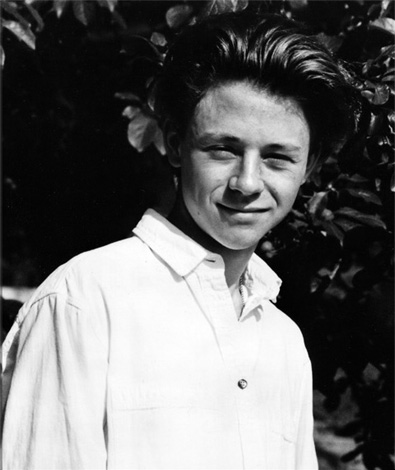
Jon E. Nadherny
TWO MILLION! Of those, 700,000 require medical attention. More than 4,0000 succeed. Suicide is of special concern to those of us who love someone with a mental disorder because 90 percent of young suicide victims have at least one major psychiatric disorder.
This year’s Jon E. Nadherny symposium in Santa Cruz focused on mental illness and I was invited to speak along with three other advocates. One of my friends and mentors, Frederick J. Frese, PhD., began the morning symposium and kept the sold-out crowd of 450 persons spell-bound for two hours. That’s right, he spoke for two solid hours and was so enthralling that no one left the room and everyone leaped to their feet in a rousing standing ovation when he ended.
Fred’s recovery story is awe inspiring. He was serving in the U.S. Marines in 1966 when he developed schizophrenia and was forcibly hospitalized. At one point, doctors declared him legally “insane” and told him that he would spend the rest of his life institutionalized. Despite horrific “treatment,” Fred managed to get discharged and became active in the consumer civil rights movement. He later became a psychologist — the only one whom I have ever heard of who has schizophrenia.
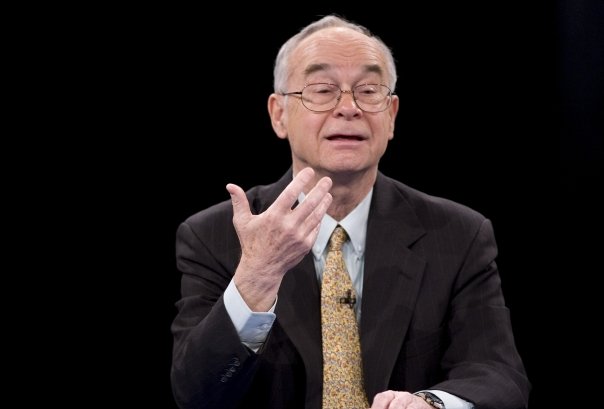 Fred is not only a passionate speaker but also an entertaining one. When he learned that he was going to be discharged from the military he was in a locked mental ward. He wanted to get a job — but how do you find someone in the military to write you a letter of recommendation when you are in an asylum? Fred ended-up getting impressive letters from an admiral and two other top military officials. How did he convince them to recommend him? It was easy, he explained during his speech, because the admiral and other high ranking brass were locked in the same mental ward that he was in.
Following Fred as a speaker is never an easy challenge but Lizzie Simon, author of DETOUR: My Bipolar Road Trip in 4 D, was up to the task. Lizzie’s book was one of the first that I bought when my son, Mike, became ill. The book describes successful people who have bipolar disorder and I wanted Mike to see that people with that diagnosis can do great things.
Much of Lizzie’s speech was about her work with Active Minds, which is a wonderful advocacy group on college campuses. If you have a college student please tell them about Active Minds.
A few months ago, I was asked to be a judge on a panel created by ASHOKA CHANGEMAKERS that was looking for innovative approaches in mental health. I spoke in favor of giving Active Minds one of the Ashoka awards and I was happy when readers of the CHANGEMAKERS website chose it as a winner.
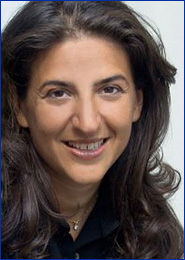
Lizzie Simon
I spoke after Lizzie Simon at the symposium and then Leslie S. Tremaine, Ed.D, the director of Santa Cruz County Mental Health and Substance Abuse Services took the stage. I’d never met Leslie but I was impressed with her resume and I became even more of a fan after hearing her speak.
In a soft voice she spoke eloquently about how we need to change not just the mental health system in our nation, but all government systems. What’s that mean? She explained that we must stop thinking about mental health as being independent from other bureaucracies. Mental health impacts veterans affairs, transportation, housing, jobs, the police, hospitals, corrections, etc.
Leslie could talk with confidence because she managed an inter-agency group in New Mexico that brought 15 different state agencies to a single table and forced them to begin sharing ideas about how to better serve persons with mental disorders by cooperating.
Leslie told me that from 1984 to 1990, she was director of the Office of Mental Health for the Virginia Department of Mental Health, Mental Retardation and Substance Abuse, and she asked me how my home state of Virginia was doing.
I took that opening to tell her about an editorial that I published recently in The Washington Post about how the governor and legislators are rolling back funding to 2007 levels — despite promises made after the horrific shootings on the Va. Tech campus.
I left the symposium inspired by its sponsors, the Nadherny/Calciano family, and excited by the speeches that I had heard.
I also left frustrated because people such as Jon E. Nadherny are still dying when, in fact, we know how to help many, many people with depression and other mental disorders.
We simply aren’t doing it.

 About the author:


The Calciano Family, like so many other families across this nation are using their own pain as a springboard for action. We have waited a long time for change to come from the top down. That will never happen unelss it comes from the bottom up. We are paying for this mental health mess with our children's lives and our loved ones futures. We do not need to wait for a tragedy to speak out. These are physical illnesses and they are treatable. We can talk about them. We can educate our children about them by demanding that our schools teach children to recognize symptoms and know where to ask for help. We can embrace those who suffer from these illnesses by offering compassion and support.
@Pete: More than 4,0000 succeed. Suicide is of special concern to those of us who love someone with a mental disorder because 90 percent of young suicide victims have at least one major psychiatric disorder.
Can you clarify that number Pete — did you mean 4000 or 40,000? I ask because I see a great deal of misrepresentation of this number and although I realize whatever the number is, it's a tragedy, I also feel we need to be dealing with the accuracy of that reality.
Sorry for the misprint. It was 4,000.
Thanks for calling my attention to it.
And thanks for reading my blogs
Pete
And thank you for clarifying. Would you happen to have a source for that figure — the issue of suicide and mental illness is one that I frequently encounter and I try to share reputable sources where I can.
Incidentally, I've never had the opportunity to hear Frederick Frese speak or Lizzie Simon, but it sounds as if they both had some productive information to share.
@Pete: Suicide is of special concern to those of us who love someone with a mental disorder because 90 percent of young suicide victims have at least one major psychiatric disorder.
My area of knowledge tends to center around psychosis and schizophrenia. In this particular area, young men are more likely to succeed in a suicide attempt. They are most vulnerable in the period after being diagnosed. I suspect this is because they lose hope for themselves; they envision a life of failure. So I think it's critical that with young people in particular, we begin talking about recovery and when possible, connecting them to peers and mentors who are living successfully in the community.
@Peter: Despite horrific “treatment,” Fred managed to get discharged and became active in the consumer civil rights movement. He later became a psychologist — the only one whom I have ever heard of who has schizophrenia.
Daniel Fisher, Rufus May, David Lukoff, Patricia Deegan, Edward Whitney, Ronald Bassman — these are all individuals who underwent a severe form of mental illness, recovered and became psychiatrists or psychologists.
See also: Voices of Recovery: http://voices-of-recovery-schizophrenia.blogspo…
Pete thanks for the kind comments in your 3/18 blog abt the symposium. I have some resource info for you to follow up abt New Mexico BH Collaborative if you are still interested — let me know.
your website is a great resource and I am glad to have made this discovery as well as to have shared the day with you. People have had nothing but positive comments and this served as an energy boost for all of us!
Pete thanks for the kind comments in your 3/18 blog abt the symposium. I have some resource info for you to follow up abt New Mexico BH Collaborative if you are still interested — let me know.
your website is a great resource and I am glad to have made this discovery as well as to have shared the day with you. People have had nothing but positive comments and this served as an energy boost for all of us!