Levon Wilson, a resident of Winston Salem, North Carolina, who had been diagnosed with bipolar disorder, was arrested on August 31, 2010, on misdemeanor charges and sent to the state’s Central Prison to await trial. Five weeks later, he was dead.
An autopsy showed that Wilson had been transferred from the prison to Wake Med Hospital in Raleigh with “moderately high levels” of lithium in his bloodstream ten days before he died. Lithium is often prescribed to treat manic symptoms common with bipolar disorder. But taking too much lithium is deadly. Patients taking lithium must be monitored with blood tests because too much lithium can impair the kidneys and obstruct bowels.
The autopsy revealed that Wilson had died from “complications of lithium therapy,” which led to him suffering impaired kidneys and bowel problems. Despite the obvious — that someone in the prison system had screwed up in dispensing lithium — a state doctor ruled that Wilson’s death was the result of “natural” causes. No one was reprimanded. No one was fired.
Wilson’s death is one of numerous shocking incidents exposed this week by Michael Biesecker, an enterprising reporter with the Associated Press, who used a public records request to obtain an internal investigation of conditions inside the state’s mental health unit at Central Prison.
My friend, Mary Ann Kernan, president of the National Alliance on Mental Illness affifiate in Moore County, contacted me after she read Biesecker’s expose and asked if I would join her in publicizing how inmates with mental disorders were being abused in North Carolina.
Biesecker’s story revealed that a recent internal review by two prison system nurses had uncovered a number of disturbing incidents at Central Prison:
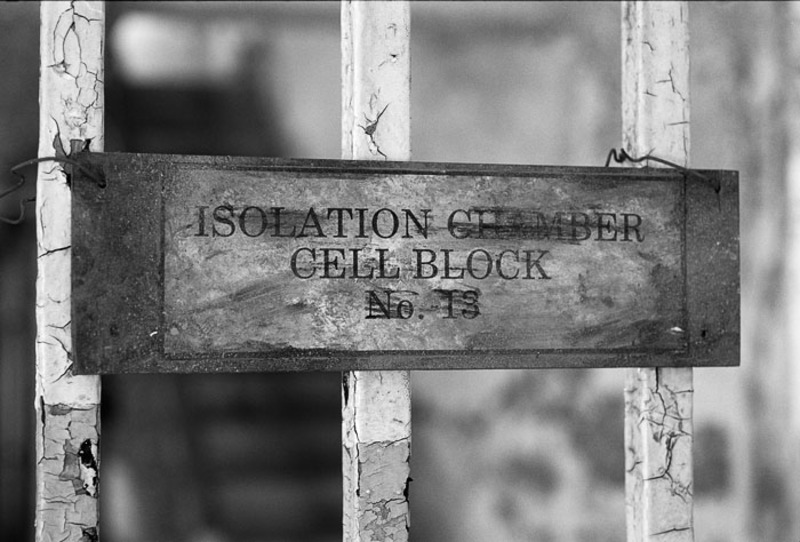
1. Inmates in the Raleigh prison were left isolated for weeks of “therapeutic seclusion,” sometimes without clothing or a mattress, in cells described as roach infested and with human waste puddled on floors.
2. Other inmates were strapped to their bunks in an improper manner that allowed them to bang their heads against concrete walls.
3. Chronic under-staffing at the prison led to situations where the sick were left untreated and suicidal inmates were not monitored.
4. Nurses at the prison acknowledged that they often didn’t know who inmates were and that patients often were given too much prescribed medication or none at all. In one instance in April 2011, the nursing staff reported giving one inmate NINE doses of powerful psychiatric drugs, including lithium and Thorazine. But a record check showed that inmate had been transferred to another prison the day before the drugs were administered. No one really knew who actually had been given the medications.
5. The report concluded that there had been “a number of deaths” due to poor medical practices at the prison, including Levon Wilson’s death from lithium toxicity.
The internal review also found that inmates placed in “therapeutic seclusion” were often kept in cells for extended periods without being let out for meals, recreation time or to shower. When asked, a prison officer said the patients were not let out of their cells to shower and exercise because they were suicidual, but investigators said the patients were seen as being troublesome — not suicidual. One inmate was placed in isolation on Feb. 1, 2011, but was ordered by a doctor to be allowed one hour per day alone in the unit’s day room for excersize. A review of his records found no evidence he was released from his cell before April 19, a stretch of 78 days being isolated in his cell.
Reporter Biesecker asked Dr. Stuart Grassian, a Boston Psychiatrist who has studied seclusion while on the staff at Harvard Medical School, about the impact of long term confinement. “When you take a person like that (with a mental disorder) and put them in solitary confinement, obviously what happens is they become more and more paranoid. Because these are progressive disorders, once they have deteriorated you really don’t have much of an opportunity to get them back.”
Dr. Grassian said there was nothing therapeutic about long-term seclusion, in fact, it increases the risk of abnormal behavior and suicide.
The internal review noted that the mental health units at the prison reeked of urine, that cell floors were sticky and often had urine and feces on them, and that inmates were left to live in their own filth.
When confronted by Biesecker, Jennie Lancaster, the chief operation officer for the N.C. Department of Corrections, said the agency is working to improve conditions. She then blamed the prisoners for causing their own shabby living conditions.
“When you’ve got an offender who you clean his cell and then two hours later he’s taken feces and he’s smeared it all over the cell again, and you’ve got someone down in another cell and they’re acting out…if you’re limited in your staff, it’s not the ideal thing, but you have to prioritize what you are doing,” she said.
Mary Ann Kernan said NAMI Moore County has petitioned the state to take immediate steps to improve conditions at Central Prison. Just like me, Mary Ann has an adult son with a mental illness who has gotten entangled in the criminal justice system. “We absolutely MUST bring this situation to the attention of others,” she wrote in her email to me. “It would be so easy for us to find our loved ones, not necessarily through any fault of their own, in the situation described. THAT scares the living daylights out of me!”
The conditions that I discovered at the Miami Dade County Jail were appalling. Men were crowded together naked in freezing cells, often times without water to drink. Now, Biesecker has unmasked equally as horrid conditions in Raleigh.
Mary Ann Kernan asked me in her email how many other jails and prisons are there in the U.S. today that are neglecting prisoners with mental disorders? How many of these inmates are stuck in fetid cells with inadequate nursing and psychiatric care?
It is an important question, given that we now have more than 360,000 persons with serious mental illnesses confined in our jails and prisons.
The Justice Department launched an investigation into the Miami Dade County jail after I wrote my book and exposed conditions there. I hope someone in the Justice Department will read Biesecker’s expose and launch an investigation of Central Prison too.
Sadly, I do not believe state officials in North Carolina will deal responsiblity with these issues. Why do I suspect this? Because, so far, no one in that state has shown any serious interest in the death of Levon Wilson.
Wilson died while in state custody. Wilson was the state’s responsibility. Where is the public outrage? Where is the investigation? Where are the voices demanding that those responsible be held accountable and that safeguards be adopted to prevent future deaths such as his?
Apparently in North Carolina, state officials do not feel responsible when a person with a mental disorder dies while under their care. Instead, they fault the victim.
(If you are outraged by what happened to Levon Wilson and conditions in Central Prison, then share this article with others or send a copy of it along with a request for an investigation to the following:
North Carolina Governor’s Office of Constituent Services : Governor Bev Perdue governor.office@nc.gov
US Department of Justice, Disability Rights Complaint. ADA.complaint@usdoj.gov
Get involved. Demand change! It only takes a second. It could help save a life.)

 About the author:


Pete,
The story is so much bigger than North Carolina. See today’s coverage of the deaths occurring in Alabama, for example. If we do not do more to provide outpatient treatment, with or without a civil court order, more treatable people will needlessly die “with their rights on.”
Aileen Kroll, JD
Legislative & Policy Counsel
Treatment Advocacy Center
Pete, I also believe that NC prison systems treat human beings in a barbaric lifestyle. This is called a correctional system, but it does not seem to be that. We need to treat humans like humans if we want them to act like humans.
All I have to say is Arizona, tent city. Google it. It’s bad.
My father, who has been in and out of prison for years (drug abuse/addiction), has come back with countless horror stories of how the seriously mentally ill are treated behind bars — verbal and physical abuse both by guards and other inmates, neglect, etc — and his stories only include how they are treated in the general prison population; I imagine it to be significantly worse, perhaps (bitterly) ironically, in segments of the prison specifically designated to house mentally ill offenders. Mental health courts (not AOT, you know my opinion on that) need to be more widely implemented and, in cases where one cannot be released and/or experiences crisis in the midst of their time in the courts, high quality (there are not many now) forensic psychiatric facilities need to be opened.
Of course, not to gt off topic, maltreatment of inmates is not limited to those with mental illness — though they are more vulnerable and exposed to the worst of it. Every inmate is suffering and, no matter what one thinks of someone who has broken the law, there needs to be major reform. I can’t help but wondering of the Drug and Mental Court model could be applied to the majority of other prisoners. Very few people decide on a life of crime for the fun and joy of it; many come from backgrounds and circumstances that make them more vulnerable. What if the goal of the penal system was to focus on that — the cause of crime and how to get to the root of the problem — instead of the confine — release — confine again self-defeating model it currently employs. For sure, prisons don’t work: most get out, most get arrested again and society is no better off (nor are the offenders). Why limit the reform to just those who suffer from DSM-IV diagnosable conditions? Doesn’t the non-mentally ill, but still suffering, man who grew up in the inner city, starving and exposed to violence, deserve the same help, chance and humane treatment? And even for the person who has faced no hardship, I would say that nobody deserves to be treated as a non-human animal, forced to live in poor, crowded conditions, offered no protection against sexual assault (which is rampant and which nobody deserves), etc, etc? Prisons, by their nature, are barbaric.
I’m rambling, however. I hope North Carolina finds reform.
And, of course, ignore/excuse the typos.
They killed my grandpa yesterday.Looking for information on bringing it to the public.Contact me at 7049741526.thanx
MY SON HAS BEEN IN SCOTLAND CORRECTIONAL FOR THE LAST 2 YEARS AFTER SERVING 6 YEARS IN EVERY PRISON IN THE STATE OF NC FROM AGE 14 – PRESENT. TRIED AS AN ADULT FOR ARM ROBBERY @ 14 ALONG WITH OTHER 14 YEAR OLDS UNDER THE LEADERSHIP OF AN ADULT THAT HAD THE KIDS HOOKED ON DRUGS. EVERY MONTH MY SON IS BEING PUNISHED FOR THINGS & THEN RELEASED & TOLD HE WAS INNOCENT. NOW HE’S ON SEG AGAIN FOR NOTHING & FIRE ANTS ARE IN HIS CELL & NOTHING IS BEING DONE AFTER COMPLAINING ABOUT BITES. I WAS THERE MON 9-10-12 & WITNESS THE ANTS HE WAS SHAKING OFF HIS CLOTHES. WHERE DOES INHUMANE TREATMENT FIT IN @ THIS PLACE?
SCOTLAND CORRECTIONAL HAS BEEN ON LOCK DOWN FOR THE LAST MONTH BECAUSE OF THE ACTIONS ON 2-5 INMATES. EVERYONE SHOULDN’T HAVE TO SUFFER FOR THE ACTIONS OF A FEW. EVERYONE HAS THEIR OWN TIME & SHOULDN’T BE HELD OR PUNISHED BECAUSE OF THE ACTIONS OF A FEW.