I came of age in the 1960s when Students for a Democratic Society (SDS) was disrupting college campuses and demonstrators were protesting the Vietnam “conflict.”
So when a friend told me about an “alternative” mental health conference that was held last weekend in Anaheim, California, I immediately pictured a group of disgruntled attendees gathering to complain about the established psychatric community and plotting ways to change it. 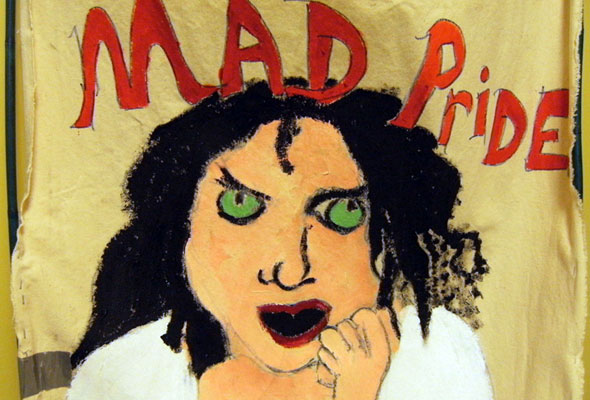
The agenda for “ALTERNATIVEs 2010: Promoting Wellness Through Social Justice“ didn’t disappoint.
The keynote speaker was Robert Whitaker, a prize winning medical writer, whose most recent book challenges the notion that mental illnesses are caused by chemical imbalances in the brain and adds that long term use of anti-psychotics actually may cause more harm than good.
A couple of workshops at the conference were run by David W. Oaks, the exective director of MindFreedom Intenational,which was founded in 1988 to advocate against forced medication, medical restraints, and involuntary electroconvulsive therapy. Its stated mission is to protect the civil rights of persons who have been “labeled with psychiatric disorders.” A majority of its members identify themselves as “survivors of human rights violations” in the mental health system.
Another session was led by Will Hall, who preaches that mental illnesses are not “disorders or diseases,” but “extreme states of consciousness that are mad gifts to be nurtured and cultivated.” His workshop was entitled: Coming Off Medications: A Harm Reduction Approach, and promised to help those who attended find safe ways to wearn themselves off anti-psychotic medications.
Because this was an “Alternatives” conference, I expected it would feature a variety of viewpoints that are not mainstream and different from what I might believe. And there is nothing wrong with that. In fact, I think diversity of opinion is good.
But what did trouble me was how this conference was bankrolled. MindFreedom didn’t pick up the tab, nor Robert Whitaker or Will Hall.
You did.
Yep, the conference was paid for by the United States Department of Health and Human Services: Substance Abuse and Mental Health Services Administration, Center for Mental Health Services, commonly called SAMHSA.
The government also is one of the major financial backers of the hosts who plan the biennial Alternatives conferences — the National Empowerment Center.
SAMHSA’s Administrator Pamela Hyde gave one of the opening speeches, welcoming attendees.
In addition to listening to Whitaker, Oaks and Hall, attendees could attend workshops on how to organize grassroots campaigns, run for political office, get elected to local boards and lobby government agencies. There were also several workshops that pushed the recovery model as being the best solution to our current mental health problems.
Please don’t misunderstand me.
I want consumers to be empowered. My son is a peer to peer specialist and in my speeches I call for all of us to get involved in grassroot politics and fight for mental health reform.
But I don’t believe that a govenment agency should be using tax dollars to teach people how to lobby the government. Nor do I believe the government should be financially supporting and pushing a single recovery concept.
I am not aware of SAMHSA providing financial support to the Treatment Advocacy Center, which lobbies for the passage of Assisted Outpatient Treatment laws.
Nor do I believe SAMHSA financially supports or endorses my belief that involuntary commitment laws need to focus on criteria other than “immediate dangerousness” — to make treatment available to persons who are clearly delusional but are not dangerous and therefore are being abandoned on our streets and in our jails and prisons.
The first time my son went off his medication, he ended up being arrested. The second time, the police shot him with a taser and the third time, he ended up in a hospital. Because of those experiences, I consider his disorder an illness, not a “gift.”
But my opinion is based on my experiences and it is my opinion, northing more.
If you read the biographies of many of the speakers at the Alternatives 2010 conference, as I have, you will understand why they feel so strongly about their viewspoints. And If I had undergone some of those same experiences, then I might agree with them.
But that’s the point, isn’t it?
The moment the government begins favoring, supporting and pushing one group’s beliefs and agenda, it is going to be shunning, undercutting and dismissing another’s.
That’s why I believe SAMHSA should not be using tax dollars to support a lobbying group that is pushing a single mental health agenda — even if SAMHSA officials share those same beliefs.
If the attendees at the Alternatives Conference believe in what David Oaks or what Will Hall are saying, shouldn’t they be the ones who rally around them and pay to hear them — not me?
Here is another question for you. If the government is financing and endorsing a speaker or group’s agenda, is that speaker or group really an “alternative” voice?

 About the author:


The government will fund whatever will cost them the least. Getting people off treatment is the cheapest way to go. There has been so much advocacy against people like my daughter getting treatment, I’m afraid of what the system will look like in 20 years.
I don’t think anyone’s been lobbying against your getting ‘getting treatment’, she can walk out the door, pick up a phone book, call a shrink and buy some ‘treatment’ there is nobody stopping her.
On the other hand, if you’re referring to terrorizing me with laws that you might selfishly like to use to coerce your daughter and inevitably other innocent people who have nothing to do with your daughter, then you’re going to find fighting people like us, is the toughest thing you’ve ever had to attempt in your life, I’ll not stop fighting forced drugging pushers until I’m dead in my grave, and believe me, the disgust, betrayal and anger that fuels me, is like 10,000 suns of endless fusion energy. I’m indefatigable, and you’re ‘afraid what the system will look like in 20 years’… good. Good, if you’re afraid of it, it might look a little more like freedom in 20 years. I hope I live to the see the day, it would be very liberating to no longer have to be terrorized by selfish parents who seek to coerce their kids, who don’t give a $%^# how many innocent other people are destroyed by the same coercive laws.
Question for Pete Earley:
What was your intent when attending the Alternatives Conference? you state in your post, what you “expected”. It appears you went on purpose with an axe to grind, close-minded and not looking to be enlightened by those who spoke or presented ideas and opinions.
Why attend a Conference you do not believe in, only to look for a scapegoat to use as your platform of pro-medication treatment?
Why attack Will Hall? he is a man, a person who could just as well be your son, who has been able to live a good life OFF of medications, and tells others about it.
It’s about choices.
I find it interesting, to say the least, that when anyone talks about being bipolar or schizophrenic and being off meds, the pro-NAMI and pro-drugs people come out of the wood work.
These people have had atrocities happen to them, some strapped by 5 points on gurneys, some handcuffed, left in ER seclusion rooms for hours while waiting for psych evals. Some have had forced injections against their will.
People here reading may not have heard of Ray Sandford.
Ray Sandford was given forced ECT as an outpatient treatment and Ray was able to make a call for help to Mind Freedom. David Oaks and advocates around the world spread the word that Ray was asking for help, he did not want the ECT, could verbalize that request and was still given forced ECT against his will in the state of Minnesota.
It took MONTHS for the advocacy to work for Ray, for the voices to be heard.
The advocate voices WERE heard and Ray no longer receives the forced out patient ECT.
I suggest anyone coming here ask themselves:
Have I been held down against my will with restraints? Have I been left inside a locked seclusion room? have I ever been strapped to a gurney at my wrists, ankles and waist? Have I ever had an injection of Haldol? have I ever been discharged from a locked psych ward on a court order to take drugs that I do not want to take?
Tax payer dollars fund many people with psychiatric labels, for income, their medications and care.
I’ve said this before: Pete do you want them to save the tax dollars and go off of those meds paid by the government?
Do you, Pete only believe in the government funding pro-med studies and care facilities, or conferences?
Why shouldn’t the government fund ALTERNATIVE choices for care?
The lifespan of individuals on antipsychotics is shortened significantly. The drugs are potent chemicals with side effects such as cardiac arrest, diabetes, permanent and involuntary movements and more.
Why shouldn’t the government endorse other less invasive approaches to mental health treatment in America?
Or is our government leaning toward one-sided ideals for care? is that not communism?
This is about choices, and at the minimum the government has offered up a conference for people to discuss Alternatives. This has not changed the medical drug based care we have in America. This has not changed mental illness stigma. This has not changed TAC’s point of view, and I dare say the conference did not change your ideas and viewpoint, Pete.
So why be threatened?
The conference is over. The drugging and forced medication regime still goes on, and on and on.
Today, their are hundreds of people in locked psych wards receiving only ONE treatment. It is take it or remain locked up: psych meds.
It is time for America to offer other choices, and Will Hall, who is labeled as schizophrenic, is OFF meds and living independently, and able to travel and speak at a conference. Are you denying him that, Pete?
Will Hall is successful off meds.
How’s that for a choice! kudos to Hall for taking on psychiatry and the people who back the agenda such as Earley and Torrey. It takes guts to stand up and say something is not right here, and Hall did that.
So have many other people such as David Oaks, and Ray Sandford.
I’ve said it. I’ve testified in court defending my adult child’s rights and freedom of choices, and the least restrictive and invasive care.
I find it compelling that Earley has not responded in his comment section, but not surprising.
I have to disagree. What is going on is that the mental health system is shifting care for people with mental illness to the criminal justice system. The total dollars spent increases. But for a Department of Mental Health, every person with a mental illness who goes to jail or commits suicide is a ‘success’. It’s one less person that has to be treated under their budget.
I have to disagree. What is going on is that the mental health system is shifting care for people with mental illness to the criminal justice system. The total dollars spent increases. But for a Department of Mental Health, every person with a mental illness who goes to jail or commits suicide is a ‘success’. It’s one less person that has to be treated under their budget.
“person with a mental illness who goes to jail”
So you think having a quack shrink who doesn’t even test people’s biology slap a label on you means you should have a get out of jail free card huh?
Show me the legitimate evidence why these people’s personal problems should be viewed as an ‘illness’?
“disgruntled attendees gathering to complain about the established psychatric community and plotting ways to change it.”
It’s not the ‘established psychiatric community’ I want to change, I don’t care in the slightest what psychiatry does, it’s a fraudulent pseudoscience comprised of physicians who don’t even examine people’s biology, yet declare that extreme distress is a brain disease. They can do what they like, I don’t care, so long as it is not the official state religion. What you ‘believe’, and you use that word in your post, is just that, a belief, a faith based belief in ‘brain diseases’ in brains that don’t even get examined by a physician and proven diseased. All I care about, is that you don’t FORCE your beliefs on me by force of law. Much the same as you can go and believe in whatever religion you like, I don’t care, just don’t lobby to make the nation a theocracy.
“The first time my son went off his medication, he ended up being arrested. The second time, the police shot him with a taser and the third time, he ended up in a hospital.”
Ah, here I see now, you have no first person experience of the experiences you label ‘mental illness’ (I do), nor any first person experience of coercive psychiatry(I do). If your son committed a crime, and got arrested, and he was not wrongfully arrested, we have a criminal justice system. I should not be forced to be terrorized by laws that could see me caught in the net you wish your son to be caught in. I will fight for my human right to own my own body, every step of the way. If you acknowledge lives are destroyed by coercive psychiatry, and then lobby for more coercion, you clearly show zero respect for my life, my life is cheap to you, you don’t seem to mind about the collateral damage, so long as YOUR son can quickly have his rights stripped from him and be shot up with tranquilizer drugs. By the way, I ceased taking a vast array of assorted guesswork tranquilizer drugs and so on, that you choose to call ‘medication’, and I didn’t get arrested, and in fact, the recovery I’ve achieved in spite of all the psychiatric garbage pumped into my body and mind, is something I will fight very hard to protect from outside threats such as forced drugging lobbyists.
“Nor do I believe SAMHSA financially supports or endorses my belief that involuntary commitment laws need to focus on criteria other than “immediate dangerousness” – to make treatment available to persons who are clearly delusional but are not dangerous and therefore are being abandoned on our streets and in our jails and prisons.”
Really, ‘make treatment available’, what a lie, a vicious lie, treatment is available to every citizen who wants it. You seek to force it on people against their will, and this shows you are willing to initiate violence in the name of your beliefs.
“abandoned on our streets and in our jails and prison”
Do you have ANY idea how much I would LOVE to be ‘abandoned’ as you put it. If I was facing imminent forced drugging, screaming ‘help’, ‘no’, ‘i do not consent’, ‘get your hands off me’, and all of a sudden my violent state sanctioned attackers, that you seek to ‘assist’ me with, if all of a sudden they ‘abandoned’ me, I would breathe the biggest sigh of relief you’d be able to hear it blocks away.
Do you have any idea how much I would prefer jail over a psychiatric facility, infinitely preferable. At least in prison I am only stripped of my right of freedom of association, and don’t lose my right to own my own (never proven diseased) brain. What you want to push on me, and make easy to happen and possible, forces me to live in terror. Of course, I’ve committed no crime, and I’ll take freedom over any of those options, but if it were down to those options, of course your ‘assistance’ would be as feared as the death penalty. At least on death row they wait until all appeals to the court and governor are exhaust before they stick the needle in you against your will. That could take some years to happen, whereas people like you want needles stuck in people ASAP. No right to a competency hearing before a judge, no right of appeal on a mind free of forced tranquilizers. You want to write checks that my body will have to cash, that makes your lobbying a step beyond a step too far. You’re a threat to my safety.
” I want consumers to be empowered. ”
You dare call anyone who is being held down and violently stabbed with a syringe full of toxic brain disabling tranquilizers by the state a ‘consumer’. How dare you.
To me, reading your words, disgusts me and offends me as much as it probably would if I described your son as a consumer of ‘taser electricity’.
As far as the tax dollars go. No tax dollars she be funding psychiatry at all, or the conference, I agree. You’re happy you’re taxes paid for the victims and survivors of coercive psychiatry to be tortured, and then they throw the most infinitesimal bone at the ‘alternatives’ conference and you’re up in arms.
You lobby for and demand programs that are going to strip our rights away, do violence against us, and which will cost millions.
“If the attendees at the Alternatives Conference believe in what David Oaks or what Will Hall are saying, shouldn’t they be the ones who rally around them and pay to hear them — not me? ”
If you believe someone’s behavior can be declared by fiat to be a brain disease when no physician has ever examined that person’s brain and proven it diseased, should YOU be the one paying the cost in lost years of your life, damage to your organs and social identity by getting involved in psychiatry? Of course, it is those you force into this belief system that pay the price, often with their lives.
I should know, the cost people like you have made me bear is something money could never compensate.
Fanatics like you, who are prepared to lobby for the state to do more violence to us, will be countered every step of the way, don’t underestimate the fight left in people who barely escaped with their lives. You like the labels and drugs, good for you buddy, you like your beliefs, fine, keep them out of my body, it should not be compulsory to believe what you believe, especially considering the great leaps of faith you took to get to where you are.
“I am not aware of SAMHSA providing financial support to the Treatment Advocacy Center, which lobbies for the passage of Assisted Outpatient Treatment laws.”
You want to ‘assist’ me huh? You think making people live in mortal terror of being kidnapped and forcibly shot up with brain damaging drugs for a disease you can’t even prove exists in the person, you think that’s ‘assistance’.
You clearly are an ideological zealot. The difference between me and you. I’m not lobbying the government for your body to be handed over to me and my belief system. You are.
May the best man win.
What does that make you? a nice guy?
What part of no don’t you people understand. These are our bodies, they belong to us. You have no right. And I’m glad your ghoulish ‘work’ will be up on the internet for future generations to see, so that your wish to do violence to innocent people can make your descendants proud.
So Pete Earley’s comments make him a “fanatic”
Why?
Because he dares to disagree with you.
Perhaps you need to re-read the blog, especially the paragraphs that state:
If you read the biographies of many of the speakers at the Alternatives 2010 conference, as I have, you will understand why they feel so strongly about their viewspoints. And If I had undergone some of those same experiences, then I might agree with them.
But that’s the point, isn’t it?
The moment the government begins favoring, supporting and pushing one group’s beliefs and agenda, it is going to be shunning, undercutting and dismissing another’s.
You seem to jump to many unsupported conclusions here when what Pete is saying is that government funds should not be used to fund the alternatives conference anymore than they should be used to support an AOT conference because either way amounts to favortism.
I’m not sure how that makes him an “idelogical zealot” out to destroy your civil rights.
And what of the million persons who go through the criminal justice system each year who have been diagnosed with mental disorders and arrested for such crimes as urinating in public and even being homeless?
Do you think they deserve to be in jail because they are having visions or hearing voices?
“So Pete Earley’s comments make him a “fanatic”
Why?
Because he dares to disagree with you.”
NO. I made it abundantly clear why he is a fanatic. He advocates initiating violence in the name of his beliefs. He believes I have a brain disease, even though he can’t produce any evidence for this drawn from my brain nor anyone else’s brain he seeks to coerce, and then he seeks to initiate violence against me on the basis of his mere belief. That is why he is a fanatic, I made that abundantly clear.
It is not because he ‘disagrees’ with me. I could care less what he thinks, so long as he doesn’t force his beliefs on me using state violence, personal violence or any other kind of violence. I don’t care what he thinks of my nonbelief in his religion either, the church of psychiatry is his belief system, and I don’t care what he thinks, does, what he thinks of my nonbelief, I only care about one thing, the fact he wants to use state force to push his belief system deep into my body. Nothing more, I don’t care about anything he thinks, says, only what he does, and only when he succeeds in instituting more violence against people like me do I care at all what he thinks or does. He is certainly not my enemy because he ‘disagrees’ with me, he is my enemy because that disagreement arrives at my door and kidnaps me and stabs me with needles full of drugs.
If he were not trying to strip me of my rights, he’d be just another believer in a load of garbage, like a chiropractor or something. Not a threat, nothing to worry about.
Re-read my post, I said the government should not be funding psychiatry OR the conference.
“You seem to jump to many unsupported conclusions”
The entirety of psychiatry is an unsupported conclusion, and if you seek to force it on me, as you do, I’ll fight you all the way. Unlike you, I will choose non violence to fight you with though.
“I’m not sure how that makes him an “idelogical zealot” out to destroy your civil rights.”
The fact that he supports laws which rip away my civil rights, on the sheer basis of his ideological belief that brain diseases can be ‘diagnosed’ by physicians who don’t even examine peoples’ brains, makes him an ideological zealot.
“And what of the million persons who go through the criminal justice system each year who have been diagnosed with mental disorders”
Number one, if you’ve committed a crime, the criminal justice system sounds like just the system for dealing with crime. Number two, psychiatry’s interpretative system has zero validity so your phrase ‘diagnosed with mental disorders’ presupposes something you cannot prove, that simply having a shrink slap a label on you constitutes the discovery of a ‘thing’, and psychiatry labeled all gays as ‘mental disordered’ until very recently in its history, and still labels all transgender people as such, and continues to vote in and out, and define into existence these ‘disorders’ you seem to blindly agree are brain diseases simply on the basis people shut up and stop acting how you don’t want them to act when they take tranquilizer drugs.
“and arrested for such crimes as urinating in public and even being homeless?”
If it is a crime, you do the time. I have not committed these crimes. I will NOT, EVER accept your desire to strip me of my human rights on the basis of someone else’s crime, or a pile of anecdotes stacked as high as the moon, because none of you can produce to me any evidence I have a brain disease, or any evidence why I should not feel terrorized by your efforts to strip me of my rights and hand my body over to psychiatry again, my worst nightmare. I will never stop fighting for my rights, and I will never accept laws on the basis of your faith based beliefs, nor anyone else’s religious beliefs.
“Do you think they deserve to be in jail because they are having visions or hearing voices? ”
Deserve? Do they deserve to be handed over to psychiatry for human experimentation? a fate just shy of death? a fate that often drives people to want to die, The community can be protected from violent criminals by a jail, yes. I am not a violent criminal, and I do not accept your faith based assertions, and should I commit a crime, I should like to think I would be entitled to be treated as any other citizen by the courts. If somebody is confused, and still their crime has demonstrated other community members are at risk, this criminal needs to be isolated. If they do not ask for psychiatry’s interpretation (which is faith based) of their problems, then it should not be forced on them.
I am not going to tolerate being terrorized by ideological zealots who seek to craft laws based on their pathetic leap of blind faith in a pathetic profession comprised of quacks who have never produced a single solid scientific result in their 200 year history of blunders, human rights atrocities and self interested corruption.
My life was almost destroyed by getting thrown into this fraudulent and violent system by coercion. I am not about to stand idly by while misguided ideologues lobby government to strip me of my most important right, the right to own my own body. Do do so, would be tantamount to trusting you with my life, and I don’t trust anyone who believes my government should be forcing me to believe what they believe, and not only that, initiating violence against me on the basis of that belief, like the author of this blog.
Given that 69 cents of EVERY DOLLAR spent on psychotropic medications comes from public money (AKA TAX DOLLARS), and yet, it is proven that that the United States has THE WORST OUTCOMES in mental health in the entire world, including (and especially) countries which do not use said psychotropics, 3 times by 3 separate WHO studies – complaining about one conference seems like you’re barking up the wrong tree.
They are not complaining about public money financing every iron bar ever welded to the window of a state coercive psychiatry facility, housing innocent people who they wish to force their beliefs and drugs on, not complaining about public money financing every vial of Zyprexa that was ever violently plunged into an innocent person’s body against their will. Not complaining about the billions spent on SSDI for people rendered disabled by man-made iatrogenic harm at the hands of coercive psychiatry. Not complaining about the public money spent on terrorizing people with forced drugging laws. Not losing sleep at night by the perverse logic that those who have been destroyed by coercive psychiatry’s violence should be taxed to pay for its perpetuation and even expansion.
Pete, you may remember that Judi Chamberlin and I have tried to have a substantive dialogue with you in years past about these issues, and — despite a few blips back and forth — my feeling is that I’ve felt generally confronted by a closed door with you.
Now I see you choose to write “about” me rather than try that dialogue.
The disability movement says, “Nothing about us, without us.” So here I am. I support your passion Pete, and I want to try dialogue again, perhaps with a mediator so we can both feel heard.
But at this point, I must also protest… so I want you to know I intend to be compassionate, but I have some tough stuff to say. I know you’re a loving father to your son, but I hope you can hear my protest in the spirit it’s give.
So now I’m afraid I need to say the following with all due respect:
Thank the universe and all the Gods and Godesses and stars in the sky…. that you were never my father.
Thirty-four years ago a dozen psychiatrists labeled me a variety of psychiatric diagnoses, and I was locked up five times. They wanted me to say on a regimen of neuroleptics for life, and even get a court order to make that happen.
But my family came through for me, as is described in my chapter in the new book about families and mental health, “A Way out of Madness.” As my mother famously said, “If our David wants to try freedom, we support him.” Today, 34 years later, my 93 year old mom is one of our volunteers… She’s even volunteering in the MindFreedom office a few feet away.
This isn’t unusual. I talk to literally hundreds of moms and dads who are sickened by the main approach of the mental health system, and who demand more alternatives.
You say your son works as a peer support specialist. Do you think such programs came out of the blue? The move for more empowerment and mutual peer support came from mental health consumer and psychiatric survivor persistent activism, going back 25 years. This took a lot of grassroots support.
But look at the hate speech you now fling at our community, at the main gathering in the world of this constituency, in all its diversity!
Rather than celebrate this community finding its voice, you join extremist opponents in calling for ending its support. I’m a taxpayer, and this is some of the best, most efficient, most effective money spent in the mental health system.
I can only begin to imagine what it would be like to have this kind of combination of intelligence and authoritarianism as a father for all my life… a father who shows his love by looking at me as a chemical imbalance.
I well remember your description of going into your first emergency room with your son, and encountering the jaded cynicism and hopeless demeanor of a conventional psychiatrist. Rather than greet you and your son with support, and perhaps peers, during this crisis… He recited a quick cognitive test and then made a political speech that he needed more power, more power, and more power.
I want a father who at that moment would have vowed to change the PSYCHIATRIC SYSTEM that would have traumatized his son, right at the moment when the family needed its most help. Don’t tell me that the magic of ‘big government’ power could have transformed that disturbed psychiatrist, overwhelmed by lack of resources, into a psychiatrist like Loren Mosher or so many other truly skilled psychiatrists.
I’d want a father who would fight by my side for the services I deserved, who wouldn’t take that kind of attitude in an emergency room, who would recognize that just “more power” and “more money” wasn’t going to fix the current chemical crusade approach of the dominant mental health system.
Thank you, to my family, for supporting me, and for being bold enough to call for far more for me, than a bag of pills and a court order.
At Alternatives 2010, there was actually a huge range of perspectives and diverse opinions, from those who embrace their mental illness diagnosis and take prescribed psychiatric drugs, to those who reject their label. All were welcome.
I wonder if your son attended, and if not why not. Because this was a gathering of 1,000 of his peers — diverse in perspective, but united in mutual support. And, yes, standing up to say “no” to those who want to push more and more forced psychiatric drugging on us, which is apparently still your own position to this day.
Talk about “big government”! You Pete apparently still support the idea that the government should get billions of dollars in order to coerce us to take prescribed psychiatric drugs even in our own homes. So you apparently would rather have the government fund the forced drugging of people like myself, rather than fund HEARING from our people.
And so for a third time… If I had a parent who would rather have me on the sharp end of a needle, than to support me gathering with my peers to find our collective voice… then, what would have happened? Instead, I had a family who saw there was more complexity to me than could be fixed by traumatically forcing me against my will to take chemicals, that are proving to be not quite the magic fairy dust panacea that we’ve been told.
I’m pro-choice about taking prescribed psychiatric drugs. Everyone I met at Alternatives — whether on or off psychiatric drugs — was pro-choice about taking prescribed psychiatric drugs. Because we know recovery takes more than a forced needle… It takes the complexity of community.
What about your own healing Pete? The times I’ve communicated with you, you’ve refused to be open to real substantive dialogue…. And now you tear into our community with this hate speech… What about your own personal mental and emotional demons, Pete? Are you truly the example of “normal” that you want us all to aspire to? Is your heart open at all to the message I’m trying to reach you with here, today?
We focus on broken minds… But what about the closed heart of a father that is illustrated in this post? What about healing that heart?
I’m here when you want to really dialogue Pete. Judi Chamberlin and I tried… she’s died now, so it’s too late for her to have a dialogue with you. But I and thousands of others are open to mediated, civil dialogue with opponents such as yourself.
Now, are YOU open to dialogue Pete? Is your heart open? Or do you have a type of sickness in your own heart, a moral sickness, that closes your heart to dialogue with others, even when your own son’s well being is at stake?
Again, with a mediator we can agree upon, I’m fine to try again to have an open dialogue with you. But in the meantime, we need to peacefully protest, including hold civil disobedience, when opponents gather to try to rip away our fundamental human rights.
I’d rather have my own family, in their imperfections… because at least they’ve had an open heart.
David Oaks, Director, MindFreedom International
And this, people, is why one of these guys is just another ideological zealot pushing forced drugging laws, terrorizing innocent people, re-traumatizing survivors of the same violence he wants to pile on more of…
and the other guy is an internationally respected human rights activist, and the living embodiment of a life salvaged through the sheer willing of the survivor spirit.
I totally agree, I am fundamentally enormously immeasurably thankful I didn’t have this guy as a Dad too. I am going to stop typing this, walk outside into the yard and stare at the stars and thank the universe for such good fortune.
And I don’t even know him, never been to this blog until today, I can tell all I need to know from one key fact, he’s willing to initiate violence against me, or have the state do it on his behalf, in the name of his non-demonstrable faith based belief that I have a brain disease. That’s all I need to know right there.
Just like any other person who will do me violence and violation, he’s not someone I can respect, not someone I’d want as a father, brother or son, not someone I would employ, work for, even want to share a planet with, not unless he ceased to espouse pushing his beliefs on me by force of law and apologized for his atrocious activities.
The sooner we are no longer under siege from the violent threat he and other forced drugging pushers pose to us, the sooner he lives and lets us live, the sooner the leading cause of depression in my life will disappear, the leading cause being, guys like this forcing me to live in constant terror of having my body snatched and handed over to the quacks. Get your ideology off of our never proven diseased neurology, your unwanted touch on our bodies will be countered, it’s unacceptable this violence you seek to initiate in the name of your beliefs.
Some harsh posts here on this blog today, for a harsh man with some harsh beliefs pushing for some harsh draconian laws that destroy lives. It can’t feel good to be so despised, but like all fanatics, he probably just rationalizes that derision away by labeling it a symptom of our supposed ‘brain disease’.
Dehumanizing your victims is the first hurdle to cross when you wish to initiate violence in the name of your beliefs.
I just found out who this guy is, apparently he wrote some book about his son and jails, I’d never heard of him…
“I had no idea. I’d been a journalist for thirty years and written extensively about crime and punishment and society. ”
You’ve still got no idea.
“But I’d always been on the outside looking in. I had no idea what it was like to be on the inside looking out – until my son, Mike, was declared mentally ill.”
Keyword, declared. People aren’t ‘declared’ to have cancer, they are discovered to have cancerous tumors in their body. But you are ‘declared’ ‘mentally ill’, whatever that means, and whatever this guy thinks it means, he wants to make the state religion by instituting laws than can and will violently force anyone into his narrow, faith based belief system.
“Suddenly the two of us were thrown headlong into the maze of contradictions, disparities and Catch-22s that make up America’s mental health system.”
I love how you put yourself on an equal footing with what your son was no doubt ‘thrown into’.
“Crazy: A Father’s Search Through America’s Mental Health Madness is a nonfiction book that tells two stories. The first is my son’s.”
I hope you got his full, free and informed consent to tell his story, and that he was afforded the opportunity to review the manuscript with a mind free and clear of the kind of forced drugging you wish to impose on us.
“The second describes what I observed during a year-long investigation inside the Miami- Dade County jail, where I was given unrestricted access. I feel more passionately about this book than any I have every written.”
‘passionate’ enough to throw anybody’s human rights out to impose your unasked for, unwanted, violence on us in the name of your beliefs huh?
“Our nation’s jails and prisons have become our new mental asylums. I wrote this book as a wake-up call to expose how persons with mental illness are ending up behind bars when what they need is help, not punishment.”
I’d take prison ANY DAY OF THE WEEK pal. At least there only people on death row are getting needles stuck in them. And don’t you just love his confidence that he’s identified those who are ‘with’ his nebulous asserted ‘illness’, of the, hang on, which body part, oh, the mind, of course.
And this guy is going to give us the ‘help’ we allegedly ‘need’, in the form of violent laws that terrorize us. What a nice man. Thank you for your passion. Now will you please cease trying to use government force to impose your violence on me in the name of your beliefs?
And guess what, news to you maybe, but if I commit a crime, I want to be treated like an equal citizen, and if I’m sentenced to jail, I’ll wear it, because at least there the worst they can do to me is lock me in a cell. What you’re pushing is a whole other torture.
Don’t you just love how this guy goes and visits a jail, writes a book, and in the name of ‘helping’ everybody, chooses those of us that have committed a crime, as the basis on which to mount a pivot toward terrorizing all of us, even the millions of us without criminal records, terrorizing all of us by expanding coercive psychiatry laws.
Nice logic there. Instead of hanging out with criminals, how about you come and meet the people who live in daily terror of the kinds of laws you push for, and if what the above poster says is true, that you’ve actively denied engagement with the survivor community and refused a dialogue when offered one repeatedly, then you really are just an ideological zealot.
Your son is ‘declared’ such and such, you ‘declare’ you want to ‘help’, then you ‘declare’ war on our human rights in the name of your beliefs, and we ‘declare’ our resolve strengthened.
There is not a chance in hell we are going to tolerate being terrorized by people initiating violence on the basis of their beliefs about us, against us.
Whoa! Hold on a minute.
This blog is about whether or not the government should be paying for a mental health conference.
Earley said that if he had been mistreated in a state hospital like some of the people attending the Alternatives 2010 conference, he’d be protesting with them, only that had not happened to him so he had a different viewpoint.
He said SAMHSA wasn’t paying to support AOT or his views about involuntary committment standards. He didn’t think SAMHSA should.
His point was that the government should not be taking sides and I would imagine that you would be saying the exact same thing if SAMHSA was paying for AOT proponents to get together and teaching them how to lobby.
If you disagree, then disagree with him about the point of this blog. Don’t attack him personally and call him a bad father and accuse him of wanting to stick needles into everyone when that is not what he said or endorsed. Making him the devil depersonalizes him and is a red herring in this debate. Whether or not he and Mr. Oaks were supposed to get together and one of them changed his mind or chickened out is immaterial.
The point that Early is making is that the government is playing favorites and that is dangerous.
If you believe the government is simply trying to level the playing field because of the power of the medical profession and drug companies then say that. Don’t crucify him for raising the question.
The question that he has raised is whether or not taxpayers money should be spent on an alternatives conference or for any mental health conferences.
You have GOT to be kidding me.
“Earley said that if he had been mistreated in a state hospital like some of the people attending the Alternatives 2010 conference, he’d be protesting with them, only that had not happened to him so he had a different viewpoint. ”
His ‘viewpoint’ is lobbying for laws that coerce people with psychiatric labels and enable the state to rape our brains with toxic tranquilizer drugs against our will. There is no way to be stripped of your right to own your own body by violent quacks and for it be anything other being ‘mistreated’. And this not only happens in psychiatric detention facilities which you call ‘state hospitals’, it happens in our own homes, with community forced drugging, which is what this man advocates and what I live in terror of. For him to say ‘he’d have a different view if he was mistreated’, and then for him to push for more forced drugging laws is the most egregiously offensive thing I’ve read all day.
“He said SAMHSA wasn’t paying to support AOT or his views about involuntary committment standards.”
THE GOVERNMENT IS PAYING FOR THE FORCED DRUGGING OF EVERYONE TARGETED BY FORCED DRUGGING LAWS!!! ‘standards’!!!! YOU USE THE WORD STANDARDS ABOUT LAWS THAT DISCRIMINATE ON ME ON THE BASIS OF MY PSYCHIATRIC LABEL!!!
“His point was that the government should not be taking sides and I would imagine that you would be saying the exact same thing if SAMHSA was paying for AOT proponents to get together and teaching them how to lobby. ”
I HAVE STATED IN MY COMMENTS I DO NOT BELIEVE TAX DOLLARS SHOULD FUND THE CONFERENCE. WITH THAT SAID, FOR 200 YEARS THAT COERCIVE POWERS HAVE BEEN HANDED TO PSYCHIATRY THE GOVERNMENT HAS BEEN ‘TAKING SIDES’. WHAT COULD BE MORE ‘TAKING SIDES’ THAN A GENERATIONS LONG HISTORY OF GOVERNMENT SANCTIONED VIOLENCE AND ATROCITIES AGAINST US? AND YOU BEMOAN A SMALL AMOUNT FOR A CONFERENCE? YOU GET BILLIONS SPENT ON YOUR CRUSADE TO PUSH US AROUND.
THAT SAID, I DON’T THINK ANY TAX DOLLARS SHOULD GO TO PSYCHIATRY, OR THE SURVIVORS OF IT, PERIOD.
“Don’t attack him personally and call him a bad father and accuse him of wanting to stick needles into everyone when that is not what he said or endorsed”
HE IS ON THE RECORD IN THIS VERY BLOG POST ADVOCATING MORE FORCED DRUGGING IN THE COMMUNITY, OR ‘AOT’ AS HE CYNICALLY AND DISRESPECTFULLY CALLS VIOLATING PEOPLE’S BODIES ‘ASSISTANCE’.
HE IS ON THE RECORD ADVOCATING THAT RIGHT HERE ON THIS BLOG POST, WHEN HE STATES
“my belief that involuntary commitment laws need to focus on criteria other than “immediate dangerousness” –
“Don’t attack him personally and call him a bad father and accuse him of wanting to stick needles into everyone when that is not what he said or endorsed”
HOW DO YOU THINK THE PERPETRATION OF FORCED DRUGGING IS CARRIED OUT LADY? IT’S CARRIED OUT BY VIOLENTLY STABBING PEOPLE WITH TRANQUILIZER DRUG FILLED SYRINGES. IF HE IS FOR FORCED DRUGGING, HE IS FOR THE GOVERNMENT DOING THAT TO PEOPLE. PERIOD. HE IS FINE WITH ADVOCATING LAWS THAT CONSTITUTE AN ATTACK ON THE DEEPEST SEAT OF PERSONHOOD, MY BODY AND BRAIN. WHAT I SAID ABOUT BEING GLAD HE’S NOT MY FATHER, IS TRUE. IF HE WANTS RESPECT, HE WILL RESPECT EVERY HUMAN’S HUMAN RIGHTS. WHICH HE CLEARLY DOESN’T, AS HE’S A FORCED DRUGGING PUSHER.
“The point that Early is making is that the government is playing favorites and that is dangerous.”
PSYCHIATRY IS CURRENTLY ABLE TO BE VIOLENTLY FORCED ON ANYONE IN THE COUNTRY, IT IS A KIND OF STATE RELIGION, YOUR BELIEFS ARE FORCED ON ME BY THE GOVERNMENT. I WOULD HARDLY SAY THE GOVERNMENT IS PLAYING FAVORITES. IS ANYONE AT ‘ALTERNATIVES’ PLOTTING TO RIP AWAY YOUR HUMAN RIGHTS? NO, SO FOR YOU TO CONDESCEND TO ME ABOUT WHAT YOU THINK IS ‘DANGEROUS’, WHEN I AM FORCED TO LIVE IN TERROR OF COERCIVE PSYCHIATRY LAWS YOU PUSH, IS ABHORRENT.
“If you believe the government is simply trying to level the playing field because of the power of the medical profession and drug companies then say that.”
IT IS THE POWER OF EVERYDAY PEOPLE TO CALL UP THE POLICE AND USE MY PSYCHIATRIC LABEL TO SET IN MOTION A PROCESS THAT RIPS MY HUMAN RIGHTS AWAY WITHOUT SO MUCH AS A TRIAL WHEN I HAVE COMMITTED NO CRIME, THAT NEEDS TO BE FOUGHT.
THIS HAS NOTHING TO DO WITH DRUG COMPANIES, WHEN HAVE I EVER MENTIONED DRUG COMPANIES HERE, DRUG COMPANIES DO NOT HAVE THE POWER TO RAPE MY BRAIN, GOVERNMENTS, AND PSYCHIATRISTS DO.
“Don’t crucify him for raising the question.
The question that he has raised is whether or not taxpayers money should be spent on an alternatives conference or for any mental health conferences. ”
I’M MORE CONCERNED ABOUT THE TAXPAYER’S MONEY USED TO TORTURE AND TERRORIZE ME, AND THOSE PEOPLE WHO HATE PEOPLE WITH PSYCHIATRIC LABELS AND WHO WANT TO FORCE MORE LAWS THAT TORTURE AND TERRORIZE THROUGH.
Thank you Mr. Early for a thoughtful column. I am sorry that people feel compelled to attack you personally, rather than thougtfully state the reason they disagree. I think this is what TV teaches us now.
Just out of curiosity, if you could meet some of the few survivors of the Nazi euthanasia mental hospital death squads, how would you explain and justify why someone should be forced to live in terror of government initiated violence on the basis of their psychiatric label?
Would you say ‘don’t worry, I am here to give you the ‘help’ you are too inferior to see you ‘need’?
How would you explain the fact that you believe in destroying the freedom of people with psychiatric labels to own their own bodies?
What if I had escaped enormous state sanctioned violence in the 2000s, as I did, and have, violence that people like this guy are totally fine with, as evidenced by their support of forced drugging in the community laws.
Someone who hates me, and actively lobbies for my worst nightmare to become easier to come true, is not someone I have an ounce of respect for and why should I?
People who killed us in nazi germany believed they were doing the ‘humane’ thing. Their actions, are now regarded as hate. Your actions, in believing you’re ‘helping’ by pushing forced drugging, will come to be seen for the hate they are, regardless of what you believe, and regardless of what the hateful psychiatric nurses who gave people with psychiatric labels lethal injections in Nazi Germany believed.
I don’t ‘feel compelled’ to ‘attack’ anyone apart from those who ‘feel compelled’ to attack me with forced drugging laws. One is a verbal attack, the other is a physical attack, who is worse?
Drug your own brain. What did I ever do to you to deserve your hate and persecution, to have to live in terror of what you’re cooking up next in terms of laws that make it illegal to exist without forced tranquilizers coursing through my body.
The very fact that you consider me so unacceptable to even live in your community unless I am chemically lobtomized by force tells me you don’t think I’m an equal human to you. You regard me as little more than a diseased animal, fit for being treated like an animal, and you’ll do everything in your power to ensure my body can be easily handed over for forced alteration by shrinks who you know deep in your heart haven’t got a clue about my biology, or anyone’s biology, because they don’t even test their patients’ biology.
The measure of the value you place on my life, is how little evidence you require my body is actually diseased before you confiscate from me the right to own my own body.
The enormous degree of this violence, is clearly not comprehended by you. You’ve dehumanized the living, conscious, innocent human beings who you’re happy to have terrorized by forced drugging laws, and as a result, you’re incapable of seeing the tremendous violation and violence of what you’re adovocating.
It is deeply, almost indescribably hurtful and offensive, that people who have led some of the most stressful lives in society, should have to be forced to deal with hateful bigots like yourself who don’t respect our human rights, our right to own our own bodies, our right to feel safe, our freedom to not live in fear of harm, organ damage, and death, from forced drugging. People who hate and want to destroy our freedom to be equal under the law. People who deny us rights they themselves consider themselves human enough to enjoy.
Such people, who take such atrocious positions, can’t expected to be treated with kid gloves by the victims of their hate crimes.
Oh I mentioned the tens of thousands of people with the schizoprhenia label exterminated in Nazi Germany, but I forget the hundreds of thousands who were forcibly sterilized. I suppose you don’t support my right to have children too, is that another right you want taken away from me?
How would that work, you’d flood my body with drugs when I was pregnant too would you? Or would you be a kind and generous master and allow me to have my body back for nine months?
You hate people with psychiatric labels.
I personally know women who are being drugged by the state in their own home who have suffered the drug effect (which you would push to the side and call ‘side effect’), I know young fertile women who are currently subjected to community commitment who are not menstruating at all as a result of the forced drugging.
This is a form of functional forced sterilization and you don’t care about this. You don’t care about a woman’s right to have a baby or a father’s right to fertilize an egg with their own bodies free and clear of toxic tranquilizer drugs.
What you’re in favor of, treats people like animals. You want more horror stories? I’ve got endless horror stories for you, and you’ve got endless hate for me.
Maybe Mr. Earley would like to stop savaging the civil rights and human rights of others. Coercion and force involving indefinite incarceration and toxic brain damaging drugs against one’s will is not advocating for the people he seeks to impose it upon. It’s blatant violence, and someone who proposes and supports this sort of inhumane treatment is personally attacking everyone who is subject to such acts. It’s disgusting and disgraceful, and I too thank God that Pete Early is not my parent.
I googled you fascistpsychlaws, you may have had a blog at http://fascistpsychlaws.wordpress.com, but I don’t see it there anymore. I thank you for being an ally in the fight to defend ourselves from the violence people like this guy want to initiate against us. It is so cool to see you all come here and join the chorus of justified condemnation of this violent ideologue.
Yes, That was my blog, and it’s going to be revived soon at a new URL. I’ve followed your comments here and at Jaffe’s blog, and I thank you for addressing their lies and propaganda in such detail while describing that fear and harm this sort of force inflicts.
What a load of bull! If you feel this man was personally attacked by the responses to his opinions–rest assured it is only your opinion, NOT a fact.
Fact: Pete Earley lied to have his son committed against his will. Maybe you were just taking the “turn over the furniture” approach DJ Jaffe has recommended in his “how to get a person committed” piece.
Fact: Pete Earley has made a huge issue in this post about Tax Dollars going to fund alternative opinions that are contrary to his own. Yet, Our Government spends countless billions on psychiatric drugs that have not proven to be effective or safe for long term use. Many of these drugs are given to children, the poor, foster kids, those in juvenile detention, and to persons against their will.
I don’t see Mr. Earley jumping up and down screaming my TAX DOLLARS in these instances. Maybe it’s because he agrees with this failing modality based on his belief system, & not proven science or a verifiable disease.
As is stated prior comments, there not a biological test, a gene or series of genes, or any pathological cause the meets medical gold standard marker of proof for a single disorder listed in the DSM.
So why do I who disagrees with this pseudo science and unproven treatment modality have to pay for your believe system with my tax dollars?
It appears you want it your way, and your way only Mr Earley
Thanks for that, you are a very de-indoctrinated individual, clearly. You clearly think for yourself instead of mainlining propaganda from Torrey’s hate group, like these unsophisticated people who neither personal experience of extreme states labeled by psychiatry as whatever, and no personal experience of coercive laws they push.
He even, shockingly seeks to minimize the lived experience of survivors, pooh pooh it, anything that stands in his way to have total biological control over an entire population of innocent human beings who he can’t prove are biologically diseased.
The sad atrocity is that Mr Early is on the march, imposing his belief system of dehumanization, his faith based fanaticism, by force of law, so that we cannot escape his sickening, unwanted white coat gloved hand of brutality and brain rape.
We are human beings. Equal human beings entitled to the human rights you enjoy. Your selfish desire to have us all ensnared in a net of coercion you ‘believe’ is right for your son, ignores my mother’s pain at watching me be destroyed caught in this net.
Your net, was crafted for selfish reasons, completely relies on across the board fundamental, systematic, human rights atrocities against innumerable others you’ve never met, never will meet, who are destroyed, who have nothing at all to do with your son, nothing at all to do with your selfish desire to keep him out of jail at ANY cost, even if that cost is SMASHING MY LIFE, ORGANS, AND FUTURE… you have NO right to force us to live in terror, no right to be just fine with inflicting harm on people you’ll never have the burden of seeing destroyed, in order to selfishly make it easy for you promptly call the cops and have your son’s legal status reduced to that of a safari animal getting stabbed with tranquilizer darts. You think it ‘helps’ good for you, you don’t seem to care if that satisfaction you derive from quickly getting your son handed over to shrinks is built on a massive pile of dead bodies, including mine.
You are an indoctrinated zealot who wants more violence against us, who bases his rationale for violence against us on a convenient willful ignorance of the fact not his son’s brain, and not my brain, and not anyone’s brain he wants targeted by his laws, has ever been examined by a physician and been proven to be diseased.
Tranquilizer drugs, and the fact someone shuts up and stops acting the way you don’t want them to act when they take them, are all you have Mr. Live and Let Live, all you have, you have nothing more. A bunch of speculation and wishful thinking, corrupt fraudulent failed science that has produced not a single replicated demonstrated biological lesion or aberration, nothing. Nothing but lies, toxic organ damaging tranquilizer drugs, and enough hubris to sleep at night after a hard day advocating the most heinous chemical warfare against innocent strangers who never did a thing to you.
I break down and cry, lie awake at night sometimes when it gets too much being terrorized by forced drugging laws that I know can easily end my life or destroy it all over again, smashing my recovery. You spit on my recovery. You wish the people destroyed by coercive psychiatry laws would just disappear, you’ve got no eyes to see and no ears to hear about the HUMAN TOLL of the policies you so vehmently espouse. If you did, you’d immediately adopt a nonviolent position, just as we do. I do not seek to impose my non-belief on you by force, you do seek to impose your belief on me by force.
How do you sleep at night? I know exactly how you sleep at night. Like all violent fanatics, you’ve dehumanized those you advocate violence against, and you sleep just fine. You’re more concerned for the rights of whales or dolphins than you are for the humans you’ve ideologically declared by fiat are a lower species, not worthy of the human rights you extend to other humans.
What crap! I searched for what you said Mr. Jaffe said, and if I found what you are referring to, this is it: “While AMI/FAMI is not suggesting you do this, the fact is that some families have learned to ‘turn over the furniture’ before calling the police. ”
Mr. Jaffe is ‘reporting’ on what some do, and then goes on to specifically say he “is NOT (emphasis added) suggesting you do this”. I think it is disingenuous at best to suggest that someone who reports on something, says he is not for it, is therefore ‘recommending’ it. Give me a break! You should have enough real facts to differ with Mr. Earley, not to have to make them up. And what does JAffe have to do with Earley anyway.
Guest, Are you THAT dense? Please. That’s his disclaimer. He’s not simply reporting. He’s putting it out there so others can use that unethical tactic themselves. And they have a lot to do with each other. They’re friends, and they push the same laws.
Re: guest asking what does Jaffe have to do w Earley anyway?
DJ Jaffe was on the TAC board, and remains a staunch supporter of Fuller Torrey and his ideals, forced drugging, and forced out patient drugging called “treatment”, also backing the NY Kendras Law which imposes that stripping of human rights upon patients. Jaffe is in the Earley-Torrey-NAMI camp of pro-med, only paradigm of care psychiatric patients should receive. They hype news stories that promote stigmassociating MI w violence.
Instead of calling other comments crap, why not do a little reading on your own and discover the astrocities that happen to patients w advocates who do not fight for rights. They end up locked up against their will, without choices of care …forced injections in psych wards…
It is apparent, “guest” that you have not been inside a locked psych ward to witness the horrific terror and forced injections, forced medications and received a court order to take meds or go back…in essence it’s no less than a prison environment.
I’ve seen it all, and it’s not a hospital setting. Don’t kid yourself with the word hospital in America. They are plastic mattresses, tile floored institutions, that still use restraints and seclusion rooms.
Inhumane treatment of human beings. The reason people call themselves survivors, is because they have actually SURVIVED situations that place them often in grave harm and jeopardy, and learn to live outside by not being noticed. That is no quality of life, but it beats the antipsychotic drugged stupor that the doctors push on people.
I’d be curious about the relationship of Earley and his son. What his son thinks about him lying to get him a bed in a psych ward for care.
As a parent, I disassociate and always have with those kind of parents.
I stood in court against doctors and fought for my adult child’s rights, because, yes patients DO have rights as human beings, choices and must have informed consent.
Informed consent does not happen at the tip of a needle injection of Haldol, or while strapped 5 points to a gurney, or handcuffed due to police brutality. Informed consent and your rights are stripped when you are slapped with a psych label, and anyone who has a label knows it.
There are ppl with the labels who take the meds and claim to do well on them. That is their choice. Same choice should be given to ppl to choose NO drugs and other routes for wellness, and Will Hall presented that to the Alternative Conference.
If Earley was open-minded he would embrace ALL people with mental illness, not just the ones who follow his paradigm of treatment and care.
We know the outcome of Pete’s son in the future: go off meds and his father will get him help. We know Pete’s idea of help.
Perhaps Mr. Earley used DJ Jaffe’s instructions on how to go about this. Mr Jaffe wrote an essay suggesting, among other things, that family members turn over the furniture before calling the police on the “loved one”.
Quoting Jaffe: “In addition, if your relative is picked up for some crime (drugs, let’s say); by making prior arrangements, you can help see that they go to a hospital instead of jail. Finally, it may make it easier for you to get someone involuntarily committed, if & when you have to do that.”
Quoting Jaffe: “some families have learned to ‘turn over the furniture’ before calling the police….If the police see furniture disturbed they will usually conclude that the person is imminently dangerous.”
http://web.archive.org/web/19981205154708/http%3A//www.schizophrenia.com/ami/coping/911.html
E Fuller Torrey himself has stated: “It would probably be difficult to find any American Psychiatrist working with the mentally ill who has not, at a minimum, exaggerated the dangerousness of a mentally ill person’s behavior to obtain a judicial order for commitment.”
These are the people presenting a danger to others.
Pete,
You must have forgotten that Medicare/Medicaid and SSI which support MANY people with psychiatric labels and pay for their medications, and inpatient locked psychiatric institution care are TAX DOLLARS.
The medications given to the patients, the forced injections, all paid for by TAX DOLLARS.
Surely, Pete you have not read Whitaker’s book, where he writes about the significant increase of people on lifetime SSI and tax payer funded insurance and care, due to becoming disabled on psych meds and with psych labels.
In essence, it behooves the Government to reduced that burden from the budget and the tax payers concerned (as YOU seem to be) and cut their services, cut Medicaid/medicare benefits, SSI and the forced/mandatory court ordered medications required to reside in state funded (tax dollars) residential care group homes.
It benefits YOU Pete, the concerned tax payer that people draining the system leaning on the medical model of a psychiatric drug paradigm in America–GO OFF THEIR MEDS.
Save the tax dollars from being wasted! Go off meds paid for by your state or federal tax dollars!
I’m in love with your comment. This guy cares about the lucre more than he does the fact that my parents could easily be visiting me in a cemetery due to the destruction unleashed in my life by the laws that he espouses violently indoctrinating and pushing me into psychiatry, and allowing my never examined biology to be splayed open like I’m some animal and mangled, meddled with, maimed, and raped. He has zero concept of the personal tranquilized hell he’s forcing on people. He has zero concept, all her cares about is the narrow allotment of lucre for the Alternatives conference. An unforgivably atrocious stand to take in the face of the mounting death toll from coercive psychiatry.
You know, when a death penalty state is found to have wrongfully executed just one man, everything STOPS and is SUSPENDED.
If coercive psychiatry hoovers up millions of bodies and brains to bust and mangle across the world, no one cares in the slightest. The people pushed to suicide from being terrorized and brutalized, just grist for the mill, and this guy is fine with lives being destroyed in order that his son be permanently kept in a state of easy to drug convenience.
Even if I was the father of a murdered son, if even ONE MAN was wrongfully executed in my death penalty state, I’d want operations suspended.
Life is cheap when you’re cast into the role of ‘mental patient’ by these fanatics.
NEVER WILL YOU BE FORGIVEN.
btw the Government also attempted to CENSOR and remove Whitaker from speaking and Will Hall from speaking what what on his workshop. It was the vocal movement of MindFreedom and various mental health blog advocates who wrote loud and clear that censorship was NOT acceptable.
If that is the government Pete Earley represents, which is a censored, controlled and loss of dignity and rights then that is a sad state of affairs indeed.
Whitaker and Hall were both reinstated after a protest by citizens concerned for rights, choices, freedom to choose, informed consent and not for forced or coerced drugging of people.
It’s time for Earley to listen to his sons peers and others who want simple freedom of choice. Is that wrong? to want a choice in care? and treatment? why is it so upsetting to hear people living successfully off medications, Pete?
Have any of you bothered to read Mr. Early’s book or looked at some of his other blogs. In one of his first ones, he writes about Judi Chamberlain and the important role that she played in the Mad Pride movement. In another he writes about advance directives and how important peer to peer is. This guy wrote an editorial in the Washington Post about how a peer should have been put on the panel that investigated the shootings at Virginia Tech. That’s how strongly he feels about consumers having a voice.
But now everything he says apparently doesn’t matter because he dared write that the government shouldn’t be funding mental health conferences and that he personally believes involuntary committment standards should include criteria other than dangerousness. You folks ever heard of gravely disabled or unable to care for self or others? And why do you think he is pushing forced drugging? There are lots of forms of treatment besides drugs — I thought that was what the alternatives conference was all about. Why do you assume he only thinks people should take drugs just because drugs helped his son?
You are looking for a villian here because you need a straw dog to beat up.
The last time I checked, it was against the law to force anyone to take medication. It was against the law to force anyone to take medication even if they were locked up in a jail. It was against the law to force anyone to take medication if they were involuntarily committed and put in a state hospital. That’s the law and if anyone tries to force anyone to take medication, then a lawyer from a state advocacy group will sue the hospital or the jail. I know cause I work in a hospital and we have plenty of people who refuse to take their meds and are released after three days. What happens? They come back a week later and are just as delusional as they were –oh, but I forgot. There is not such thing as mental illness beause you say so. Sorry.
CW wrote: “The last time I checked, it was against the law to force anyone to take medication. It was against the law to force anyone to take medication even if they were locked up in a jail. It was against the law to force anyone to take medication if they were involuntarily committed and put in a state hospital. That’s the law and if anyone tries to force anyone to take medication, then a lawyer from a state advocacy group will sue the hospital or the jail.”
Incorrect. Drugs can be forced on a hospitalized patient against their will if it is deemed an “emergency”, and all that takes is a nurse who wants to shut the patient up and a signature from the doctor on call. Drugs can also be forced on an inpatient after obtaining a court order from the usual kangaroo court. Patients can be forcibly drugged in the community under the AOT laws…and yes, the threat of being committed for refusal to comply with that court order is coercion and amounts to force. You are misinformed.
Dear CW Thanks for simply stating the facts and making a statement without launching into an emotional and personal attack. I find that much more compelling and helpful than much of this other chatter.
sorry, I meant to thank Facistpscyhlaws, not CW.
OK, you were thanking Fascistpsychlaws… sorry my mistake.
Imagine the gall of victims of human rights abuses to ever dare get emotional?
It’s nice to speak to people online whose internet connection is payed for by paychecks they earned stabbing nonconsenting people with needles full of tranquilizer drugs.
CW–“last time I checked” re: forced meds?
You clearly have not been on the receiving end of a forced injection of Haldol or have been discharged from a psych ward on a court order to reside in your residence and remain on meds or you will be sent back to the locked psych ward.
CW clearly, you have not read about Kendras Law and how it promotes FORCED, without choice, out patient drugging for “treatment”.
CW, if you read all of the comments here there is not one that stands out that declares “no mental illness” .
Everyone here who speaks opinion other than your own, clearly know and have or know people with mental illness or psych labels.
CW clearly you have not been strapped to a gurney and lost your dignity as a result, being treated as a 3rd class citizen or worse. Clearly, you have not witnessed what others here have, and that is the reason you will not seen the side of the people talking here.
Have you ever sat in a locked psych ward?
I have. It’s a place no one wants to end up. Rape, forced druggings by staff who use disposable restraints to inject loud patients with Haldol (antipsychotic) and YES, this is against their will.
In the REAL world, laws appear on paper as do the rights of patients. Those laws and rights are ignored inside state institutions, and if you think they are not, think again. This is an atrocity happening every day in America.
Advocates are not seen in locked institutions, and rarely a family member. End up in one of those w out an independent advocate or family member who wants to help you get out, and you WON’T.
CW what hospital and state do you work in, because clearly that hospital is part of the problem, using meds that do not work, and creating a revolving door.
CW do you have mental illness or a loved one who does?
“Have any of you bothered to read Mr. Early’s book or looked at some of his other blogs. In one of his first ones, he writes about Judi Chamberlain and the important role that she played in the Mad Pride movement. ”
How dare a forced drugging pusher even condescend to mentioning Judi’s name. She was horrified by this person. He is pro forced drugging in my own home.
I didn’t read Mein Kampf either, but I don’t need to, to know that hitler hated people with psychiatric labels too, just look at Hitler’s laws.
He suppports more coercive psychiatry. That is all we need to know.
“I know cause I work in a hospital and we have plenty of people”
First off, I don’t respect people who choose to work in coercive psychiatry. And secondly, you have plenty of detainees (all of them) who were detained without charge or trial for three days, obviously you want it to be indefinitely, don’t worry it is in many other places around the world.
” who refuse to take their meds and are released after three days.”
If they don’t consent to later their never proven diseased bodies with toxic drugs, why are you using the word ‘their’ ‘meds’? Why the ‘their’? Because you think ‘they’ are a ‘they’?
“What happens? They come back”
Yeah, they just ‘come back’, NO LIAR, they are falsely imprisoned once more.
” a week later and are just as delusional as they were
I don’t take what you called ‘my’ toxic psych drugs and I don’t ‘come back’. So how about you speak for yourself, which would involve your no personal experience experiencing states you label ‘mental illness’ and just your claim to fame which seems to be you get paid to do violence to us.
“–oh, but I forgot. There is not such thing as mental illness beause you say so. Sorry. ”
Hmmm. A legitimate apology to your victims will probably never be uttered. I’d still like to see why people’s personal problems are automatically an ‘illness’, I guess it’s just because YOU SAY SO and can’t provide a single shred of evidence drawn from my biology or any of the detainees at the building you choose to call a ‘hospital’.
Strange ‘hospital’ that, lots of activity, no real doctors examining their patients’ bodies. No informed consent. Lovely place to CHOOSE to work.
I know you sleep well, your victims don’t.
Also, CW–Using the word “they” as in they come back “delusional” and the way you describe the people you supposedly take care of in a psych “hospital” is exactly what we all talk about here. You remove the human being aspect of your description. These are ppl you are in charge of, whatever your capacity is, you clearly have the mental illness stigma thing down with the “us and them” view point.
The federal government – using our tax dollars – funds countless forums, gatherings, conferences, etc. promoting more of the current mental health system, with its emphasis on a dominating and narrow medical model, coercive psychiatry, ‘pharmaceutical fundamentalism,’ and a chemical crusade.
I haven’t heard Pete Earley crusading against those events.
At Alternatives 2010 we heard a DIVERSITY of views. Some people upheld a medical model. Others did not.
It is apparently the existence of DIVERSITY that Pete Earley objects to, when he makes his false claims about the Alternatives 2010.
But isn’t this consistent with an authoritarian perspective?
He pushes for forcing us against our will to take these substances, which are proving to be not as effective as claimed — that’s a “one size fits all approach.”
And now, when people gather with a diversity of opinions, he also wants to shut that down.
Once more, thankfully, this authoritarianism was not the kind of parenting that I experienced growing up. I wonder if the kind of tolerance I received from my family helped me in my own resilience and recovery, after being diagnosed schizophrenic.
That’s not a personal attack. That’s just my perspective.
I’ll tell you what a personal attack is: Trying to make it easier to force us to take substances against our will which we know is harmful. Yes, I take attacks on our fundamental human rights as American citizens very personally.
One thing I haven’t heard Pete talk about is that now we know that long-term high-dosage neuroleptics can actually measurably and substantively shrink frontal lobes in the brain. Now, I’m pro-choice. Many people choose to take prescription drugs, even though there are huge risks like that. But that’s the point — Pete wants to force these chemicals on us, without our having a choice.
Ask Pete why he doesn’t talk about the findings that long-term use can actually cause substantial shrinkage of the frontal lobes.
To get lots of documentation on that, you can go to the medical literature. We collected a bunch of it for years — you can just google the words MindFreedom neuroleptic brain damage — and you’ll find those references.
Unfortunately, the federal government doesn’t fund any opportunity for people to bring up issues like this. The federal government does fund countless gatherings promoting pharmaceuticals, but Pete apparently has zero problems with the ‘chemical crusade’ approach.
You know, every week millions of Americans have watched shows like Supernanny go out to families with young children who any of us in the mental health flied, would have to agree would IMMEDIATELY be put on lifetime neuroleptics by any of hundreds and hundreds of psychiatrists.
And while it’s certainly one of those simplified reality shows, Supernanny shows us some common sense approaches that help those kids. And yes, part of what she does often includes some kind of loving but strong confrontation with the parents, mainly about uniting together, etc.
Supernanny is not BLAMING those parents. “Blame” isn’t the issue. But she is identifying them as having some RESPONSIBILITY.
Pete, I’m not blaming you… But I am saying it’s time for you to take responsibility about the kind of negative mental and emotional state you are displaying with folks who have experienced extreme mental and emotional problems.
The way you dead-ended communication with Judi Chamberlin and myself… The way you did not stand up to that first psychiatric emergency room doctor… the way you have crusaded for more big government in mental health through forced drugging… your reliance on the ‘magic fairy dust’ of psychiatric drugs as the answer… and now your dumping your negativity on the heads of one of the main gatherings of mental health consumers and psychiatric survivors…. it does seem to add up:
Pete, you yourself appear to have some kind of severe mental and emotional issues, and it may be time for you yourself to take a look at that.
I know psychologists and psychiatrists in every area. Would any of those people who promote FORCING us to take these powerful chemicals agree to see one of them for a check-up, about your personality trait of bizarre authoritarianism? If not, then would any of you feel it would be okay if you were court mandated for such a check-up? After all, denial of problems is supposedly a sign you have them, right?
Sincerely
David Oaks
Re: federal dollars used
Charles Nemeroff, ex chair of the Dept of Psych at Emory University was investigated by Senator Grassley for non disclosure of income via paid speaking and promoting psych meds for drug companies such as GSK.
Why is that relevant here?
Because, Emory U was receiving thousands of federal dollars from the NIH and due to the Nemeroff scandal he no longer can be associated with federal grant monies.
Federal dollars are used all of the time to fund research and most of the KOL’s (Key Opinion Leaders) such as Joseph Biederman have been involved in pharmaceutical corruption of some sort. The data is skewed, often ghost-written.
Anyone here who has not read Robert Whitaker’s book should.
Whitaker discusses the increase of people with psych labels on tax payer dollars….disability due to psych labels.
Does Earley stand by his wanting to protect tax payer dollars at all costs? America has never seen such an increase of psychiatric diagnosing or such an increase of children on antipsychotics–ever. Until now.
Ask yourself: why is this mental illness epidemic only happening in America?
Ask yourself: who would advocate for me if I was locked in a psych ward on a 90 day court order? what if I was injected with an antipsychotic against my will? who will fight for my rights?
CW and others believe people like me have “agendas”.
I never started out with a viewpoint. The system in all its glory showed me what psychiatric care in America is, and it is a horrific atrocity, that I am shocked to discover.
I also find it compelling, that Earley has not entered his own comment section here.
Wow, it seems that the comments that I have read are becoming increasingly personal against Mr. Earley. It does appear that there are passionate opinions about the issue of forced medication and patient rights. I find it interesting that Mr. Earley is being villainized for a belief that he holds based on HIS experience and yet, those of you with completely different experiences are able to express it without shame. I understand and empathize with both sides of this issue but the personal attacks on Earley certainly give some amount of discredit to those who write with such passion about their beliefs. You can state your beliefs and opinions and they should be able to stand alone without dumping on the guy whose opinion differs with your own. Horrible father? Nazi? If you write what you know and write why you feel that way then the rest of us reading this blog can form our own opinions and beliefs and not fear being attacked for that very right.
“Mr. Earley. It does appear that there are passionate opinions about the issue of forced medication and patient rights. I find it interesting that Mr. Earley is being villainized for a belief that he holds based on HIS experience”
If ‘HIS experience’ includes at least one instance in the history of the world of a psychiatrist examining anyone’s biology and proving it diseased, then just maybe….
I don’t think it does.
“forced medication and patient rights”
Try forced MEDICALIZATION without any evidence anyone has a ‘medical’ program, and the FORCED ASSIGNMENT OF THE PATIENT ROLE to people who never consented to any ‘service’ from the ‘doctor’.
“Mr. Earley is being villainized for a belief that he holds ”
NO HE ISN’T, HE CAN BELIEVE IN CHIROPRACTORS BEING REAL DOCTORS, HE CAN BELIEVE IN THIS BRAIN DISEASE GARBAGE, I DON’T CARE….
IT’S WHEN HE FORCED HIS BELIEFS ON US WITH VIOLENCE.
As one of many who is sending links to this comment thread must say I agree with the unseemliness of ad hom, demonizing, Nazi references and all CAPS, while relating on a personal level to the outrage that gives rise to them. Persuade or you spew, but you can’t do both. One makes people listen, the latter tunes them out.
OH I’M SO SORRY I BROKE THE SOCIAL CONTRACT OF NO CAPS… OOOHHH I’M SO SORRY, NO ONE LISTENS TO OUR SCREAMS OF NON-CONSENT WHEN WE ARE BEING STABBED WITH NEEDLES BY THESE THUGS, MR. EARLEY DOESN’T USE ‘PERSUASION’ HE WANTS GOVERNMENT FORCE.
reply to Guestperson:
I too thank, Pete and apologize for those who have attacked him personally. I have read his book, “Crazy” and applaud his efforts to make know what goes on in jails across this nation. I believe he is a wonderful father who loves his son very much.
I understand Pete’s story because for 15 years my own life has been impacted by very similar circumstances with my son. I have had major depression for five years as a result and I gratefully take my medications not only to set an example, but I also enjoy a normal life with the support I find in psychiatry of the highest quality.
The reality is… my son would clearly be dead if it were not for interventions by caring medical doctors. It should be as King Brown commented a choice to get treatment. The unfortunate thing is… many more innocent lives would be lost to tragedy on a daily basis if that were true for everyone.
My son has become catatonic (similar to a coma) when off medications and by the grace of God he has survived running off Interstate highways, incontinent with his eyes rolled back in his head as he seeks to insist his brain is fine. His brain is not working obviously when that happens. Why is it so impossible for you folks that insist that alternatives are better to see harm can be caused to those who because of genetic defects don’t have a choice? You have a right to your opinions, but if any of you got a hold of my son and helped him off medications, I would prosecute you for murder.