NAMI State Report Shows Budgets, New Laws In Each State: What’s Happening in Your State?

nami

Kudos to the National Alliance on Mental Illness for publishing its third annual state survey  that identifies major mental health legislation by state and also reports which legislatures have increased or cut spending for much needed mental health care.

My home state of Virginia got high ratings largely because it implemented a psychiatric inpatient bed registry system that was championed by state Senator  Creigh Deeds  after he was unable to get his son, Gus, into a local hospital. Gus later attacked his father before ending his own life.

Deeds has used that preventable tragedy to become a tour-de-force in Virginia. He’s an inspiring example of the power of one person to bring about major changes! It’s nice to read that Virginia is actually being praised rather than ending up near the bottom of mental health lists.

Please download NAMI’s state-by-state report and check your state. Not only will you learn if your elected leaders upped or cut mental health budgets, you’ll also be able to read about key mental health legislation that has been passed. You can compare how other states have reacted legislatively to issues such as civil commitment and court-ordered treatment, early intervention, Medicaid and Medicaid Expansion, Health Insurance parity, children and youth services, suicide, and your state’s criminal justice system.  Gold stars pinpoint useful bills and red flags are used to spotlight awful bills.
Click to continue…

Where’s The Treatment Plan? Ill Mother Released To Family After Son’s Death In Swing

motherswing

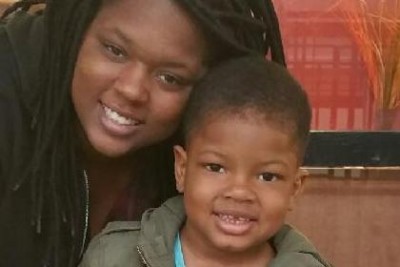
I want to continue making readers aware of an especially troubling case in Maryland that involves the death of Ji’Aire Simms, a three year-old boy nicknamed “Sumo” because of his chubby cheeks. He died in May this year from hypothermia and dehydration after being pushed in a playground swing for 40 hours straight by his mother, Romechia Simms, age 25, who reportedly had been diagnosed with schizophrenia and bipolar disorder.  She never left his side and continued pushing him during a rain storm and after he already had died. (He’d been dead two days when the police arrived.)

This week, The Washington Post reported that a judge had lowered Simms’ bond so that her mother,Vontasha Simms, could get her troubled daughter out of jail and, hopefully, into treatment before she is brought to court to face charges of manslaughter and first-degree child abuse punishable by 45 years in prison.

What’s upsetting about this news story is not that Simms has been released from jail, but her mother’s claim that Simms did not receive any mental health treatment while incarcerated.

Click to continue…

A Taser Death Every Week Investigation Finds: Often Persons With Mental Illnesses

taser_m26c_m18l_deployed

The Washington Post has been at the forefront of writing about police involved shooting deaths and last week, reporters Cheryl W. Thompson and Mark Berman cast a much needed spotlight on the use of Tasers. At least one person a week dies in the U.S. after being stunned with a Taser and more than half of them had a mental illness or illegal drugs in their system, according to their research.

The Post undertook its investigation after Natasha McKenna, a 37-year old African American woman who’d been diagnosed with schizophrenia, died in Fairfax County, Virginia. She had been shot four times with a Taser by deputies while restrained in jail. This exhaustive news story ends with a quote from me about McKenna’s death: “Having a mental illness shouldn’t be a death sentence, and that’s what this was.”

TASERS — IMPROPER TECHNIQUES, INCREASED RISKS

By Cheryl W. Thompson and Mark Berman, The Washington Post, 11-27-15

Mathew Ajibade had been acting strangely shortly before Savannah, Ga., police officers arrested him on suspicion of hitting his girlfriend outside a convenience store last New Year’s Day.

Officers said he was combative, so after booking the 21-year-old Wells Fargo bank employee into the Chatham County Detention Center, a sheriff’s deputy Tasered Ajibade’s abdominal area after he was handcuffed with his ankles bound. They left him in an isolation cell and didn’t check on him for at least 90 minutes, in violation of department policy. When they did, he was dead.

Click to continue…

How Much Do They Earn? Executive Pay At Mental Health Non-Profits

salaries

Each year between Thanksgiving and Christmas, our mail box fills with pleas from mental health groups seeking much needed contributions. Before Patti and I begin writing checks, I review how much these non-profits bring in each year and how much they pay their top executives. Thanks to GUIDESTAR, checking the IRS 990 Forms for non-profits is easy.

In the Washington D.C. area, the Judge David L Bazelon Center for Mental Health Law provides the most generous compensation among mental health groups for its president, according to IRS filings. It paid a salary of $247,980 and an additional $29,415 for a total of $277,395, according to its 2013 filing. It listed its gross receipts at $4,713,817. (Note: additional pay is generally retirement and/or bonus.)

The National Alliance on Mental Illness, which is the largest grassroots mental health organization, paid its executive director $207,045 and an additional $26,170 for a total of $233,215, according to its 2013 report. (It has changed directors since this filing.) It listed gross receipts of $10,912,588.

Mental Health America, which is the oldest consumer organization, paid $202,004 to its president, but those funds covered the salaries of its outgoing president and incoming one (who later left), according to its 2013 report. It reported gross receipts of $3,755,173.

The Depression and Bipolar Support Alliance is considered the third largest national mental health grassroots group. It reported gross receipts of $3,158,542 in its 2013 report and paid total compensation of  $112,458 to its president.

So are those compensation figures too much or too little?  For the answer, I consulted Charity Navigator .

Click to continue…

Jay’s Story: No One Should Be Left Behind, Thankful But Still Much To Be Done

homeless youth

( From My Files Friday: This Thanksgiving marks the beginning of my son’s eighth year in recovery! I am grateful to the many people who helped him and am proud of him for finally accepting his illness and taking steps to recover. I realize, however, there are many who are very sick and for their loved ones, Thanksgiving can be a difficult time. A year ago, I published a powerful blog by Joanne Kelly about her son, Jay. I recently asked if Jay’s situation had improved and, sadly, the answer was no. Joanne, please know that you and Jay are in our thoughts and prayers. You are why we must continue our fight for a better system. No one should be left behind.)

Please God Keep Jay Safe For Another Week: A Mother’s Ritual

          RITUALS   —   By Joanne Kelly

If you are an astute observer and you stand in the courtyard of my son’s apartment building, you might notice that everyone’s window blinds are white except Jay’s. The blinds in his windows are a golden brown, the outward manifestation of a two-packs-a-day smoking habit multiplied by four years of occupancy in this particular apartment. joanne

Today is pretty typical of my visits over the last few months. Jay hasn’t answered any of my phone calls this week. It is 4:00 in the afternoon on a sunny day in late November. I knock. I wait. I knock again. I wait some more. Finally I hear him unlock the deadbolt. He opens the door looking disheveled and groggy. Obviously, I have interrupted his sleep.

Click to continue…

Judge Steve Leifman Is Honored At U.S. Supreme Court For Mental Health Advocacy

judge-leifman-with-award

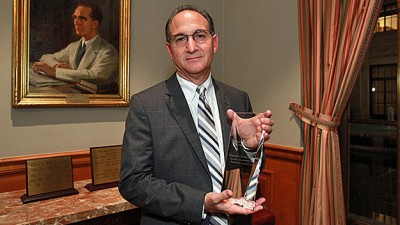
My good friend, Miami-Dade Judge Steve Leifman, received one of the highest honors awarded to a jurist during a recent ceremony held at the U.S. Supreme Court. I was privileged to be his guest and sit with his family when he received the William H. Rehnquist Award for Judicial Excellence from U.S. Chief Justice John Roberts. The award recognizes a judge each year who exemplifies judicial excellence, integrity, fairness, and professional ethics.

Judge Leifman was honored by his peers because of his tireless efforts to improve the lives of Americans with severe mental illnesses. True to form, he made an impassioned plea to his fellow judges during his acceptance speech, asking them to join him in diverting persons with mental disorders out of the criminal justice system and into community treatment.

If you have read my book, CRAZY: A Father’s Search Through America’s Mental Health Madness, you will recall that it was Judge Leifman who arranged for me to spend ten months inside the Miami-Dade detention center following persons with severe mental illnesses through the criminal justice system out onto the streets. I had not planned on doing research in Miami, but the Los Angeles jail kicked me out after two days, claiming that I was violating HIPAA. (That was simply an excuse to keep me from documenting the dreadful conditions I was seeing there.) I tried to visit jails in Chicago, New York, Baltimore and Washington D.C. but none of them would allow me access. I would not have been able to write my book had it not been for Judge Leifman who invited me to Miami.

Click to continue…