My father is a retired protestant minister and I grew up attending church. When I was a child, Easter was my second favorite holiday. I preferred Christmas because I got presents. At Easter, we hid eggs but didn’t exchange gifts. Of course, when I got older I came to understand just how important Easter is to protestant faiths.
I am writing about religion because of a question that I was asked recently at Viterbo University, a beautiful school in La Crosse, Wisconsin. About 550 people attended my speech at Viterbo, which traces its origins to a small school founded by the Franciscan Sisters of Perpetual Adoration. 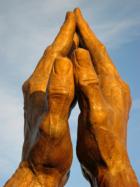
“How important is spiritually to mental health recovery?” a woman in the audience asked me.

 introduce himself and even more stunned by how much he knew about Oklahoma politics. Not only was he familiar with the state’s congressional leaders, he also asked me about several county commissioners. I later learned that Broder was that well-versed about every state. Like most other young staffers, I thought he walked on water. But he was never arrogant and that was not something that could be said about several of his other Mount Olympus colleagues.
 What if someone with a severe stutter wants to work as a broadcast journalist? Should a college allow that person to enroll in its school of mass communication?